Stargazing From a Yurt in the Mongolian Steppe
Stargazing from a Mongolian steppe yurt offers dark skies and clear Milky Way views. Learn the best time to see stars in Mongolia and plan your trip.
Why the Mongolian Steppe Is a Dark-Sky Destination
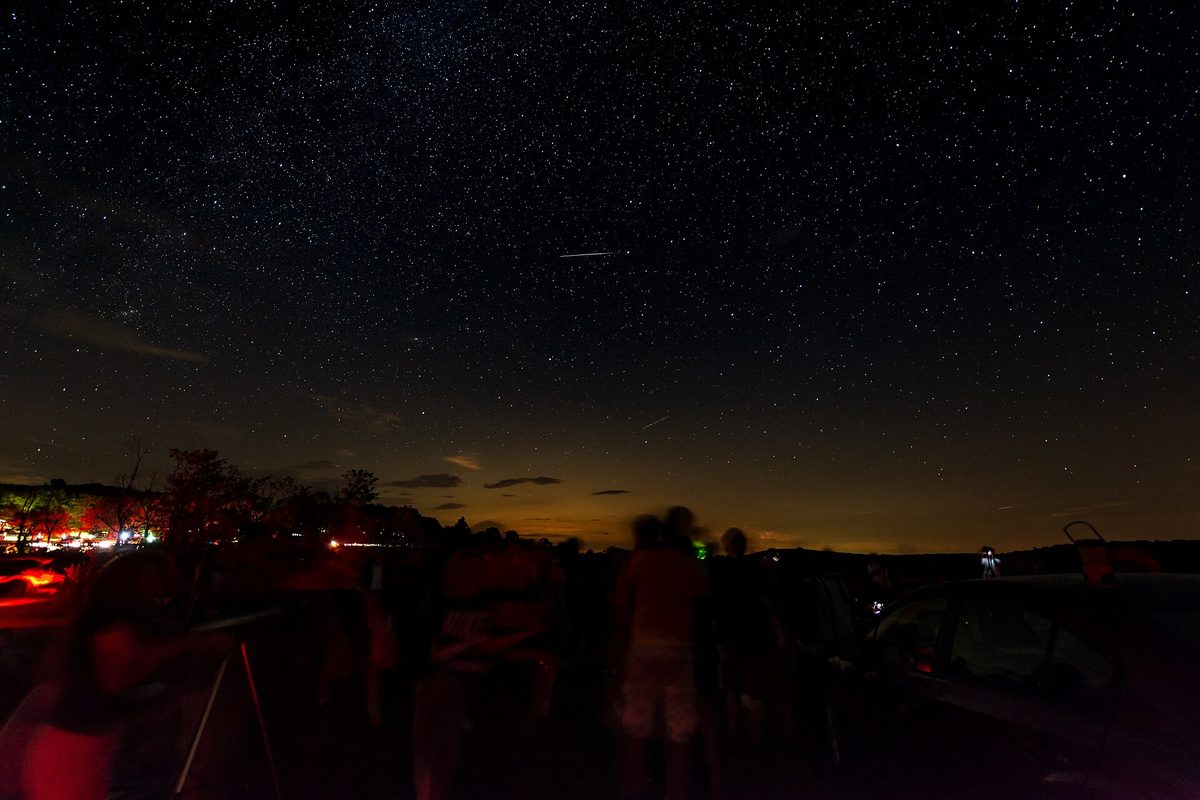
The Mongolian steppe has some of the darkest night skies on the planet. Fewer than two people live per square kilometer and there are no big industrial centers outside the capital, so light pollution stays among the lowest recorded outside Antarctica. At a ger camp after midnight the Milky Way looks like a solid band of light instead of a faint smear. This article covers what makes stargazing here work, what you can see from a yurt, and how to plan a trip.
Most of Mongolia is far from city glow. The steppe is flat, dry, and high, with clear air that holds little humidity to scatter light. Lie on the felt roof of a ger or stand in the open grass and the horizon stays dark in every direction. Ulaanbaatar has grown bright, but drive three hours out and the sky changes completely.
Understanding the Bortle Scale in Mongolia
Astronomers use the Bortle scale, a nine-step measure from inner-city glow to pristine wilderness. Most of the Mongolian countryside is at Bortle 1 or 2. At Bortle 1 you can see the gegenschein, a faint glow opposite the sun caused by dust in the solar system. At Bortle 2 the zodiacal light shows as a soft cone before dawn or after dusk, and the Milky Way shows dark dust lanes with the naked eye.
A night sky ger camp in the provinces gives you these ratings without special effort. You do not need to hike to a remote peak. The flat steppe is the dark site. The only local light is usually a dim bulb at the camp kitchen, which you can ask staff to switch off during observation hours.
What Makes Stars in Mongolia Yurt Stays So Clear
Three factors shape the view from a yurt. Altitude: much of the steppe sits between 1,000 and 1,500 meters, where the air is thin and stable. Dryness: the continental climate brings low precipitation and low cloud cover in the observing season. Lack of competing light: with no highway lamps or shopping centers, your eyes adapt fully within 20 minutes.
Steppe astronomy works because the horizon is open. In forests or mountains, trees and ridges block low targets. On the steppe you can track constellations from the north celestial pole down to the southern horizon. The open land also reduces airglow from ground reflection, keeping the background sky black.
The Milky Way Over the Ger
The Milky Way display peaks in the cold months, when the dense spiral arms in Perseus and Cassiopeia rise high. From a yurt you see the band cross the roof opening if the toono (the central smoke hole) is left uncovered. Many travelers photograph it by placing a camera on the ger roof pointing up through the opening.
In summer the galactic core rises after midnight. July and August are the best months to see the bright center, when Scorpius and Sagittarius sit due south. The dense star fields near the teapot of Sagittarius show well even with basic camera gear.
Best Time See Stars Mongolia by Season
The best time depends on your target. For the galactic core, July through September gives the richest view. For meteor showers, the Perseids peak around August 12 and the Geminids around December 14. For naked eye scanning of constellations, the May night sky holds the spring triangle of Virgo, Leo, and Boötes before summer haze builds.
Winter brings the clearest air but brutal cold. A yurt stays warm with a stove, but limit outside sessions to 20 minute bursts. For cold-night preparation in a similar setting, see our yurt cold night prep guide. Spring and autumn offer mild temperature and dark, stable skies.
Steppe Astronomy: What You Can Observe
From a ger camp you can see a wide range. With the naked eye count the seven sisters of the Pleiades, trace the Big Dipper, and watch the sky turn around Polaris. Fainter features like airglow appear once your eyes adapt. Meteors streak every clear night, with rates climbing during showers.
Binoculars reveal dozens of open clusters and the moons of Jupiter. A portable telescope shows Saturn's rings and the bands of Jupiter. Because the steppe has no light dome, faint objects like the Andromeda Galaxy show as a soft oval without filters.
Light Pollution Mongolia: The Numbers
Light pollution in Mongolia is concentrated in Ulaanbaatar, where the urban glow reaches Bortle 7 to 8. Outside the capital, measured sky brightness stays near natural levels. Handheld meter readings at rural steppe sites average near 21.8 magnitudes per square arcsecond, close to the theoretical dark limit. The steppe qualifies as a candidate for dark-sky reserve status, though no formal certification exists yet.
The government has not built major outdoor lighting outside towns, so the situation holds steady. Travelers worried about Ulaanbaatar conditions should plan to leave the city. A three hour drive puts you in Bortle 2 air.
Planning a Yurt Stargazing Trip
Book a night sky ger camp at least two months ahead for summer. Choose a location more than 50 kilometers from any town of over 5,000 people. Good bases include the plains near Arvaikheer, the area east of Tsetserleg, and the wide ground south of Lake Khövsgöl. Confirm with the camp that they can dim or shut off compound lights on request.
Pack a red flashlight to protect night vision, a warm layer even in July, and a simple star map. A smartphone app works but use red mode only. For photography bring a tripod and a wide lens. The Milky Way shot needs a 15 to 25 second exposure at high ISO with the lens wide open.
Observing From Inside the Yurt
The ger design helps stargazing. The toono at the top frames a circular patch of sky. Leave the stove low and the flap open on clear nights. You can lie on the bed platform and watch stars in yurt style without facing cold wind. For the May night sky, late dusk means observing starts near 11 pm local time, later than in lower latitudes.
If you step outside, lay a blanket on the grass. The steppe is soft and the horizon wide. Keep a thermos of salt tea nearby. Most camps welcome guests staying up past midnight as long as the stove is managed.
Meteor Showers and Special Nights
The Perseid shower in August is the headline event for steppe trips. Under Bortle 2 skies you can see 40 to 60 meteors per hour at peak. The Geminids in December are colder but richer, sometimes 100 per hour. The Lyrids in April and the Quadrantids in January add off-season options.
Plan a shower night by checking the moon phase. A bright moon washes out faint meteors. New moon weeks are best. Camps can schedule a late dinner so you are ready when the radiant rises.
Airglow and Zodiacal Light
Two subtle features reward patient observers. Airglow is a faint emission from the upper atmosphere, seen as a soft green or gray band near the horizon after full dark. Zodiacal light is a tilted cone along the ecliptic, visible in the west after dusk in spring or east before dawn in autumn. Both need a dark site and adapted eyes, which the steppe provides.
These are not aurora. They are steady and quiet. A yurt stay gives you the dark hours needed to pick them out, especially during the May night sky window when the ecliptic stands steep after sunset.
Photography Settings for the Steppe Sky
Use the table below as a start point and adjust for your lens.
Lens ISO Shutter Aperture Notes
14mm 3200 20s f/2.8 Wide core, minimal trail
24mm 1600 15s f/2.8 Less distortion
35mm 800 10s f/1.8 Tight frame, bright stars
50mm 400 6s f/1.8 Detail, short exposure
Focus manually on a bright star using live view zoom. Turn off image stabilization on a tripod. Shoot in raw. The Ulaanbaatar escape pays off in clean frames with low noise because the ambient temperature drops the sensor heat.
Constellations Across the Year
The steppe shows the full northern sky. Winter brings Orion and Taurus high. Spring shows Leo and Virgo. The May night sky gives Boötes and the Corona Borealis. Summer lifts Cygnus and the Summer Triangle. Autumn shows Pegasus and Andromeda. Because the steppe is flat, you lose no low targets to terrain.
Learn five key constellations before you go. They act as signposts for fainter objects. The Big Dipper points to Polaris. Cassiopeia points to Andromeda. Sagittarius marks the galactic center.
Remote Skies and Astronomy Tourism
Remote skies draw a growing field of astronomy tourism. Mongolia fits the trend because access is simple: a domestic flight or drive from the capital, then a ger camp with food and heat. No special permits or guides are required for casual observing. The light pollution map shows vast dark zones open to visitors.
Camps increasingly list stargazing as an activity. Some provide a camp telescope and a local explainer. Others stay silent and let you watch alone. Either way the Milky Way arc is the main draw. For a broader context on traveling the country's grasslands and stays, see Mongolia nomadic travel guide.
A Sample Night Schedule
Below is a practical flow for a July visit.
21:00 Dinner at camp, request lights off at 22:30
22:30 Eyes adapt, scan north for Draco and Ursa Minor
23:30 Milky Way core rises south, start photos
00:30 Subtle glow features gone, deep sky objects clear
01:30 Meteor watch, count Perseids
02:30 Warm up in yurt, tea break
03:30 Pre-dawn zodiacal light east, final shots
04:30 Sleep
This schedule suits the summer window when nights are short but rich.
Common Mistakes to Avoid
Do not rely on the city for viewing. Ulaanbaatar dark sky is a contradiction. Do not use white headlamps. Do not point phone screens at full brightness. Do not expect the galactic core in winter. Do not book a camp next to a town without confirming light control. The yurt experience fails when a single security lamp floods the field.
Bring more warm clothing than you think. The steppe cools fast after sunset even in July. A cold observer packs up early and misses the best hours before dawn.
What to Read Before You Go
Study a current star chart for the month. Learn the Bortle scale so you can record your site. Read about airglow and the ecliptic glow so you know them when seen. Practice focusing a camera at night at home. The more you prepare, the more the session delivers.
Local libraries in Ulaanbaatar have Mongolian sky guides. Ask your camp host which constellations they know. Many herders name stars by season and animal shape, a useful local layer on the standard maps. For a cultural angle on staying in a ger with locals, check Mongolian yurts nomadic lifestyle experience.
Why a Yurt Beats a Tent
A yurt keeps heat, blocks wind, and gives a framed sky window. A tent traps condensation and cuts your view to a zip opening. For steppe trips the ger is practical: you step out fast, step back in to warm, and store gear dry. The night sky ger camp model fits the climate better than canvas.
Some camps offer a glass-roofed ger for winter. That option lets you watch the Milky Way band from bed. It costs more but removes the cold limit on session length.
Final Notes for First-Time Visitors
Your first steppe night will likely surprise you with scale. The sky feels close and full. Give it two nights. The first adapts your eyes and your plan. The second delivers what Mongolia has to offer. By the third you will have a routine and a set of photos worth keeping.
Book the camp, pack the red light, leave the city glow behind, and let the steppe show the stars in yurt style that drew travelers here for centuries.
Official sources
Details worth verifying before you go — checked against:
Travel Writer & Editor
Emily Johnson writes and edits Do Travel Blog. Every guide on the site starts the same way: with a question she actually had while planning — when to book, which pass to buy, how to get from A to B without overpaying. Where a number matters, she cites the source: park tickets link to the park's own fee page, visa rules to the official consulate, ferry times to the operator. Prices get re-checked against those pages before each update, and a guide is re-dated when its numbers move. Nothing here is sponsored — she doesn't accept payment for coverage. Spotted something stale or wrong? Email hello@dotravel.blog and she'll fix it.