Beyond Sunrise: Alternative Temples in Angkor
Skip the 4 AM rush with these Angkor Wat alternatives to sunrise. Learn the best time to visit Angkor Wat and where to find the quietest temples.
The sunrise trap: Why you might want a different plan
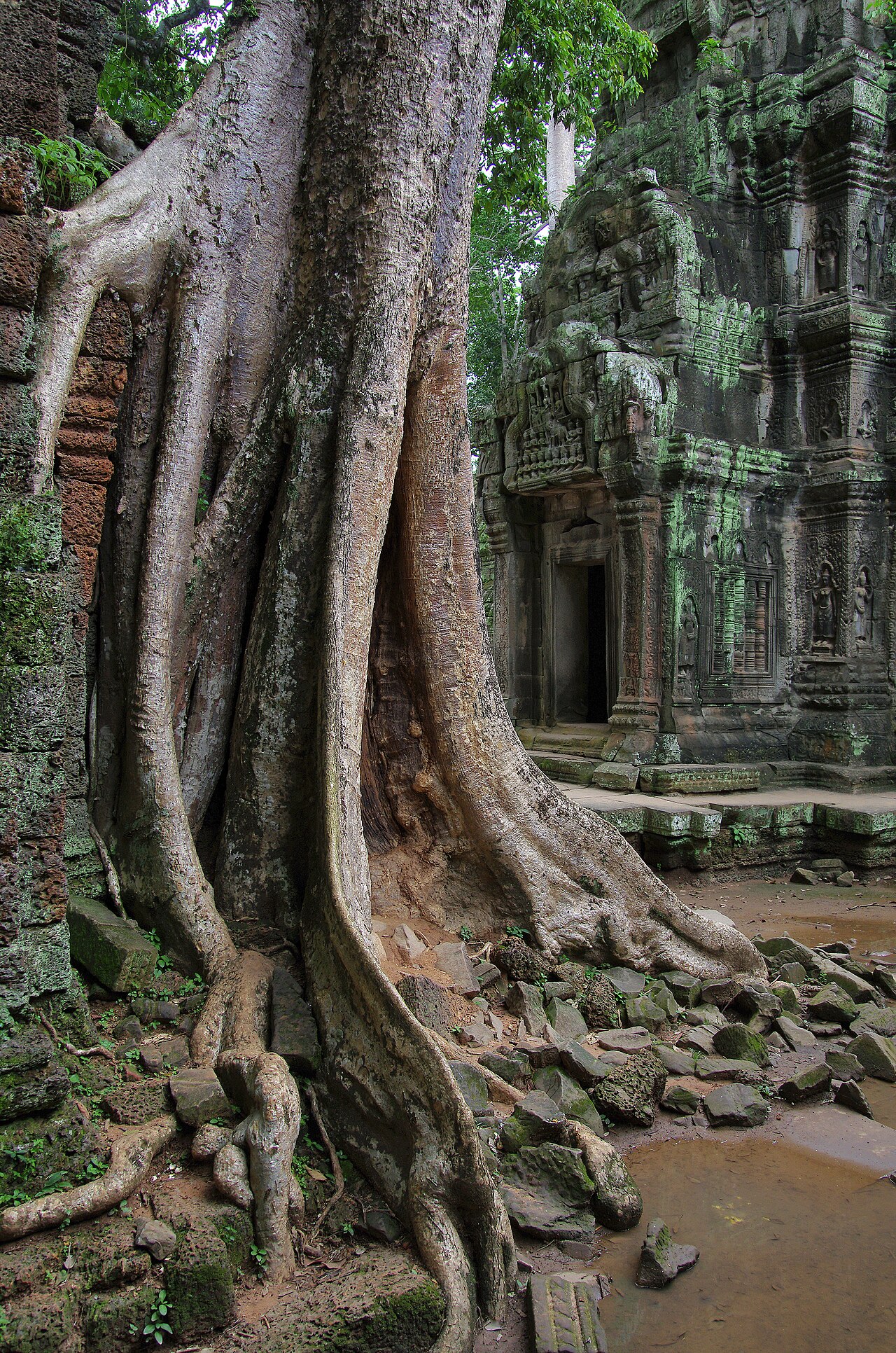
Photo: Phillip Maiwald (Nikopol) / CC BY-SA 3.0 / Wikimedia Commons
Most travelers start their Angkor Wat experience at 4:00 AM. The routine is predictable: a bumpy tuk-tuk ride in the dark, a scramble for a spot by the reflection pond, and a crowded wait for a sun that often stays behind clouds. While the image is iconic, the reality is usually a stressful exercise in crowd management. If fighting thousands of people for a photo sounds exhausting, you are not alone. For those who still want the shot, check out this Angkor Wat sunrise photography guide.
Finding the best time to visit Angkor Wat does not require sacrificing sleep. The temple complex is huge, and crowds usually cluster in a few spots at specific times. By changing your schedule, you can see the Khmer Empire ruins without the chaos. This guide covers Angkor Wat alternatives to sunrise and ways to explore the park at a slower pace.
Rethinking the clock: The best time to visit Angkor Wat
If you want to see the main temple but hate the sunrise rush, you have a few options. The trick is to understand how tour groups move. Most large groups follow a set path: sunrise at Angkor Wat, then Bayon, then Ta Prohm.
The late morning pivot
One way to avoid the crowds is to arrive at the main temple around 10:00 AM or 11:00 AM. By then, the sunrise crowd has moved to smaller temples or gone back to their hotels for breakfast. The heat is stronger, but the corridors are much quieter. You can hear your own footsteps on the stone and look at the bas-reliefs without people pushing past you for a selfie.
The afternoon descent
Visiting Angkor Wat from 3:00 PM onwards offers a different feel. The light turns golden on the western face of the temple, and most day-trippers are heading back to Siem Reap. This is often the best time to visit Angkor Wat for scale and solitude. The air is calmer and the temperature drops, which makes the climb to the upper sanctuary easier.
Quiet temples in Angkor: Escaping the main circuit
Angkor Wat is the most famous, but the park has hundreds of structures. Some of the best experiences happen far from the main gates. To find quiet temples in Angkor, you have to go to the outer edges of the park.
Banteay Srei: The jewel of the forest
Banteay Srei is further from the center and often skipped by people on tight schedules. That is a mistake. Built from pink sandstone, the carvings here are some of the most detailed in the region. Because it is far away, it never feels as cramped as the main circuit. The scale is small, but the detail is high. It fits a slow travel Cambodia approach, where the drive through the countryside is part of the reward.
Preah Khan: The labyrinth of stone
Preah Khan is a large complex that feels like a city reclaimed by the jungle. Unlike Ta Prohm, which is famous for giant trees and packed with tourists, Preah Khan has a similar look with more room to breathe. You can walk through its corridors and gateways for an hour without seeing anyone. It is a great hidden gem for those who like the feeling of discovery.
Beng Mealea: The raw ruin
If you really want to avoid people, go to Beng Mealea. This temple is even further out and is mostly unrestored. It is a heap of sandstone blocks and strangler figs. Walking across wooden boardwalks over the ruins feels like being an explorer from the 1800s. There are no queues here, just the sound of the jungle.
Mastering the morning: Bayon temple morning strategy
If you want an early start without the Angkor Wat stress, try the Bayon temple morning experience. Bayon is the temple of the many faces in the center of Angkor Thom.
While people go to Angkor Wat for the sunrise event, Bayon is better for observation. Arriving at 7:30 AM, right as the park opens, lets you walk among the stone faces in peace. The morning light makes the carvings look serene. By the time the sunrise crowds arrive around 9:00 AM, you will have already finished and moved on.
Itinerary planning for the stress-free traveler
Successful temple hopping requires a counter-intuitive approach. The goal is to be where the crowds are not, which means being flexible and ignoring some standard guidebooks.
The reverse circuit
Most people do the Small Circuit clockwise. To find more solitude, try going the other way. Start with the furthest temples and work back toward the center. By the time you hit the popular spots, the first wave of tourists has usually left.
The mid-day retreat
Cambodia's heat helps with crowd control. Between 12:00 PM and 2:00 PM, many tourists go back to their hotels for a nap. This is a good window to visit a medium-sized temple like Baphuon or the Terrace of the Elephants. It is hot, but the lack of people makes it feel more intimate.
Slow travel Cambodia: A philosophy of exploration
Many visitors treat Angkor like a checklist, rushing to see everything. This leads to burnout. A slow travel Cambodia mindset means choosing quality over quantity.
Instead of ten temples in two days, pick three. Spend four hours at one. Sit in the shade and watch the light change on the stone. Talk to your driver about the history of the area. When you stop rushing, you notice the small things: moss in the crevices, the scent of incense, and the smiles of local vendors.
Practical tips for avoiding the crowds
Beyond timing, a few hacks can make your visit easier.
Hire a local guide
A guide can often show you a side entrance or a hidden courtyard that tourists ignore. They know the rhythms of the park and can change the plan based on where the crowds are.
Use a bicycle
Tuk-tuks are easy, but a bicycle lets you stop at any small ruin you see. Many of the best moments in Angkor happen between the major temples on dirt roads lined with palms.
Pack for the long haul
To handle the heat and the trips to distant temples, bring more water than you think you need. A cooling towel and a wide-brimmed hat are essential. If you are prepared, you can stay in the park longer, which is the easiest way to find quiet moments. For more gear tips, see our guide to gear for hot climates.
Comparing the experiences: Sunrise vs. alternatives
Here are the trade-offs between the traditional sunrise visit and the alternative approach.
The sunrise experience - Pros: Iconic photos, the sight of the sun over the towers. - Cons: 4 AM wake-up, heavy crowding, high stress, often cloudy.
The alternative experience - Pros: More sleep, a closer connection with the architecture, less stress, hidden gems. - Cons: Midday heat, more travel time to remote sites, missing the bucket list photo.
For many, the trade-off is worth it. Being the only person in a thousand-year-old stone corridor is more memorable than a photo that looks like every other one on Instagram.
The hidden gems of the outer ring
For those who have seen the basics or want to avoid the hub, the outer ring has some of the most atmospheric sites.
Koh Ker: The pyramid of the jungle
Koh Ker is a long trip from Siem Reap, but it is a great Angkor Wat alternative to sunrise. The main feature is a seven-tiered pyramid that looks more like Maya architecture than Southeast Asian. Because it is so far, it stays quiet. The isolation creates a strong sense of awe.
Banteay Chhmar: The forgotten city
If you are committed to avoiding crowds, go to Banteay Chhmar. This temple is near the Thai border and is rarely visited. It is a sprawling ruin where the jungle has mostly won. There are no fences or queues. It is the purest form of exploration in Cambodia.
Summary and action plan
Visiting Angkor does not have to be a race. By changing your timing and map, you can make the experience restorative.
If you want a balanced trip, try this plan:
- Skip the 4 AM alarm. Wake up at a normal hour and have a slow breakfast.
- Start at Bayon temple around 7:30 AM to beat the first wave.
- Spend midday at a remote site like Banteay Srei or Preah Khan.
- Visit the main Angkor Wat temple at 3:30 PM for golden hour light and fewer people.
- Spend one full day on the outer ring at Koh Ker or Beng Mealea for true silence.
By prioritizing your own pace, you will leave Cambodia with a deeper appreciation for the Khmer Empire and a sense of peace that a photo cannot provide.
Official sources
Details worth verifying before you go — checked against:
Travel Writer & Editor
Emily Johnson writes and edits Do Travel Blog. Every guide on the site starts the same way: with a question she actually had while planning — when to book, which pass to buy, how to get from A to B without overpaying. Where a number matters, she cites the source: park tickets link to the park's own fee page, visa rules to the official consulate, ferry times to the operator. Prices get re-checked against those pages before each update, and a guide is re-dated when its numbers move. Nothing here is sponsored — she doesn't accept payment for coverage. Spotted something stale or wrong? Email hello@dotravel.blog and she'll fix it.