Hoi An at Night: A Photography Guide to Golden Lanterns
A practical guide to Hoi An night photography: best vantage points, camera settings, and timing for capturing golden lanterns and yellow facades.
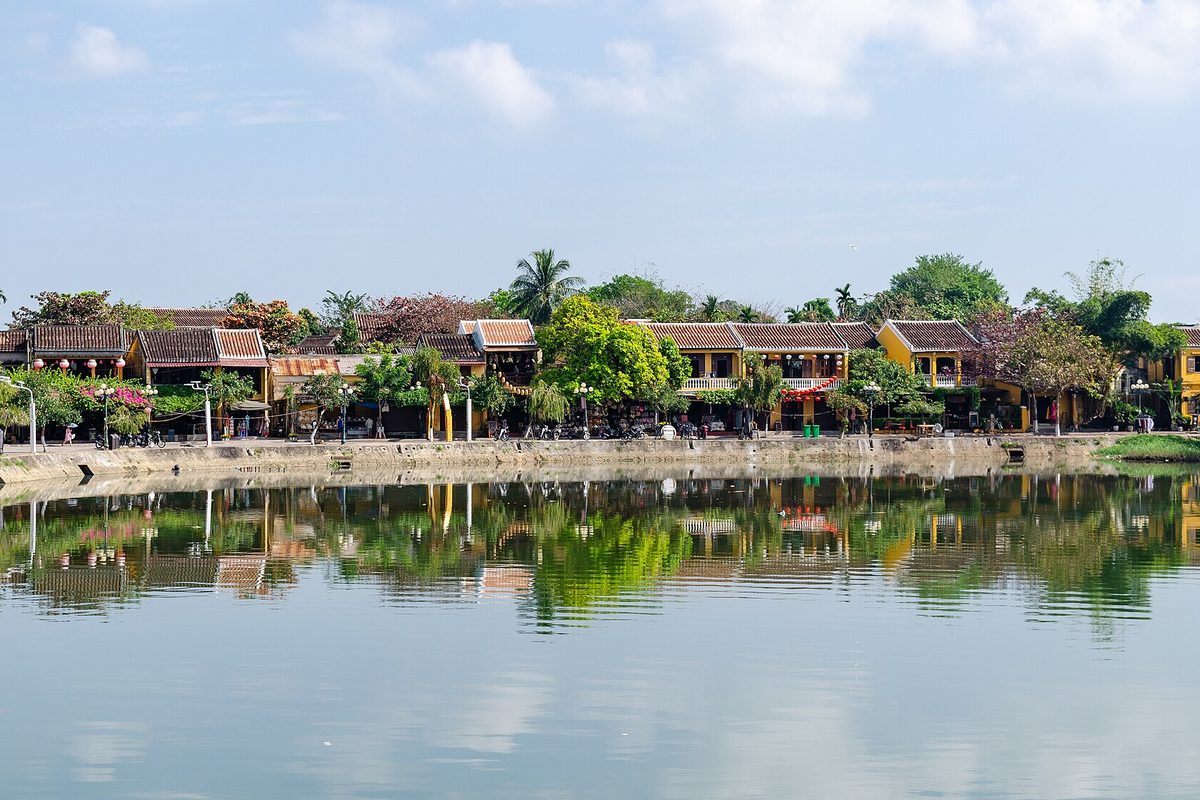
Why Hoi An Ancient Town Comes Alive After Dark
Hoi An during the day is pleasant, with quiet canals, tailors calling from open shops, and tourists walking under faded yellow walls. But the town at night is a different subject. It is why many photographers plan their Vietnam itinerary around the few hours between 5:30pm and 9pm in this riverside town.
When the sun drops and the lanterns switch on, the ochre facades of the UNESCO heritage architecture shift from dusty yellow to a burnished gold. With hundreds of paper lanterns across narrow lanes, floating candles on the Thu Bon river, and the glow on wet cobblestones after a shower, it is one of the most photogenic towns in Southeast Asia. This guide focuses on Hoi An night photography and lantern photography: where to stand, what light to wait for, which settings to use, and how to handle the evening crowds in the old quarter.
This is not a general travel guide. It is for those who want images, not just memories. It covers the practical mechanics of evening photography: timing, gear, composition, and the quirks of shooting lanterns against colored walls in low light.
Understanding the Light: Blue Hour, Golden Hour, and the Lantern Switch
The most important variable in dusk photography is timing, not your camera. Hoi An's old quarter follows a predictable daily rhythm, and knowing it prevents wasted evenings.
The Golden Hour Before Sunset
Golden hour happens roughly 45 to 60 minutes before sunset. The low sun angle hits the yellow houses and brings out texture in the peeling paint, wooden shutters, and roof tiles. At this point, lanterns are usually off or only partially lit. This is useful because you can photograph the architecture with warm directional light and long shadows without lantern glow competing for attention. For more on finding these moments, see my search for atmospheric sunsets.
Sunset times shift throughout the year. In the dry season (February to July), the sun sets closer to 6:00 to 6:30pm. In the wetter months (September to January), it can be closer to 5:15 to 5:45pm. Check the actual sunset time for your dates rather than relying on a fixed clock, as this determines your entire schedule.
Blue Hour: The Sweet Spot
Blue hour occurs in the 20 to 30 minute window after the sun drops below the horizon but before full darkness. The sky is a deep cobalt or violet, and there is still enough ambient light to see detail in the streets and river. By now, most lanterns are lit. The color contrast between the cool sky and warm lantern glow is most dramatic here, making it the best window for evening photography.
Blue hour is short. Be in position with your tripod set and composition locked by the time the sky shifts from orange to purple. Searching for a shot during this time wastes the only 20 minutes you have.
After Full Darkness
Once true night falls, the sky goes black and is no longer a compositional element. This is still a good time for close-up work, lantern boats, and long exposures of foot traffic. However, these images rely on the lanterns as the only light source rather than a balance between sky and street.
When Do the Lanterns Actually Turn On
Lanterns in the old quarter are not switched on all at once. Shopkeepers and stall owners light their own, usually starting 30 to 45 minutes before sunset. The lighting builds gradually, meaning you have about an hour where different streets have different levels of illumination.
Practically, you should arrive early and scout a first vantage point while the light is workable. Be willing to walk to a few locations as lanterns come on street by street. Do not wait in one alley for a single moment. Move around.
Best Time to Photograph Hoi An: A Practical Timeline
Here is a realistic evening plan for those asking about the best time to photograph Hoi An: - 60 minutes before sunset: arrive in the old quarter, scout your first location, and photograph architecture in golden hour light. - 30 to 45 minutes before sunset: lanterns begin switching on. Move toward the river. - Sunset to 20 minutes after: blue hour. This is prime time for wide shots of the sky, river, and architecture. - 30 to 90 minutes after sunset: full illumination and peak foot traffic. Best for lantern boats and crowd shots. - After 9pm: crowds thin on weekdays, allowing for cleaner shots in side lanes. Many lanterns stay lit until 10pm or 11pm.
Monthly lantern festivals on the 14th day of the lunar calendar change things. Municipal lighting is switched off in parts of the old quarter, leaving only lanterns, and floating candles on the river increase. If your dates allow, timing a visit for the lantern festival is worth the effort.
Best Vantage Points and Photo Spots
Most people want a list of reliable spots rather than a suggestion to wander. These locations consistently produce strong results.
Cau An Hoi Bridge and the Riverside Promenade
The pedestrian bridge crossing the Thu Bon river near An Hoi is a top spot for wide shots. From the bridge, you see riverside lantern shops, boats with red and gold lanterns, and reflections on the water. Shoot from the bridge for height, or use the riverbank steps for a lower angle.
Nguyen Phuc Chu Street Riverside
This stretch is where most lantern boat operators depart. It provides a tighter framing of boats against glowing shopfronts. Arrive before blue hour to claim a spot at the railing, as this area crowds quickly.
Tran Phu and Nguyen Thai Hoc Streets
These parallel streets are the commercial spine of the old quarter, lined with yellow shopfronts and lanterns. They are best for street photography: shopkeepers, tailors, and rows of lanterns receding into the distance. Shoot down the length of the street to maximize depth.
Chua Cau (Japanese Covered Bridge)
This 400-year-old bridge looks different after dark when its lantern-lit interior glows against the darker street. Shoot from an angle to capture the roofline and the reflection in the canal if water levels allow.
Hoi An Old Quarter Alleys
Step away from the main streets into the narrower alleys. These lanes are quieter and often have atmospheric single-lantern lighting. They suit intimate compositions, such as a single doorway or a hanging lantern against textured plaster. For those who enjoy this, getting lost in the old alleys is the best way to find unique frames.
Central Market Area at the River's Edge
Near the central market, the riverbank offers an elevated view back toward the bridge and lantern shops, providing a mid-range alternative to the bridge shot.
Photographing Lantern Boats and the Thu Bon River
River lanterns are a signature image. Getting them right requires understanding the subject and the moving water.
Boat operators paddle wooden boats loaded with lanterns near the bridge. To photograph them: - Position yourself on the bridge or riverbank with a clear line to the boats' route, usually just downstream of the bridge. - Use a shutter speed of 1/4 to 1 second to create a small amount of motion blur in the wake without blurring the boat. A tripod is essential. - Wait for boats to be lit by their own lanterns rather than backlit by streetlights, which flattens the color. - Shoot several frames in sequence because paddle motion and passenger positions change quickly.
For floating candle lanterns, a slow shutter (2 to 6 seconds) captures the drift and light trails, provided the camera is stable.
Camera Settings for Hoi An Lanterns
Settings depend on managing bright, warm lanterns next to deep shadows in fading light. Use this framework as a starting point.
Blue hour, wide street scene, tripod:
 Mode: Manual or Aperture Priority
 Aperture: f/5.6 to f/8
 Shutter: 1 to 4 seconds
 ISO: 100 to 200
 White balance: 3200K to 4000K

Full darkness, handheld street shot:
 Mode: Aperture Priority or Manual
 Aperture: f/1.8 to f/2.8
 Shutter: 1/60 to 1/125
 ISO: 1600 to 6400
 White balance: Auto or 3500K

Lantern boat, tripod, slow shutter:
 Aperture: f/8 to f/11
 Shutter: 0.5 to 2 seconds
 ISO: 100 to 400
 White balance: 3500K

Close-up single lantern, handheld:
 Aperture: f/2.8 to f/4
 Shutter: 1/125 or faster
 ISO: 800 to 3200
 Focus: manual or single-point AF
White balance is critical here. Lanterns are warm (2000K to 2700K) and the blue hour sky is cool. Auto white balance often creates a muddy compromise. Shooting in RAW and setting a manual balance around 3200K to 4000K keeps the lanterns gold while retaining the blue sky.
Aperture depends on distance. Wide scenes benefit from f/5.6 to f/8 for sharpness. Close-ups or portraits work better wide open, f/1.8 to f/4, to blur background lanterns into soft orbs.
Long exposure techniques apply to moving water and crowds. A shutter speed of half a second or longer smooths motion and gathers more light, but this requires a tripod and a remote release or timer to avoid shake.
Low Light Camera Settings Without a Tripod
If you are skipping a tripod, use a wider aperture and higher ISO. Modern sensors handle ISO 3200 to 6400 well with noise reduction in post. A fast prime lens (f/1.8 or wider) is the most important gear choice for handheld night photography.
Tripod Photography Tips for Crowded Streets
Main lantern streets are pedestrianized but crowded, making tripod use difficult. - Use a compact travel tripod. A smaller footprint is easier to manage in a busy alley. - Shoot from the edges of streets, against shopfronts or railings, to avoid blocking traffic. - The bridge and riverside promenade have more space and are more tripod-friendly. - If it is too crowded, switch to handheld settings. Some of the best street images are handheld because a tripod locks you into one frame while the crowd moves. - Some heritage interiors restrict tripods. Check signs and be ready to shoot handheld inside.
Composition Techniques for Golden Facades and Lanterns
Certain principles separate strong images from average ones in this location.
Use the Lanterns as Leading Lines
Rows of lanterns form patterns that draw the eye. Shoot from low and centered in the street to let this repetition guide the viewer.
Let the Yellow Walls Carry Color
Many photographers rely only on lanterns and ignore the walls. During the last light of golden hour, the ochre facades have saturated color on their own. Try photographing a doorway or window without a lantern to emphasize the wall texture.
Reflections Double the Effect
After rain, or from the river and canals, reflected light increases the visual density. Look for wet pavement or puddles and include the reflection in the lower third of the frame.
Frame Through Doorways and Arches
Arched doorways and covered walkways provide natural frames. Shooting a lantern-lit alley through one of these adds depth.
Include a Human Element for Scale
A single figure walking through an alley, silhouetted or lit from the side, gives scale to an architectural shot. Wait for one clear subject rather than shooting a dense crowd.
Practical Logistics for an Evening Photo Session
Getting There and Timing Your Arrival
Most hotels are within a 20 minute walk of the old quarter. Leave early to arrive at least 45 minutes before sunset. Core streets are pedestrian-only in the evening, so the final approach is always on foot.
Entry Tickets
The old quarter charges a small fee for heritage sites like the covered bridge and old houses. General street access and photography in the lantern streets do not require a ticket, but entering specific buildings does.
Managing Crowds
Weekends and festival nights are busier than weekdays. If you can, visit on a weekday for more room to work on the bridge and riverside.
Weather Considerations
Light rain is not a reason to cancel. Wet cobblestones produce great reflection shots. Bring a rain cover for your gear. Only heavy, ongoing rain is a real deterrent, as it reduces visibility.
Gear Checklist - Camera body with high-ISO performance - Fast prime lens (f/1.8 to f/2.8) - Compact travel tripod - Remote shutter release or timer - Lens cloth for humidity and rain - Small dry bag or rain cover
Sample Two-Hour Shooting Plan
If you have only one evening, use this plan to cover the best spots:
- 60 minutes before sunset: arrive at Tran Phu Street for architecture and early lighting.
- 30 minutes before sunset: move to the Japanese Covered Bridge as lanterns illuminate.
- Sunset to 20 minutes after: position on Cau An Hoi Bridge for the blue hour wide shot.
- 20 to 60 minutes after sunset: move to the riverside promenade for boats and reflections.
- Final 20 minutes: find a quiet alley for close-up lantern and doorway shots.
This sequence moves from wide context to the best light window, then to intimate details as the crowds shift.
Common Mistakes to Avoid - Arriving after dark and missing golden hour and blue hour. - Using auto white balance, which results in flat color. - Shooting only wide shots and missing the details in quiet alleys. - Fighting for a tripod spot in the most crowded areas when alternatives exist one block away. - Ignoring the river and missing the reflections.
Final Thoughts and Next Steps
Hoi An evening photography rewards preparation more than expensive gear. A photographer with a phone who arrives early, moves between the bridge and the alleys, and watches the white balance will often do better than someone with professional gear who arrives late.
Start with a plan: know your sunset time, arrive early for golden hour, claim a spot for blue hour, and end in a quiet alley. This structure is what turns a walk into a strong set of images.
Official sources
Details worth verifying before you go — checked against:
Travel Writer & Editor
Emily Johnson writes and edits Do Travel Blog. Every guide on the site starts the same way: with a question she actually had while planning — when to book, which pass to buy, how to get from A to B without overpaying. Where a number matters, she cites the source: park tickets link to the park's own fee page, visa rules to the official consulate, ferry times to the operator. Prices get re-checked against those pages before each update, and a guide is re-dated when its numbers move. Nothing here is sponsored — she doesn't accept payment for coverage. Spotted something stale or wrong? Email hello@dotravel.blog and she'll fix it.