Hoi An Lantern Festival at Night: A Full Moon Guide
A guide to the Hoi An Lantern Festival: releasing lanterns on the Thu Bon river and exploring the old town during the full moon ritual.
The Night the Town Went Dark
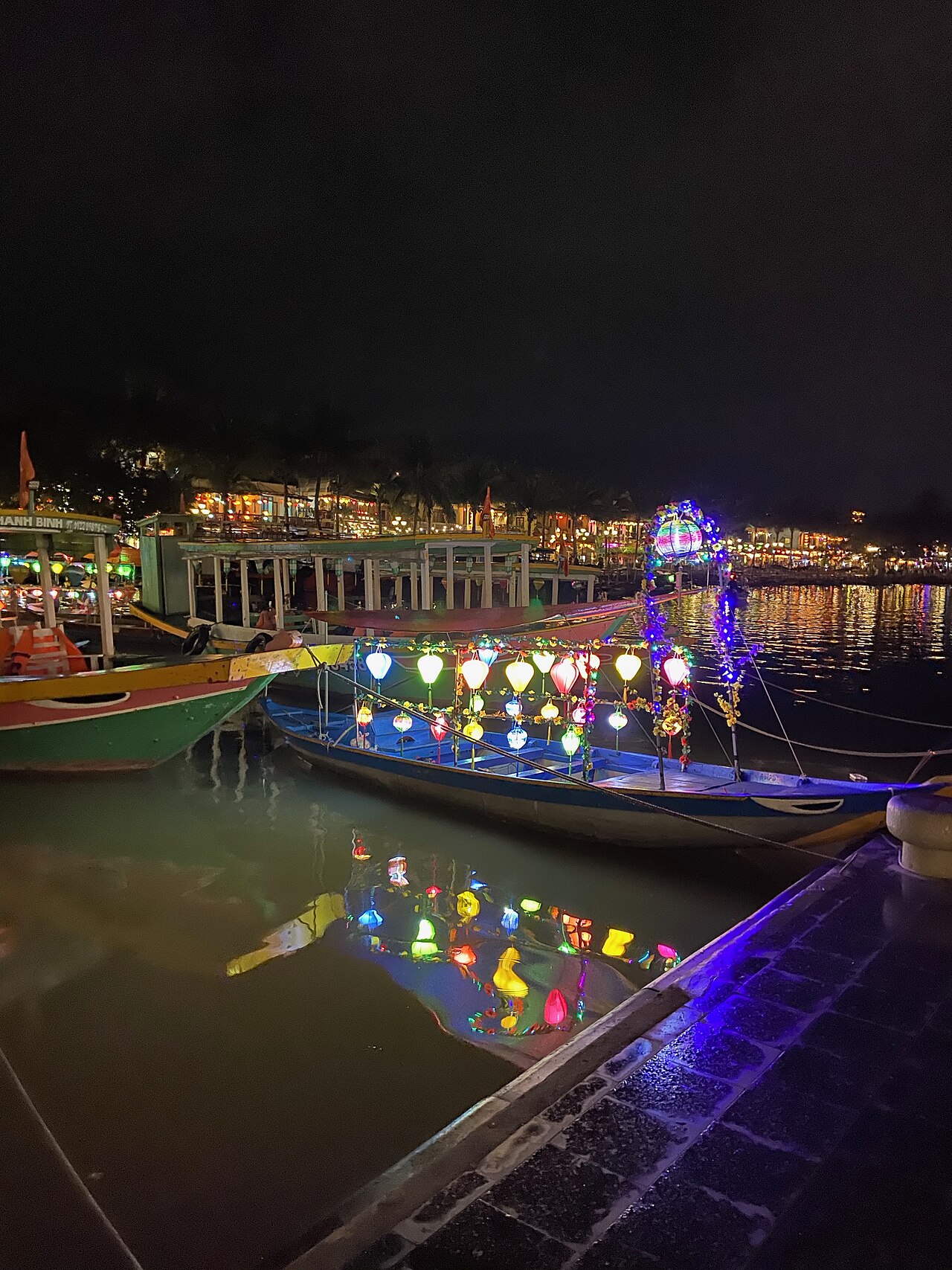
Photo: Kuroczynski / CC BY-SA 4.0 / Wikimedia Commons
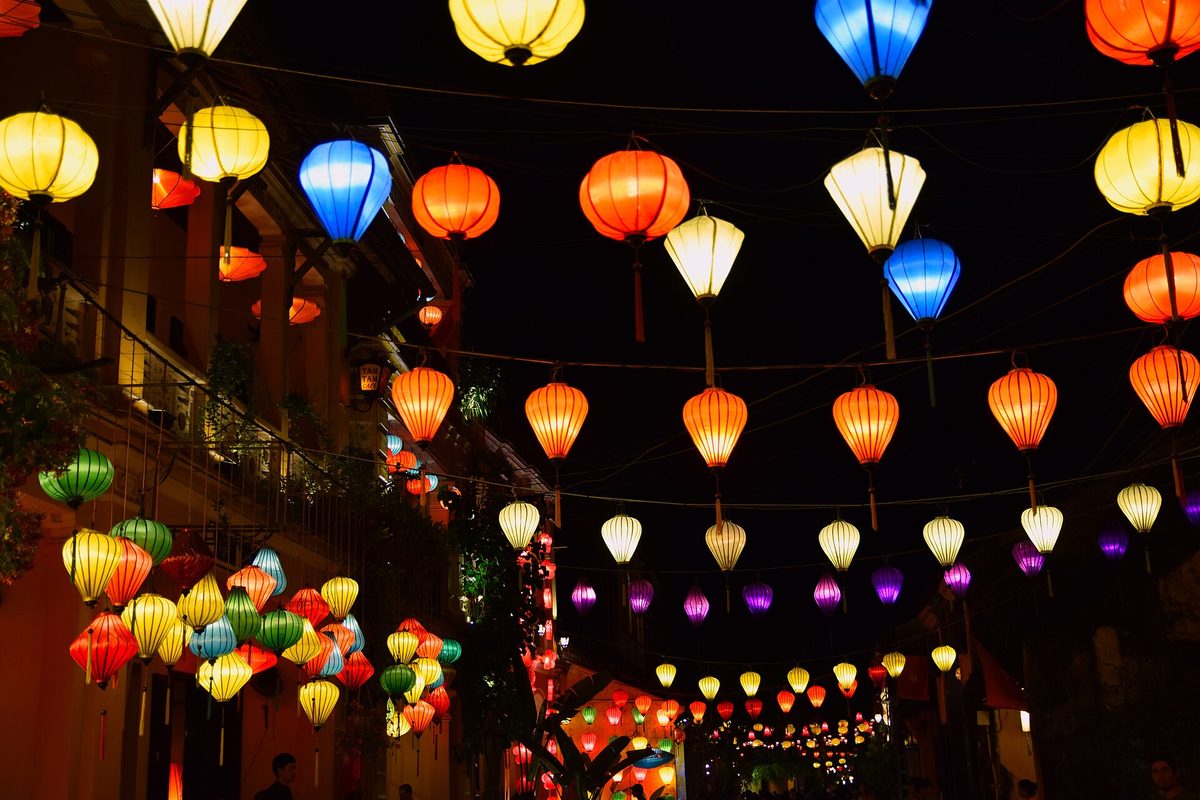
On my first night in Hoi An I turned a corner near Tran Phu Street and the electric lights just stopped. One block they were there, humming over shopfronts and scooter repair stalls, and the next block they were gone. They were replaced by the soft orange glow of paper lanterns hanging from eaves and strung across the narrow lane. I did not know yet that I had walked into the middle of the Hoi An full moon festival, the monthly ritual that makes this small riverside town feel more like a memory than a place.
That first accidental encounter is the reason I keep coming back. The Hoi An Lantern Festival is not a single spectacle staged once a year for tourists. It happens every month, on the fourteenth day of the lunar calendar. Locals have kept the custom going for decades without much fanfare. Nobody hands out a program or tells you exactly where to stand. You just notice, at some point after sunset, that the town has quietly rearranged itself around candlelight.
What the Full Moon Festival Actually Is
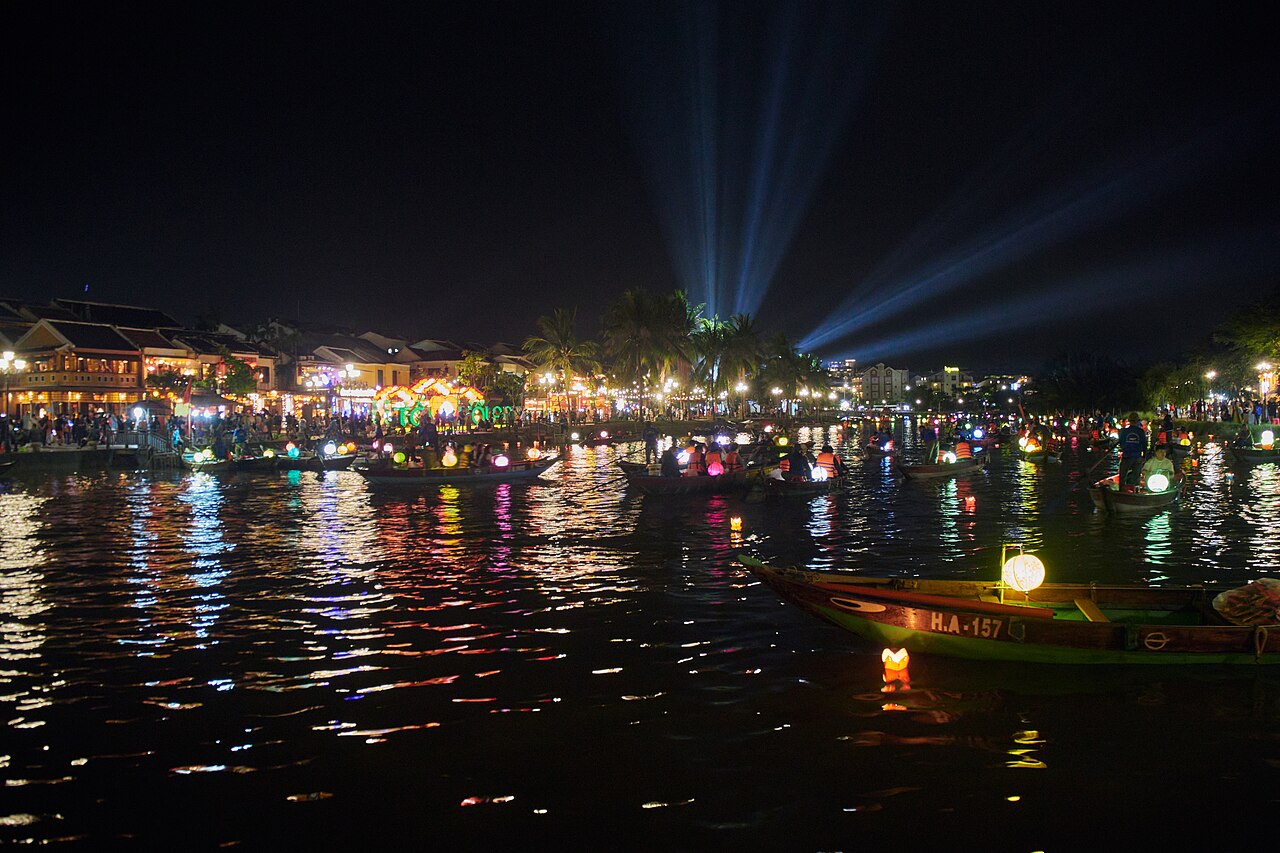
Photo: lumoplank / CC0 / Wikimedia Commons
The tradition traces back to the old trading port days, when Hoi An was one of the busiest harbors in Southeast Asia and merchant families from China, Japan, and later Europe settled along the Thu Bon river. Once a month, on the night the moon is fullest, the town switched off electric lighting and returned to lanterns, incense, and quiet streets. It was partly practical, since older buildings ran on fragile wiring, and partly ceremonial, a way of marking the lunar calendar as the town had done before electricity arrived.
Today the Hoi An full moon festival is smaller in scale but the spirit is similar. Shopkeepers switch off their signs. Cafes trade fluorescent tubes for candle jars. Families hang silk lanterns outside their doors in red, yellow, and blue. If you ask someone why they still do it, most will just shrug and say it is what their parents did.
What makes the festival worth planning a trip around is a string of small things happening at once: the darkened streets, the boats gathering on the river, the lantern sellers setting up folding tables along the bank, and the sound of a bamboo flute drifting out of a courtyard. None of it is choreographed for visitors, which is why it feels real.
When the Streetlights Switch Off
The change happens gradually, then all at once. Around six in the evening, while the sky is still fading from white to peach, shopkeepers start bringing out lanterns and hooking them onto the metal brackets outside their storefronts. By seven the ancient town is a patchwork of light. Some streets already glow orange, while others are still lit by ordinary bulbs. By eight, if you are anywhere near the old quarter on the festival night, the transformation is complete. Every alley you walk down feels like it belongs to a different century.
This is the version of Hoi An at night that people mean when they talk about the lantern town. The yellow facades of the French colonial buildings pick up the lantern light and throw it back warmer than usual. The wooden shutters on the Chinese assembly halls look like they are actually being used, the way they were two hundred years ago. Even the smell changes, with incense and grilled corn and river water replacing exhaust fumes.
If you only have one evening in town, this is the one to spend walking rather than sitting in a restaurant. A Hoi An night guide built around a fixed itinerary will only get you so far, because half the value of the evening is stumbling onto something you did not plan for.
Getting Lost on Purpose
I say this from experience, mostly because I got properly lost on my second visit. I had a rough plan: dinner near the market, a walk along the river, and a lantern boat before the crowds thickened. I made it through dinner. Then I turned down what I thought was a shortcut back toward the water and instead found myself in a lane barely wide enough for two people to pass. The walls were the color of turmeric, and lanterns were strung so low I had to duck under a string of them shaped like fish.
There was no river in sight. No map signal either, since my phone had given up somewhere between two identical looking gates. For a solid twenty minutes I just kept walking, past a woman folding paper lanterns at a low table, past an open doorway where an older man was tuning a two-string violin, and past a shrine tucked into a wall with a single stick of incense burning in front of a faded photograph. Nobody looked at me twice. This was just a Tuesday for them, even if it happened to fall on the fourteenth day of the lunar month.
Eventually I came out near Bach Dang Street, disoriented but not unhappy about it. That wrong turn ended up being the best twenty minutes of the trip. If you are visiting Hoi An old town in the evening, I would encourage a version of this. Pick one landmark you eventually want to reach, like the river or the Japanese Covered Bridge, and then take the long way there. The ancient town is small enough that you cannot get lost for long, and the alleys hold small scenes you will not find any other way.
The Ritual of Releasing Lanterns on the River
By nine, most of the traffic in town has funneled toward the water. This is where the Hoi An lantern festival night reaches its center of gravity. Vendors line the riverbank selling small floating lanterns, which are paper cups holding a candle and a folded flower shape. You buy one, light the candle with a stick handed to you by the seller, and crouch at the edge of the bank to set it on the water.
The custom behind releasing lanterns on the river in Hoi An is simple. You make a wish, quietly, as the flame catches, and let the lantern go. If it drifts and keeps burning, that is meant to be a good sign. If it tips and the flame goes out, most people just laugh, light another, and try again. I have seen grandmothers do this with the same concentration as eight year olds. Nobody treats it as a performance for cameras, even though everyone ends up taking a photo anyway.
Watching hundreds of these small lights drift downstream at once, bumping gently against each other before spreading out across the current, is the image most people carry home from Hoi An. It is worth doing from the bank at least once before you get on a boat. From ground level you see the lanterns up close, the way the paper glows differently depending on how tightly it is folded, and the way some burn down fast while others last long enough to travel fifty meters.
Along the Thu Bon at Night
Once you have released a lantern from the bank, the natural next step is getting onto the water. Small wooden boats, usually rowed by a single person, ferry visitors along the Thu Bon river lanterns route. It is a slow loop past the old quarter, under the glow of the buildings on shore, and back. Prices are negotiable and rise the later it gets, so it is worth arranging a boat earlier in the evening if you want a fair rate.
From the water, the floating lanterns Hoi An is known for take on a different character. You are no longer watching them drift away from you; you are moving through the same current they are. Look back toward the bank and you will see the lantern sellers' stalls glowing in a row, the outline of the covered bridge further down, and the reflections of a hundred paper lanterns breaking apart and reforming on the water every time a boat passes through.
Some boat rides include music, usually a recorded track of traditional Vietnamese instruments played through a small speaker. Some travelers love this and others find it a bit much given how quiet the rest of the evening feels. If atmosphere matters more to you than convenience, ask for a quieter boat, or simply request that the boatman turn the volume down. Most will happily oblige.
The Night Market Between the Bridges
Away from the river, the stretch of stalls known locally as the night market fills the space between the old quarter and the newer part of town with food, crafts, and more lanterns. This is the place to buy one to take home, since the market stalls sell sturdier versions that fold flat and pop back into shape.
Between the lantern stalls you will find grilled skewers, banh mi carts, sugarcane juice pressed on the spot, and vendors selling small trinkets. You will also find things that are distinctly local, like the pressed flower bookmarks and hand painted silk fans particular to this region. Prices are rarely fixed, and a bit of good natured bargaining is expected. For tips on navigating these interactions, see the art of market conversation.
The night market is also where the crowd thins out first as the evening wears on. This makes it a decent option if you want a calmer version of the lantern filled atmosphere after the riverbank has gotten busy. Come back around ten and you will often find the same stalls half empty, with vendors chatting among themselves rather than calling out to passersby.
Where the Lanterns Come From
It is worth spending part of a daytime visit at one of the small workshops around town where lantern making Hoi An is taught as a hands-on activity. A handful of family run shops, many tucked just off the main tourist streets, offer short lessons where you learn to bend the bamboo frame, stretch the silk or paper over it, and fold the ends properly.
The process is more involved than it looks. Bamboo strips are soaked and bent while damp, tied at the joints with thread rather than glue in traditional workshops. The fabric is stretched taut before the frame fully dries so it does not sag later. Watching someone who has done this for twenty years finish a lantern in under two minutes, after you have spent twenty minutes fumbling with your own, is a good reminder of the skill involved.
Buying directly from these workshops, rather than from a generic souvenir stall, also means more of what you spend goes to the family actually making the lanterns. If you plan to bring one home, ask about a flat-folding version, since some of the larger silk lanterns do not survive a suitcase well without a rigid frame.
Practical Notes for Visiting
The lunar calendar governs everything here, so the first thing to sort out is the date. The Hoi An lantern festival happens on the fourteenth day of each lunar month, which shifts against the standard calendar. A quick search for the current year's lunar dates, or a check with your hotel a day or two before you plan to visit, will save you from turning up on an ordinary evening.
That said, even outside the festival date itself, the old quarter has a partial lantern atmosphere most nights, since so many shops and restaurants keep their own lanterns lit year round. The full effect, with streetlights off across the whole quarter, is reserved for the festival night, but a milder version of the same mood is available on almost any evening.
Getting there is straightforward from Danang, about forty minutes away by car or scooter. Most visitors base themselves either in the old town itself or along An Bang beach. Within the old quarter, much of the center is closed to motorized traffic in the evenings, so plan to walk once you arrive.
A few practical notes worth keeping in mind: - Arrive before sunset if you want to see the transition from electric light to lanterns. - Carry small cash for lantern purchases and boat rides, since most riverside vendors do not take cards. - Wear shoes you do not mind getting a little wet near the riverbank. - Expect crowds near the two main bridges after eight, and use the side alleys to move around them. - Some restaurants raise prices slightly on festival nights given the demand.
Photographing Hoi An After Dark
If you care about photography, Hoi An old town lights are one of the more forgiving night scenes to shoot, since the lanterns themselves act as a warm, diffuse light source. A basic tripod or even a small phone stand helps, since exposure times get longer once full darkness sets in.
The most photographed vantage points, the Japanese Covered Bridge and the row of lantern stalls along the bank, are also the most crowded. If you want a shot without forty other people in the frame, arrive early or come back toward eleven when the crowd has mostly moved on. Side streets away from the main strip offer quieter compositions, like a single lantern glowing outside a closed shop or a cat asleep on a doorstep lit orange from above.
Boat based shots work well with a fast shutter to freeze the movement of the water and the drifting lanterns. A slightly longer exposure gives you the light trails that make the floating lanterns look almost liquid. Either approach works, depending on whether you want the scene to look sharp or soft.
Local Customs Worth Knowing
A little awareness goes a long way on festival night. The lantern release carries some quiet meaning for local families, so it is worth treating it with care rather than treating it purely as a photo opportunity. Take your photo, but also take the moment to actually make a wish and watch your lantern go.
Dress for the ancient town leans casual but modest, especially if your evening includes a stop at any of the assembly halls or communal houses. Removing hats and speaking quietly inside these buildings is appreciated, even if a sign does not explicitly ask for it.
Bargaining at the night market and with lantern sellers is normal, but keep it good humored. A friendly counteroffer usually gets a friendly response, while pushing too hard over a small amount of money tends to sour the exchange.
Before You Go
Hoi An at night rewards patience more than planning. The best moments I have had here, the accidental wrong turn through the alleys, the lantern that refused to stay lit until the third try, and the boatman who hummed along with his own oars, were not things I could have booked in advance. They happened because I left enough open space in the evening for something unplanned to happen.
If you are working out the best time to visit Hoi An around this festival, aim to arrive in town by late afternoon on the day of the full moon. Leave your evening loosely structured, and treat the river, the night market, and the back alleys as separate small adventures rather than one fixed itinerary. Buy a lantern from a small workshop rather than a mass stall if you can. Release one on the river even if you feel a little self conscious. And when you inevitably take a wrong turn somewhere in the old quarter, let it run a little longer before pulling out your phone to fix it. That wrong turn is usually where the town actually shows itself.
Official sources
Details worth verifying before you go — checked against:

Travel Writer & Editor
Emily Johnson writes and edits Do Travel Blog. Every guide on the site starts the same way: with a question she actually had while planning — when to book, which pass to buy, how to get from A to B without overpaying. Where a number matters, she cites the source: park tickets link to the park's own fee page, visa rules to the official consulate, ferry times to the operator. Prices get re-checked against those pages before each update, and a guide is re-dated when its numbers move. Nothing here is sponsored — she doesn't accept payment for coverage. Spotted something stale or wrong? Email hello@dotravel.blog and she'll fix it.