A Day in the Life: Buddhist Monastery Routine in Thailand
A look at the daily routine of Buddhist monks in Thailand, from pre-dawn meditation and alms rounds to mindful eating and study.
The reality of monastic life in Thailand
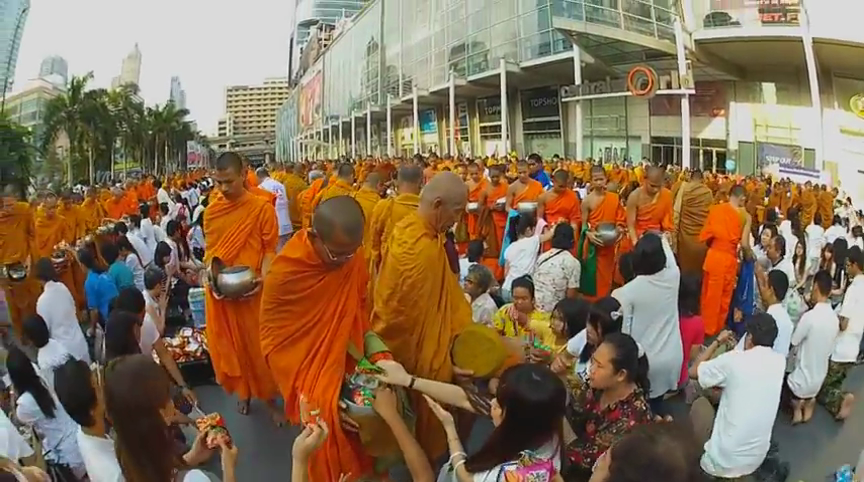
Photo: David Quine / CC BY 3.0 / Wikimedia Commons
Walking into a Buddhist monastery in Chiang Mai feels like stepping into a different pace of time. While the city outside is loud with scooters and street food, the temple grounds follow a rhythm that has stayed mostly the same for centuries. For those curious about the Buddhist monk schedule, it is more than a list of chores. It is a spiritual training ground used to build mindfulness and discipline.
Understanding the monastery daily routine requires a different perspective. In the West, we usually see a schedule as a way to be more productive. In the Thai forest tradition or city temples of Northern Thailand, the schedule is a tool for liberation. Every action, from folding a saffron robe to holding an alms bowl, is an exercise in being present. This monastic life Thailand offers is a model for anyone wanting to see how discipline can lead to mental freedom. For a deeper dive into the experience, see our Buddhist Monastery Retreat in Chiang Mai guide.
The pre-dawn awakening: 4:00 AM to 6:00 AM
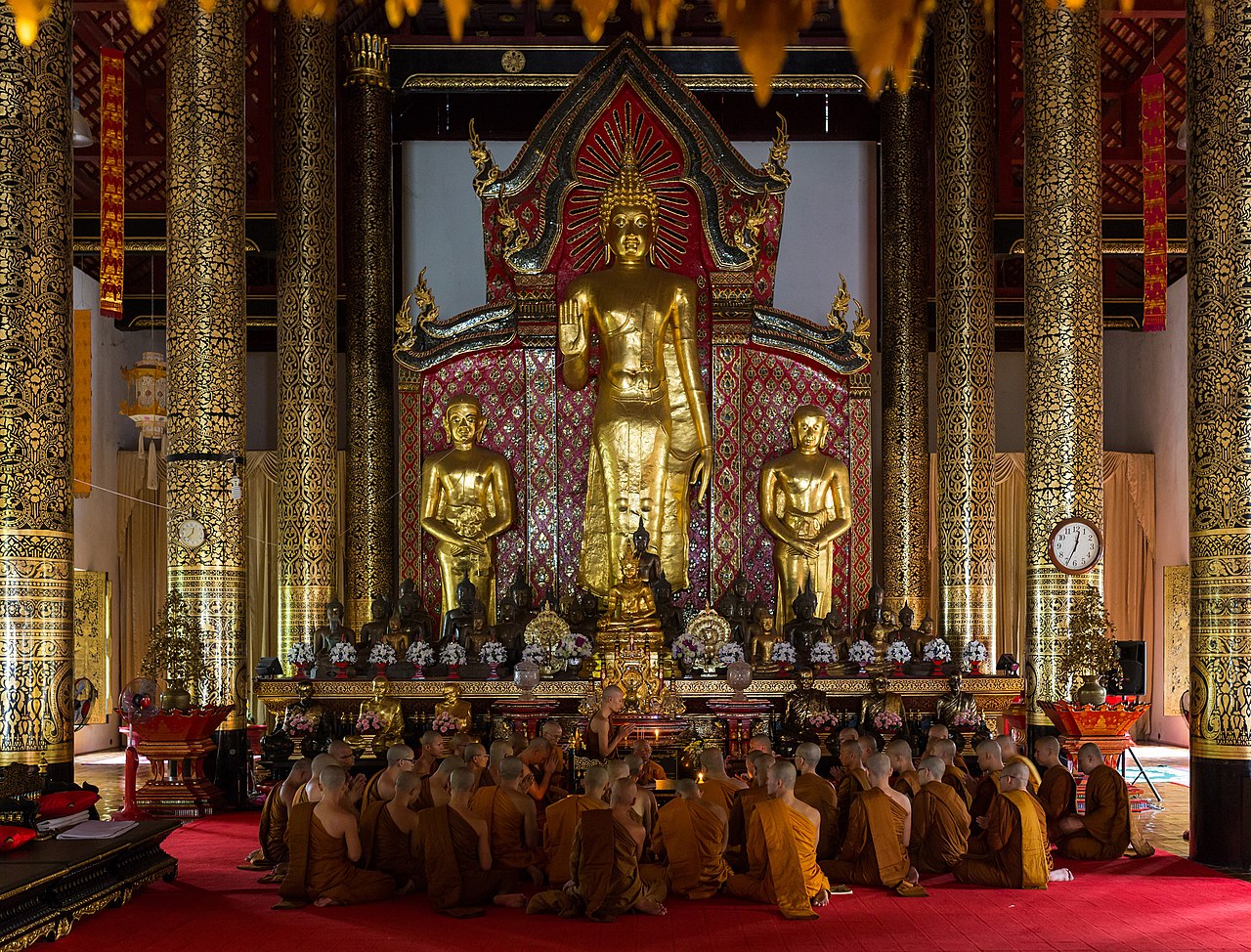
Photo: Diliff / CC BY-SA 3.0 / Wikimedia Commons
While most of Chiang Mai is still asleep, the monastery is already active. The schedule starts long before sunrise. Around 4:00 AM, a bell or a soft gong echoes through the kuttis (small monk dwellings) to start the day.
The first hour: awakening the mind
Upon waking, monks start their morning meditation routine. This is a focused effort to clear the sleep from their heads and anchor the mind in the present. This initial silence is important because it sets the tone for the day, ensuring the monk does not move through tasks on autopilot.
Chanting and communal focus
After meditation, the monks gather in the main hall for morning chanting. The rhythmic Pali chants help synchronize the community. Chanting is about the discipline of the breath and the unity of the Sangha (community) as much as it is about the words. This practice helps maintain a steady mind throughout the day.
The alms round: the connection to the community
As dawn light hits the gold spires of the temple, the monks prepare for the alms round. This is a central part of monastery life and shows the relationship between monks and laypeople.
The walk of humility
Monks walk barefoot through the village in a silent line, ordered by seniority. They carry an alms bowl, their only vessel for food. The alms round is a practice of humility. The monk does not ask for food; he simply gives laypeople a chance to make merit (Tam Bun).
Mindful interaction
During the walk, the monk stays in a state of walking meditation. Every step is a conscious movement. When a layperson places food in the bowl, the monk acknowledges the gift with a silent gesture. This is a lesson in non-attachment. The monk accepts whatever is given, whether it is a full meal or a piece of fruit, treating all offerings with respect.
Mid-morning: sustenance and study
Returning to the monastery, the monks organize the food they collected. This leads to one of the most disciplined parts of the day: eating in a monastery.
The rules of mindful eating
In the Thai tradition, monks usually eat one or two meals a day, and all eating must finish before noon. This practice of mindful eating is meant to prevent gluttony and reduce time spent on physical desires, leaving more energy for spiritual work.
Eating happens in silence. There is no conversation or distraction. The focus is on chewing and swallowing, acknowledging the effort that went into the food. This turns a biological necessity into a meditative practice.
Study and Dhamma reflection
After the meal, the late morning is for study. Monks spend hours reading the Tripitaka (the Buddhist canon) or studying with a senior abbot. This is the intellectual side of monastery life. They analyze suffering, the mind, and the path to enlightenment. This study is not academic; it is a practical application of philosophy to their own lives.
The afternoon: labor and maintenance
Monks do not spend every second in deep meditation. A large part of the monastery daily routine involves physical labor, known as "Samvada" or communal work.
Meditation in the garden
Cleaning the temple grounds, sweeping leaves from courtyards, and maintaining gardens are all forms of meditation. When a monk sweeps, he is also trying to clear the mental clutter of greed, anger, and delusion. Physical labor keeps the mind from becoming too abstract.
The discipline of service
Monastic discipline applies to how these tasks are done. There is a specific way to hold a broom and move through the space. By applying mindfulness to chores, the monks remove the gap between "sacred" meditation and "ordinary" work.
Late afternoon: deepening the practice
As the heat fades, the focus shifts back to mental training. This is often the hardest part of the day because the body is tired and the mind tends to wander.
Walking meditation
Walking meditation is a primary tool in the afternoon. Unlike the alms round, this is done on a designated path. The monk walks slowly, focusing on lifting the foot, moving forward, and placing it down. This slow movement forces the mind to stay locked into physical sensation.
Seated meditation and insight
After the walk, the monks return to seated meditation. They apply the insights from their morning study, observing the rise and fall of emotions, the feeling of the skin, and the flow of the breath. The goal is to observe the mind without judgment. This process of Vipassana (insight) is the core of the monastic day.
The evening: closing the circle
As the sun sets over the mountains of Chiang Mai, the monastery enters its final phase. The evening is for reflection, community, and preparing for tomorrow.
Evening chants and prayers
Just as the day began with chanting, it ends with a communal gathering. The evening chants help wind down the nervous system and refocus the mind on the Three Jewels: the Buddha, the Dhamma (teaching), and the Sangha. The atmosphere is peaceful.
Final reflections and rest
Before going to their kuttis, monks may reflect individually or talk with a mentor. They review where they succeeded or failed in mindfulness. If a monk became angry or distracted during afternoon labor, he notes it without self-criticism.
Rest is also disciplined. Monks sleep on simple mats to maintain detachment. The goal is to get enough sleep to function without becoming sluggish. By 9:00 PM or 10:00 PM, the monastery is silent, preparing for the 4:00 AM wake up.
The psychology of the monastic schedule
To an outsider, the monastery daily routine might seem boring. But that repetition is the point. In this routine, boredom is a teacher. When the mind has no phones, entertainment, or social variety, it is forced to face itself.
Breaking the habit of distraction
Most people spend their lives avoiding silence. The monastic life promoted here is a direct confrontation with that silence. By structuring every hour, the monastery removes the decision fatigue of modern life. A monk does not have to decide what to do; he only decides how to be while doing it. This is a powerful form of digital detox applied to the entire lifestyle.
The role of monastic discipline
Monastic discipline is not about punishment. It is about creating a container. Just as a river needs banks to flow, the human mind needs structure to move toward enlightenment. Without the schedule, the mind might drift into laziness or anxiety.
Comparing the monastery routine to modern life
Comparing the monastic day to a 9-to-5 corporate routine shows that while the goals differ, the need for structure is the same. The corporate world uses schedules for output, while the monastery uses them for awareness.
The cost of constant stimulation
Modern life is full of notifications and demands, which fragments attention. The monastery daily routine is an antidote to this. By dedicating blocks of time to single activities like eating or walking, the monks reclaim their attention.
Applying monastic principles at home
You do not need to move to Chiang Mai to use these insights. Some people adopt "micro-monastic" habits, such as meditating before checking emails or practicing mindful eating at lunch. The essence of monastic life Thailand is that quality of life depends on the attention we bring to what we do.
Common misconceptions about the monk's day
There are several myths about monastic life that confuse visitors.
Myth 1: They spend all day in silence
Silence is valued, but monks do communicate. They discuss the Dhamma, coordinate maintenance, and guide the lay community. Their communication is just intentional. They avoid idle gossip, which they see as a waste of mental energy.
Myth 2: The routine is rigid
While the framework is consistent, it changes based on the season or lunar holidays. During Uposatha days (observance days), the routine is more intensive with more meditation and stricter fasting. The schedule is a guide, not a prison.
Myth 3: It is a life of leisure
A monk sitting under a tree looks relaxed, but the mental effort of deep meditation is often more exhausting than physical labor. Fighting the urge to sleep at 4:00 AM or resisting food cravings during the alms round requires significant willpower.
The impact of the routine on mental health
The structured nature of the monastery daily routine affects the psyche. By removing the chaos of choice and competition, the mind settles.
Reducing anxiety through predictability
Anxiety often comes from an uncertain future or a regretful past. The Buddhist monk schedule anchors the practitioner in the present. When you know exactly what is happening for the next twelve hours, the mind stops racing. This creates a space for emotional healing.
Cultivating equanimity
Through early wake ups, mindful eating, and repetitive labor, monks develop equanimity. This is the ability to stay calm regardless of circumstances. Whether it is a rainy morning or a difficult meditation session, the routine teaches that all states are temporary.
Summary of the monastic day
The Buddhist monk schedule is a circle of awareness. It begins with internal focus, expands to the community through the alms round, returns to the self through study and labor, and closes with collective peace.
To integrate these lessons, you do not have to copy the whole schedule. You can identify one area of your day to transform from a chore into a meditation. Whether it is drinking coffee or walking to your car, the principles of monastic life can turn an ordinary day into a practice.
If you visit Chiang Mai, spend a few hours at a local temple. Observe the monks during their alms round or sit in the courtyard. You will see that the monastery daily routine is not about the absence of activity, but about being present in every action. For more tips on exploring the region, check out our Ultimate Guide to Northern Thailand.
Official sources
Details worth verifying before you go — checked against:

Travel Writer & Editor
Emily Johnson writes and edits Do Travel Blog. Every guide on the site starts the same way: with a question she actually had while planning — when to book, which pass to buy, how to get from A to B without overpaying. Where a number matters, she cites the source: park tickets link to the park's own fee page, visa rules to the official consulate, ferry times to the operator. Prices get re-checked against those pages before each update, and a guide is re-dated when its numbers move. Nothing here is sponsored — she doesn't accept payment for coverage. Spotted something stale or wrong? Email hello@dotravel.blog and she'll fix it.