Tokyo Capsule Hotels: Etiquette, Lockers and Booking
Planning your first stay? This Tokyo capsule hotel guide covers etiquette, lockers, and tips for a first-time experience in Japan.
Why try a capsule hotel?
Stepping off the plane at Narita or Haneda, the scale of Tokyo can feel overwhelming. Between the neon streets of Shinjuku and the crowds of Shibuya, the city is built on space optimization. Nowhere is this more obvious than in the capsule hotel. For some travelers, sleeping in a plastic tube sounds like a scene from a low-budget sci-fi movie. For others, it is the simplest way to travel.
If you are planning your first trip, a tokyo capsule hotel guide is useful because these places operate differently than standard hotels. They are not just cheap beds; they are sleeping systems built for efficiency and quiet. Whether you are a solo backpacker on a budget or a luxury traveler looking for a one-night experience, knowing the logistics before you check in will prevent the typical first-timer panic.
What exactly is a capsule hotel?
A capsule hotel provides a small, modular sleeping space (the pod) instead of a full room. You pay for a bed and a locker, not a living area. The concept started in Osaka in the 1970s for businessmen who missed the last train home. Today, they are a global phenomenon, with some offering high-tech gadgets and others sticking to utilitarian roots.
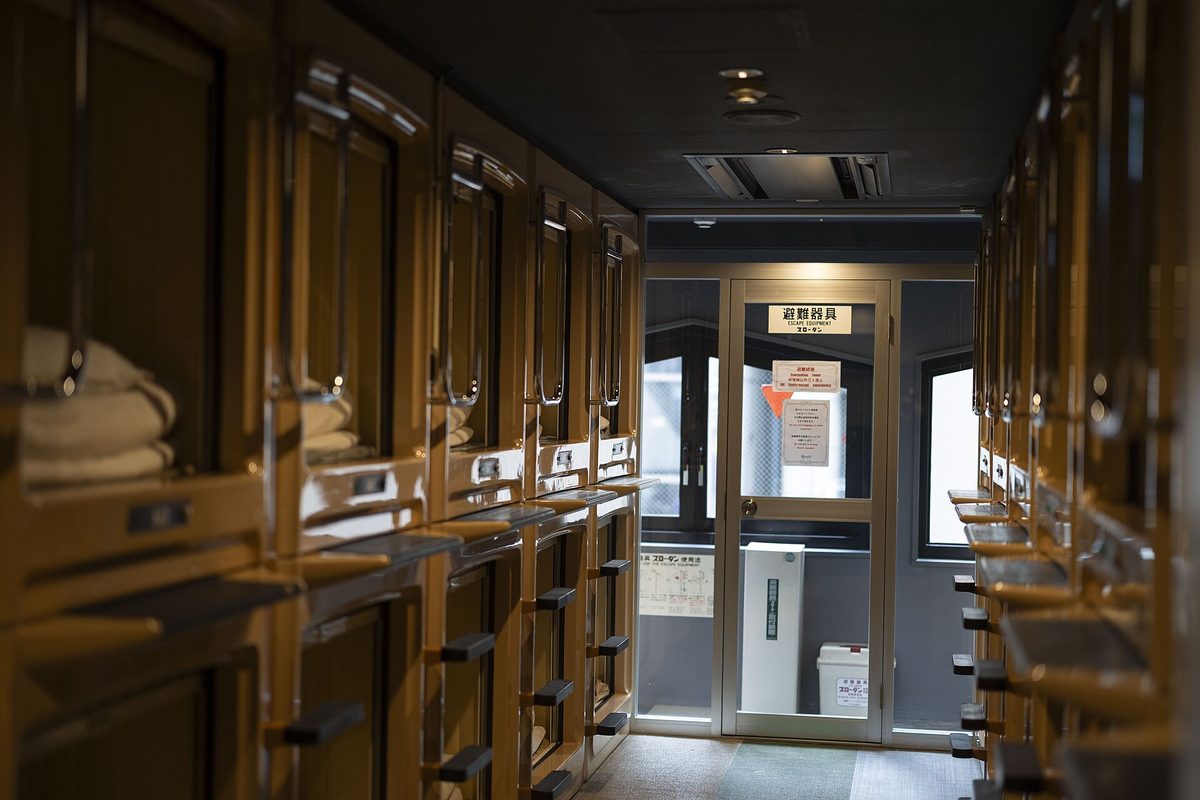
When you enter a capsule hotel, you are entering a communal space. The sleeping area is usually separated by gender. Once inside the pod area, the atmosphere is strictly quiet. You will find rows of pods stacked two or three high, separated by thin walls and a privacy blind. It is a strange but cozy experience: the hum of the ventilation, the dim blue lighting, and the sound of other travelers around you.
How capsule hotels work: The step-by-step process
For a first time capsule hotel guest, the check-in process can be confusing because it involves several steps. You do not simply get a key and go to a room. Here is the typical workflow.
Check-in and shoe removal
Almost every capsule hotel in Tokyo has a no-shoe policy. Upon entering, you will be asked to remove your outdoor shoes. Depending on the hotel, you will either leave them in a shoe locker or get a pair of hotel slippers. This keeps the sleeping area clean.
The locker system
Since your pod is only large enough for your body and a phone, you cannot keep your luggage inside it. This is where locker storage is critical. After check-in, you will be assigned a locker. This is your only private space for clothes, toiletries, and valuables.
Pro tip: If you have a massive suitcase, check if the hotel has oversized lockers. Some smaller pods in Shinjuku capsule hotels have very tight locker dimensions. If your bag is too big, you may have to pay for an additional locker or use a coin locker at the station.
Entering the pod area
Once you have your locker and slippers, you enter the capsule zone. You will be assigned a specific pod number. Most pods have a simple control panel inside to adjust the lighting and ventilation. You will find a mattress, a pillow, and a thin blanket. Some high-end pods include a reading light and a power outlet.
Capsule hotel etiquette: The unwritten rules
Because you are sharing a large room with dozens of other people, etiquette is everything. Breaking these rules may lead to a firm reprimand from the staff. For more detailed guidelines, see Tokyo Capsule Hotel Etiquette.
The rule of silence
The walls of a capsule are thin. Every whisper, rustle of a plastic bag, and phone notification echoes. This is why sleeping in a pod requires silence. Talking in the pod area is generally forbidden. If you need to chat with a travel partner, move to the lounge or the lobby.
Managing your noise
Noise is the biggest challenge for first-timers. To be a respectful guest, follow these tips: - Use noise-canceling headphones or earplugs. - Put your phone on silent or vibrate mode. - Avoid bringing loud, crinkly snack packaging into the pod. - Be mindful of how you move in your slippers; dragging your feet can be loud on the hard floors.
Respecting shared spaces
Shared bathrooms are the heart of the experience. In Japan, bath culture is highly ritualized. You will likely find a large communal bath (sento style) and individual shower stalls.
Always shower before entering the communal bath. Use the provided soap and shampoo, and leave the shower stall clean for the next person. These are high-turnover spaces, so do not linger in the shower for an hour while other guests wait in line.
The sensory experience: What to expect
Sleeping in a pod is a psychological shift. For some, it feels like a cozy cocoon; for others, it can feel slightly claustrophobic.
The visuals
Imagine a honeycomb of white and grey plastic. The lighting is usually kept low to encourage sleep. Many pods have a ceiling hatch or a sliding door that you pull shut for privacy. It is a minimalist environment that removes the distractions of a traditional hotel room.
The sounds
Despite the rules, you will hear things. You will hear the distant sound of the elevator, the click of locker doors, and the occasional snore from a neighboring pod. This is part of the experience. The ambient noise of a Tokyo capsule hotel is a blend of urban efficiency and human vulnerability.
The feel
Most pods use high-density foam mattresses. They are comfortable for the price, though they lack the plushness of a luxury hotel. The air is usually filtered and cool, which is a relief during the humid Tokyo summers.
Packing for your first capsule stay
Since you are limited by locker space and shared facilities, packing light is a necessity. Minimalist travel is a requirement here.
Essential gear - Earplugs and an Eye Mask: These are non-negotiable for a first time capsule hotel stay. They create a barrier between you and the environment. - Toiletry Kit: Most hotels provide basic soap and shampoo, but bringing your own skincare is recommended. - Quick-Dry Towel: Some hotels provide towels, but a compact, fast-drying one is useful for shared showers. - Long Charging Cable: Power outlets are usually at the head or foot of the pod. A long cable ensures you can use your phone without straining the wire. - Lightweight Pajamas: You will be moving between your pod, the locker, and the bathroom. Wear pajamas that are modest and easy to move in.
What to leave behind
Avoid bringing bulky items that will not fit in a standard locker. If you have a large wardrobe, consider using a luggage forwarding service (Takkyubin) to send your main suitcase to your next destination, leaving you with only a backpack for your capsule stay. For more tips on gear, check out our Capsule Hotel Survival Kit.
Choosing the right capsule hotel in Tokyo
Not all pods are the same. Depending on your budget, you can choose from several styles. If you are comparing options, this comparison of Tokyo's best pods can help you decide.
Budget-friendly traditional pods
These are the classic experiences. They are often located near major transit hubs like Ueno or Asakusa. They are clean and functional but lack luxury. These are perfect for those who just need a place to crash for a few hours.
Luxury and boutique capsules
Tokyo has seen a rise in luxury capsule hotels. These often feature high-end linens, designer interiors, and better lounge areas. Some even offer themed pods or advanced climate control. These are for travelers who want the novelty of a pod without sacrificing comfort.
Gender-specific vs. mixed hotels
Most capsule hotels have divided floors for men and women. Some hotels are entirely female-only, providing more security for solo female travelers. Always check the booking policy to ensure you are booking the correct section.
Common challenges and how to solve them
Even with a tokyo capsule hotel guide, some things can be stressful. Here is how to handle common issues.
Claustrophobia
If you feel trapped, you can open the pod blind or step out into the lounge. Most hotels have spacious common areas where you can stretch. If you find the pod too small, consider a "semi-double" capsule if available, which offers more shoulder room.
Sleep disturbance
If a neighbor is too loud, do not confront them directly in the pod area. Instead, notify the front desk. The staff are experts at managing the environment and will handle the situation discreetly.
Finding your way
Capsule hotels can be like mazes, especially those with multiple floors of pods. Take a photo of your pod number and the path to your locker. It is easy to get disoriented in the middle of the night when everything looks the same.
Comparing capsule hotels to hostels and hotels
To understand if a capsule is right for you, it helps to compare it to other budget options.
Capsule vs. hostel dorm
In a hostel dorm, you sleep in a bunk bed with a curtain or nothing at all. You are exposed to the room. In a capsule, you have a hard shell. This provides more privacy and a feeling of security. However, hostels are often more social, whereas capsule hotels are designed for solitude.
Capsule vs. business hotel
Business hotels (like APA or Toyoko Inn) provide a private room with a bathroom. They are more expensive but offer total privacy. A capsule is the middle ground: it is cheaper than a business hotel but more private than a hostel.
The logistics of Shinjuku capsule hotels
Shinjuku is a popular area for capsule stays because of its proximity to the world's busiest train station. However, Shinjuku capsule hotels can be tricky to find. The streets are narrow and signs can be misleading.
When staying in Shinjuku, save the hotel's address in Japanese characters on your phone. This allows you to show it to a taxi driver or a local if you get lost. Also, Shinjuku has a high density of both luxury and budget pods, so read recent reviews to ensure the facility is clean.
Final tips for a successful first night
To ensure your first experience is positive, keep these final points in mind.
First, arrive early. The check-in process takes longer than a standard hotel due to the locker and shoe systems. Giving yourself an extra 30 minutes will prevent you from feeling rushed.
Second, embrace the minimalism. The point of a capsule stay is the removal of excess. You have a bed, a locker, and a shower. Everything else is secondary. This simplicity can be a break from the sensory overload of Tokyo.
Third, be curious. Talk to the staff. They are often proud of their facility's efficiency and can give you tips on local eateries that are not in the guidebooks.
Summary checklist for first-timers
Before you head to your pod, run through this list: - [ ] Shoes removed and stored in the locker. - [ ] All valuables secured in the assigned locker. - [ ] Phone on silent mode. - [ ] Earplugs and eye mask ready. - [ ] Modest pajamas on. - [ ] Pod number noted and photo taken. - [ ] Showered before entering the communal bath.
Whether you stay for one night or a week, the capsule hotel is a window into the Japanese philosophy of space and respect. It is a lesson in how to live comfortably within small limits. By following this tokyo capsule hotel guide and respecting the local etiquette, you can turn a stressful experience into a highlight of your trip. Your first night in a pod will be a strange, quiet, and cozy introduction to Tokyo's urban design. Pack your bags light, leave your expectations at the door, and get ready to slide into your own private slice of the city.
Official sources
Details worth verifying before you go — checked against:

Travel Writer & Editor
Emily Johnson writes and edits Do Travel Blog. Every guide on the site starts the same way: with a question she actually had while planning — when to book, which pass to buy, how to get from A to B without overpaying. Where a number matters, she cites the source: park tickets link to the park's own fee page, visa rules to the official consulate, ferry times to the operator. Prices get re-checked against those pages before each update, and a guide is re-dated when its numbers move. Nothing here is sponsored — she doesn't accept payment for coverage. Spotted something stale or wrong? Email hello@dotravel.blog and she'll fix it.