How to Prepare for Acatenango Hike: Fitness & Altitude
Acatenango hike preparation starts with fitness for volcano hike and smart altitude Acatenango acclimatization. Get our training plan.
Why Prepare for the Acatenango Hike
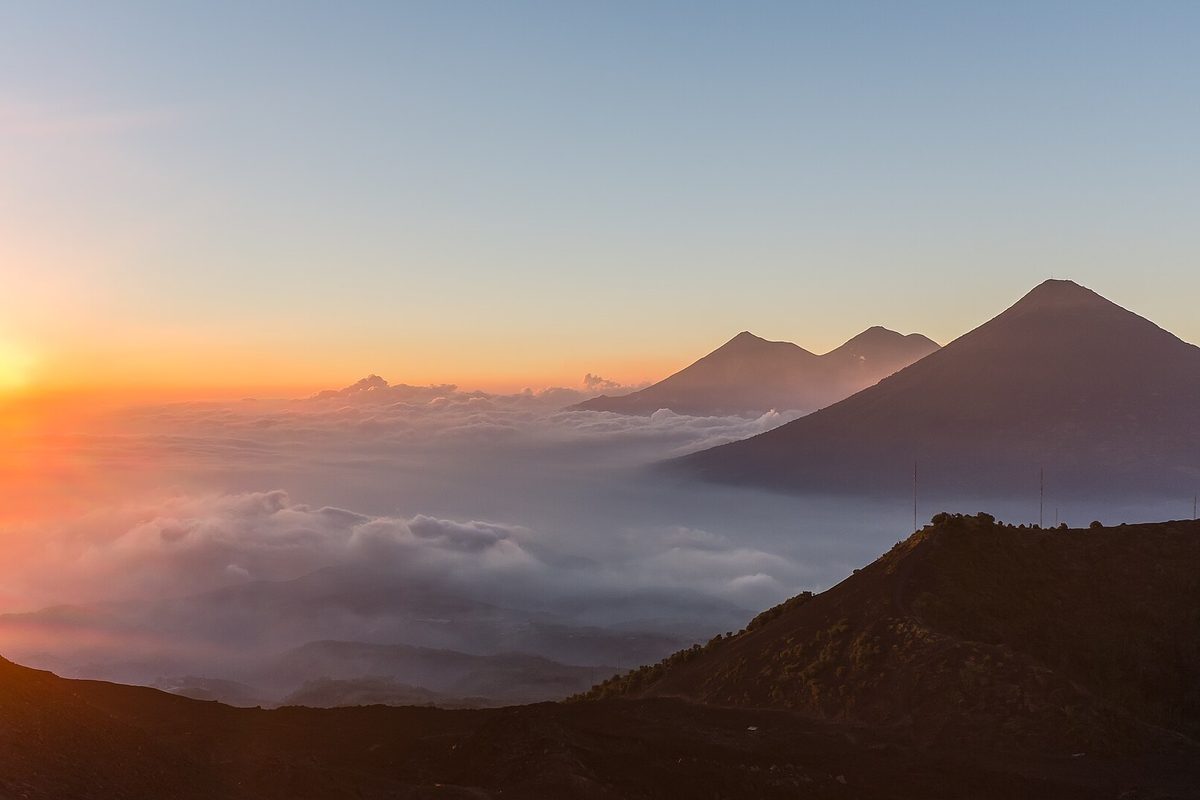
Reaching the top of Acatenango gives hikers one of Central America's most dramatic natural shows. At 3,976 meters above sea level, the summit puts you in front of Volcan de Fuego as it erupts every 10 to 15 minutes, glowing lava lighting the pre-dawn sky. That view costs a steep overnight climb that tests even experienced trekkers. The standard route from La Soledad trailhead climbs about 1,500 meters over a 6 to 8 hour ascent, with slopes of 30 to 40 percent and a final stretch above 3,500 meters in cold, thin air. Good Acatenango hike preparation needs two things: fitness for the volcano's demands and managing altitude exposure. Without hiking stamina, the constant incline drains energy before the summit ridge. Without acclimatization, less oxygen at altitude brings headaches, nausea, and slower progress. A practical plan starts with training for Acatenango at least six weeks before leaving. Do weighted hill walks, stair sessions, and back-to-back long hikes to copy trail fatigue. Also plan your acclimatization: get to Antigua (1,533 meters) three days early, or spend two nights at Lake Atitlan (1,562 meters) so the body makes more red blood cells. The next sections give exact weekly workouts and day-by-day altitude schedules so travelers can try the volcano with confidence.
The Acatenango Climb Challenge
Climb Distance Elevation and Terrain
Preparation for the Acatenango hike begins with understanding what the mountain asks of you. The standard route from La Soledad village runs 13 km round trip and climbs 1500 m from the trailhead to the crater rim. The climb is not a gentle walk. It is a single push that starts in farmland and finishes in alpine tundra above the clouds. Most groups need about 6 hours to reach base camp and 2 more to the summit, so the 13 km round trip takes a full overnight.
The ground is a real problem. Fine volcanic ash and loose scree cover the upper slopes and slide under every step. The grade between base camp and summit runs 30 to 40 percent, so there is little margin for a missed footing. Trekkers compare the ash to a treadmill of sand because momentum disappears fast.
Base camp sits at 3600 m, a cold stop before the final climb to the 3976 m summit. At that height the air holds about 62 percent of sea-level oxygen, which is why many people have pounding headaches by midnight. The summit push starts around 4 a.m. to reach the top for sunrise over the erupting Fuego volcano.
Stamina matters because the route has no flat ground to recover on. Climbing nonstop for 5 to 7 hours wears on the heart and the legs. Training for Acatenango should include weighted stair sessions and weekend hikes with 1000 m of gain. People who spend two nights in Antigua at 1500 m before the trek tend to feel better on the mountain. Without that fitness, the ash slopes turn into a wall of exhaustion.
The Overnight Summit Push
Cold temperatures define the Acatenango overnight climb. Base camp near 3,600 meters sees nighttime lows of -8 C in December to February. Proper preparation means a sleeping bag rated to -10 C and an insulated pad, because the thin air at altitude speeds heat loss. Trekkers sleep four to six hours at this elevation before summit bids. Most guided groups start the final push at 3:30 AM, climbing by headlamp for 90 minutes to the 3,976 meter summit before sunrise. This pre-dawn start is necessary, as Fuego volcano's eruptions show only in darkness. Fitness for volcano hikes must cover moving safely in freezing pre-light conditions while fatigued from the prior ascent. The final push is steep. The last 400 vertical meters rise at 35 degree slopes over loose pumice. Training for Acatenango should include hill repeats with a 10 kg pack, because heart rates exceed 140 bpm even at slow pace due to low oxygen. Because the climb gains 1,500 meters from Antigua in under 24 hours, altitude sickness prevention matters. Travelers should acclimatize in Guatemala with two days above 2,500 meters in the Western Highlands before trekking. Without this, about 30% of hikers get headaches and nausea on summit night.
Can You Hike Acatenango Without a Guide?
Legally, yes. No rule requires a guide on Acatenango, and the process for independent hikers runs through the La Soledad trailhead, where you register before starting.
What a guide actually removes is weight and judgment calls. The route from La Soledad is a single track, easy to follow in clear weather, but fog above the treeline can cut visibility to a few meters. The upper mountain is loose volcanic scree, and scree technique is what keeps you efficient there: short steps, weight directly over your feet, poles planted before you commit, and step where the hiker ahead stepped instead of testing fresh ash. One slide costs more energy than ten careful steps.
Go unguided only if you have camped above 3,000 meters before. You carry your own tent, sleeping bag, and water, and nobody else makes the weather call. Everyone else gets more from a guided group.
Building Hiking Stamina and Cardio
Cardio Plan for the Volcano Hike
Acatenango hike preparation needs a cardio schedule that builds endurance before the overnight climb. Success on the volcano depends on steady aerobic work, not a few gym visits right before the trip. Plan a six week block of cardiovascular training starting at least two months before altitude exposure on Acatenango. Running, cycling and rowing each week form the core of training for Acatenango. A balanced plan has three or four sessions: one 40 minute easy run, one 60 minute cycling loop on rolling hills, and one 30 minute rowing interval workout on a machine or open water. These build the leg strength and lung capacity needed on the 3,976 meter cone. Trekkers doing mixed sessions took fewer rest stops on the mountain than those who only walked. Volunteers should treat 150 minutes of moderate cardio per week as a minimum. That is five 30 minute sessions at 60 to 70% max heart rate. Travelers who acclimatize in Guatemala's highlands early lower their risk of acute mountain sickness at the 3,600 meter summit camp. Interval training for steep heart rate spikes comes next. After four weeks of base work, add one weekly session of 8 x 1 minute hard efforts with 2 minute easy recovery, copying the grade changes on the volcanic ash trail. Rowing and running both work. Steady volume plus sharp surges gives hikers the stamina for the long approach and the pre dawn push. This training turns Acatenango's altitude demands into a manageable rhythm instead of a survival test.
Strength Work for Steep Climbs
Effective preparation also means building lower-body power for the volcano's 1,500 meter vertical gain from base camp to summit. Hikers should program three sessions per week of bodyweight squats, walking lunges, and step-ups. A practical plan includes 3 sets of 15 squats, 10 lunges per leg, and 12 step-ups on a 45 centimeter box to mimic the irregular trails near Antigua Guatemala. These movements directly improve fitness for volcano hike demands where the slope averages 30 degrees. Core stability is equally critical when carrying a loaded pack on overnight climbs. For core work, hold front planks and side planks for 45 seconds, repeated 4 times, while wearing the same 8 to 12 kilogram backpack used on the mountain. This trains the deep abdominal muscles to protect the spine during long ascents. Functional training beats isolated gym machines for altitude readiness because the climb requires balance on loose volcanic rock, not controlled cable motions. For training for Acatenango, prioritize compound patterns like farmer carries, single-leg deadlifts, and box step-overs to build real-world strength. Hikers who train with functional movements tend to report less knee fatigue on the descent. To acclimatize, travelers should arrive 2 days early in Antigua at 1,530 meters before attempting the summit at 3,976 meters. Weekend hikes with 600 meters of elevation gain prepare the body for the overnight push. Consistent preparation reduces altitude risk and makes the sunrise view achievable.
Long Hikes and Back to Back Walks
Preparing for the Acatenango hike means training your body for what the volcano will ask before you leave. Hikers building fitness for the volcano hike should start with weighted hikes on nearby trails. Carry a pack of 8 to 12 kilograms, the usual load for an overnight ascent of Volcán Acatenango, to strengthen shoulders and legs. Build hiking stamina step by step to avoid injury. Walk 5 kilometers on flat ground in week one, then add 2 kilometers and 150 meters of elevation each week. By week eight, a 15 kilometer hike with 1,200 meters of gain matches the lower slopes. This slow build is central to training for Acatenango. Back-to-back weekend hikes copy the climb's consecutive days. On Saturday, do a 12 kilometer loop near Antigua Guatemala. On Sunday, repeat a shorter 8 kilometer route with the same loaded pack. This checks recovery and shows problem spots before the summit push. Rehearsal hikes should also test your packing list. Wear the exact boots, layering system, and backpack you plan to use. Bring the sleeping bag and cooking gear to confirm the weight sits right. Rehearsal hikes also cut gear-related delays on summit day. Travelers to Guatemala should spend two nights above 2,500 meters to acclimatize before the climb. These steps turn training into real, measurable readiness.
Acatenango Altitude Acclimatization
How Altitude Affects Your Body on Acatenango
Before the climb, travelers should know the summit reaches 3,976 meters and oxygen availability drops to about 60 percent of sea-level values. Above 3,000 meters, the thin air forces the body to adapt quickly.
Acclimatizing in Guatemala Before and During
Good acclimatization starts well before the trailhead, with time set aside to adjust to Guatemala's highland elevations. Spend at least two full days in Antigua (1,500 m) before any summit attempt. The colonial town sits at a comfortable midpoint where the body can adapt to thinner air without the stress of climbing right away. The next step is building stamina on smaller peaks. Guided climbs of Volcan Pacaya (2,500 m) or the forested slopes of Volcan Agua (3,766 m) give practical training for Acatenango and expose hikers to volcanic terrain. Do these warm-up hikes three to four days ahead so the body can recover and adapt further to altitude. Hydration is the quiet driver of success. Hikers need three to four liters of water a day, and more on climb days to offset dry mountain air. A slow ascent matters: sleep no more than 300 meters higher per day, and pause often on the steep 1,500-meter climb from base camp to summit. This measured way of preparing on Guatemala's volcanoes lowers acute mountain sickness risk and builds fitness for the hike. Travelers who skip these steps get headache, nausea, and failed summits above 3,500 meters.
Altitude Sickness Signs and Prevention
The climb demands attention to altitude effects. Hikers going from the 2,400 meter trailhead to the 3,976 meter summit gain nearly 1,600 meters in one day. Mild acute mountain sickness typically starts above 2,500 meters. The first signs are a persistent headache, nausea, and unusual fatigue that saps your energy. Headaches by base camp at 3,600 meters are common. Loss of appetite and poor sleep often follow. Do not write these off as ordinary tiredness. For prevention and medication, most plans recommend two nights in Antigua at 1,533 meters before the climb. Local guides often give coca tea, a traditional infusion of Erythroxylum coca leaves that Andean communities have used for centuries against altitude symptoms. For medicine, the Wilderness Medical Society 2019 guidelines advise acetazolamide 125 mg twice daily beginning 24 hours before the climb. Ibuprofen 400 mg eases vascular headache. Drinking 3 liters a day and keeping a slow pace that preserves fitness for volcano hike conditioning lower the risk. Altitude sickness prevention goes past pharmaceuticals to structured pre-trip conditioning. Severe signs call for descent: confusion, loss of coordination, or breathlessness at rest indicate high-altitude cerebral edema. The only real treatment is immediate descent of at least 500 meters. Training for Acatenango should cover rehearsing emergency retreat routes with guides. Night summit attempts must turn back when severe signs show, since waiting kills. Proper preparation balances ambition with clear symptom thresholds.
Training Timeline and Weekly Plan
8 Week Acatenango Training Schedule
A structured 8 week Acatenango hike preparation plan separates successful summit attempts from miserable turnarounds. The phased approach below builds fitness for volcano hike demands without overtraining. For a typical December high-season departure from Antigua, trainees should start on the first Monday of October to align the taper with arrival week.
Phase 1, weeks 1 through 4, establishes base cardio. Trainers should complete three 40 minute sessions weekly at 65 to 70 percent of maximum heart rate, using a mix of brisk walking, cycling, and stair climbing with a 5 kilogram pack. One longer weekend walk of 90 minutes on rolling terrain builds endurance. This period develops the aerobic base needed for altitude exposure later, when the trail climbs from La Soledad at 2,400 meters to base camp at 3,600 meters.
Phase 2, weeks 5 to 7, shifts to strength and real hikes. Two gym sessions focus on loaded squats, step-ups, and core work with a 10 kilogram pack. The weekend long hike grows to 3 hours with at least 500 meters of elevation gain, simulating the trail profile. Training for Acatenango must include back-to-back hike days; by week 6 a 1,000 meter gain on Volcan de Agua near Antigua conditions legs for the overnight push.
Phase 3, week 8, is a taper. Volume drops by 50 percent, with only light walks and mobility work. This is the time to acclimatize by spending two nights in Antigua at 1,500 meters before the climb, plus day trips to 3,000 meters. Proper Acatenango hike preparation leaves the body rested and ready for the 3,976 meter summit push, with hydration at 3 liters daily.
Tapering and Final Week Prep
In the last week before departure, preparation means cutting volume while keeping intensity. A climber who finished an 8-week training for Acatenango plan should drop long hikes from 15 to 7 kilometers, but do two short steep hill repeats at 400 meter gain. This keeps fitness for the volcano hike without building fatigue. Fresh legs on summit night beat last-minute gains. Gear checks are required. Verify a -10 Celsius sleeping bag, insulated layers, microspikes, and a headlamp with spare batteries. The packing list must include 3 liters of water and high-energy snacks. Travelers who spend two nights in Antigua at 1,500 meters start the altitude adjustment early. Confirm permits 48 hours prior. Rest is part of training. Target eight hours of sleep and carb load 7 to 10 grams per kilogram daily using black beans, tortillas, and quinoa. Hiking stamina from months of work fails if glycogen runs low on the 3,976 meter summit push. Light stretching replaces effort. Mental readiness ends prep. The overnight climb takes 4 to 6 hours on volcanic sand from base camp at 3,600 meters. Visualize pole plants and breathing rhythm. Altitude fatigue is normal, so plan slow steps. A calm practical mindset turns training into summit success.
Wrapping Up Acatenango Hike Prep
Good Acatenango hike preparation comes down to two things: getting in shape and planning for the altitude. Fitness work should start at least twelve weeks before departure. A solid routine is three weekly cardio sessions of brisk uphill walks or 45-minute bike rides, plus two strength workouts for quads, glutes and core. Stamina builds when you train with a 12 kg backpack and do longer weekend climbs each week, going from 300 m of gain to over 1,200 m by week ten. Since the trail is steep, add two weekly 20-minute stair climbs with that same 12 kg load.
The altitude on Acatenango tests fit hikers because the summit hits 3,976 m and the trailhead is near 2,300 m. Plan at least three nights in Antigua (1,530 m) to acclimatize before the climb. Drink 3 liters a day and keep a slow pace of 300 vertical meters per hour to cut headache risk. Groups that build altitude buffer in the prior week tend to turn back less often. Above 3,500 m the thin air hits harder, with oxygen saturation near 60 percent of sea-level levels.
An early start is what separates those who reach the top from those who stop at the ridge. A hiker who begins an eight-week program in January meets the March dry season with stronger legs and lungs. A Guatemala tour with fitness support adds structure. Outfits like Tropicana Acatenango carry heavy gear on mules and run stamina checks in Antigua. Their six-week plan includes two shakedown hikes on Volcan de Agua (3,760 m) to test breathing at height.
Train with weight, arrive early and let local guides handle logistics so you can watch the crater instead of worrying about the climb.
Official sources
Details worth verifying before you go — checked against:
Travel Writer & Editor
Emily Johnson writes and edits Do Travel Blog. Every guide on the site starts the same way: with a question she actually had while planning — when to book, which pass to buy, how to get from A to B without overpaying. Where a number matters, she cites the source: park tickets link to the park's own fee page, visa rules to the official consulate, ferry times to the operator. Prices get re-checked against those pages before each update, and a guide is re-dated when its numbers move. Nothing here is sponsored — she doesn't accept payment for coverage. Spotted something stale or wrong? Email hello@dotravel.blog and she'll fix it.