A Night in the Sahara near Merzouga: Campfire and Tea
Spend a Merzouga Sahara night enjoying Bedouin campfire Morocco traditions, Sahara desert tea ceremonies, stargazing, and your Merzouga desert camp adventure.
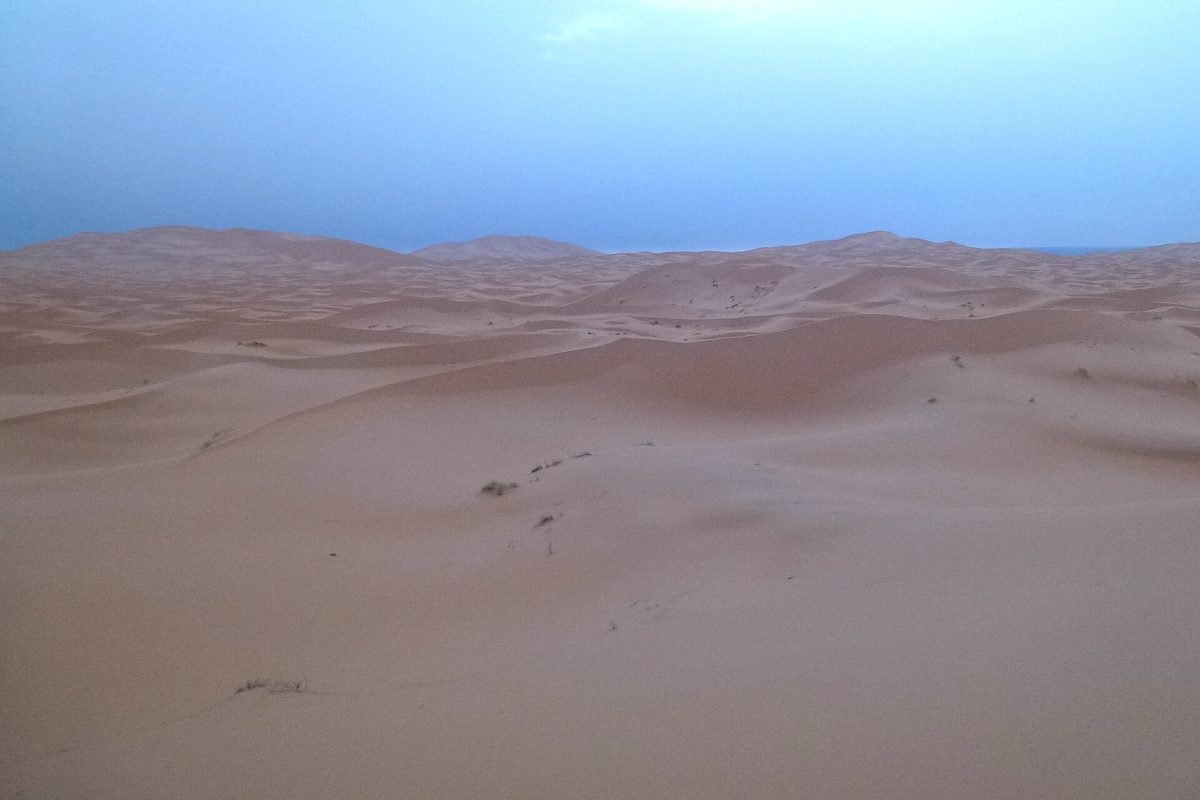
What a night in Merzouga's Sahara is like
At night the Sahara goes quiet and the stars come out. The temperature falls from 40 C at noon to near freezing after midnight, and a distant fire glows orange against the black. Travelers who spend a night in Merzouga start with a slow camel trek from the village to the Erg Chebbi dunes. The trip takes about 90 minutes and ends as the sun drops behind 150 meter sand walls. This guide covers the Bedouin campfire travelers sit around, the steps of Sahara desert tea, and what desert camping actually involves. A Merzouga desert camp usually sits in a hollow between dunes, with ten to twenty wool tents set in a circle. After dinner of tagine cooked in buried coals, elders pour mint tea in three rounds, each from a set height that shows respect. The focus here is cultural and practical. Readers will see how Bedouin culture shapes the evening, why Sahara stargazing is so clear with no light pollution, and what to bring for the cold. Later sections explain how to reach Merzouga on the N13 road from Errachidia, when to go (October to April is best), and what a night in the Sahara costs. The goal is to give first-time visitors real detail so the experience feels planned rather than lucky.
Getting to Merzouga and Preparing for the Desert
Getting to Merzouga from Marrakech or Fes
Getting to Merzouga takes planning. From Marrakech the road runs about 560 kilometers southeast and takes 9 to 10 hours by car. From Fes the distance is shorter, around 470 kilometers, and the drive takes 7 to 8 hours. You can take CTM or Supratours buses, book a private transfer, rent a car, or join a multi day tour. Many tours pair the transfer with a camp booking so guests reach the camels without delay. Choosing a guided tour or self drive changes the whole Merzouga Sahara night experience. A guided 3 day tour from Marrakech costs 400 to 600 euros and covers a Bedouin campfire dinner and tent. Self drive lets you stop at Ait Benhaddou or the Todra Gorge, but the driver still covers the last 50 kilometers of paved road to Hassi Labied at the dune edge. Parking sits at the dune edge where camp staff take the luggage. The Atlas Mountains are the hard part of the trip. The Tizi n'Tichka pass climbs to 2,260 meters with tight switchbacks and patchy fog. Fill the tank in Marrakech or Ouarzazate because fuel gets scarce east of the city. Stop 30 minutes in Ouarzazate at the 200 kilometer mark to check the brakes and drink water. The best time to visit Merzouga is October through April when roads are clear and the heat stays below 30 degrees. Summer drives risk overheating above 40 degrees. On arrival the evening routine takes over. A camel trek runs from the parking area to the camp where mint tea is poured at sunset. After the fire is lit, guests watch Sahara stargazing before sleeping under wool blankets. A night in the Sahara deserves time for the slow final mile. Camp operators confirm pickup by phone.
When to visit Merzouga for a Sahara night
The Erg Chebbi dunes have sharp seasonal weather swings that shape any Merzouga Sahara night. From June to August daytime heat passes 45°C and nights stay near 28°C, which makes a campfire gathering too hot. December through February brings 18°C days but nighttime drops to -2°C, so sleeping out here needs real insulation. The best window for Merzouga visitors is October to November and March to April. Days run 24-30°C and nights 10-15°C, good for a Merzouga camel trek and campfire tea without summer heat or winter cold at a desert camp. Sahara stargazing changes through the year. October to March has the crispest air, though the Milky Way's bright core sits below the horizon then — winter belongs to Orion and the Pleiades. The galactic core shows from late April through September, with the Perseid peak around August 12 as a bonus. December gives the longest night for slow travelers. For those figuring out how to get to Merzouga, book a local camp that respects Bedouin culture. Budget about 400-600 dirhams per person to spend a night in the Sahara with tea and dinner included.
Packing for an overnight stay in the sand dunes
Travelers planning to spend a night in the Sahara near Merzouga must prepare for sharp temperature drops after sunset. Here, October highs above 30°C fall to winter lows near 5°C. January averages 4°C at the camp. A Merzouga Sahara night at a desert camp requires warm layers: thermal base, fleece, compressible insulated jacket. Wool beanie and liner gloves retain heat while you enjoy the campfire. Even in the best months (March-April), a down vest suits pre-dawn chill. Footwear matters on shifting sand. For the Merzouga camel trek from Hassi Labied to the dune line, closed-toe shoes block thorns and hot grains. The trek starts at dusk to avoid daytime heat. Lightweight boots with ankle support, like Salomon XA Pro 3D, help navigate the 150m-high dunes. Open sandals work inside camp but not for trekking. Regulars pack wool socks to sleep in as sand loses warmth after midnight. Sand dunes overnight essentials extend beyond clothes. A red-light headlamp preserves night vision for Sahara stargazing between tents. A cotton shemagh shields face from wind gusts. Hosts share mint tea after embers fade; carry a 1-liter bottle to hydrate. Most camp hosts provide mattresses and blankets, but a 0°C sleeping bag ensures rest. Spare batteries matter for Sahara stargazing shots. A 10,000mAh power bank recharges camera batteries. Camera gear records the stark scene. The Merzouga Sahara night shows the Milky Way core April-September with zero light pollution. A mirrorless camera with 14mm f/2.8 lens on carbon-fiber tripod captures 20-second exposures. Use manual focus set to infinity for sharp stars. An intervalometer builds star trails. Before sleep, photograph the campfire ritual and the pouring of tea, rooted in local hospitality.
The camel trek to your Merzouga desert camp
Most travelers begin their desert stay with a Merzouga camel trek that leaves Hassi Labied around 17:00 in October, timed for the sunset near 18:45. The route crosses about 1.8 kilometers of dunes, with ridges rising to 150 meters. Berber handlers lead the camels at a steady 3 km/h, so riders can take in the shifting light without hurrying. The best Merzouga visits skip summer highs above 45 C and aim for October or March, when evenings sit near 25 C. This trek is the standard link between the paved road and open sand, since 4x4 vehicles stop at the dune edge.
On the walk you feel a gentle rocking gait and soft steps on sand. Riders should tie a scarf against the wind and bring water, because the 45 to 60 minute trip has no shade. The trek is central to desert camping in Morocco and introduces Bedouin culture through handlers' stories of routes used for centuries. As the sun falls, the dunes go orange and the first stars show up, a preview of Sahara stargazing. First-time riders find the saddle steady, though gripping the front handle helps on steep crest climbs.
The Merzouga desert camp reads like a settled encampment of woven goat-hair tents around a fire pit. It is the base for a night in the Sahara, with lanterns marking the sleeping quarters. Handlers help you down and pour warm mint tea, the start of the Bedouin campfire ritual that defines a Merzouga Sahara night. The two-minute walk to the tents moves travelers into a welcoming hub. Guests meet for the evening meal soon after, but the trek itself stays the memorable entry to desert camping in Morocco.
Arriving at Your Merzouga Desert Camp
Luxury camps vs traditional Berber hospitality
Travelers planning to spend a night in the Sahara near Merzouga will find two distinct styles of camp accommodations. Luxury tented camps sit along the eastern edge of the Erg Chebbi dunes and have raised beds, private bathrooms, and solar lighting. A Merzouga Sahara night in these camps costs about 120 to 300 euros, usually with a sunset camel trek included. Traditional Berber camps use wool tents with thin mattresses on the sand and shared squat toilets. These rustic stays cost 30 to 60 euros and include tagine dinner and campfire tea after a campfire gathering. The difference between a luxury desert camp and a rustic one is price and authenticity. Family-run camps led by local Sahrawi hosts keep Bedouin culture alive with evening songs, hand-poured mint tea, and storytelling under the open sky. A luxury camp shields guests from the weather but loses some of the desert's raw pace. For Berber hospitality authenticity, a small camp of six to eight tents puts you in direct contact with hosts who have lived among the dunes for generations. The tradeoff is budget and comfort. Be clear-eyed about utilities, too: standard camps mean solar charging for phones, no Wi-Fi, shared squat toilets, and no hot showers. Luxury camps add en-suite bathrooms, running water, and outlets in the tent, sometimes with an advertised Wi-Fi signal that reaches the terrace and nowhere else. Book to the reality, not the amenity list. Rustic setups give up hot showers for clear Sahara stargazing and a stronger sense of place. The best months for these nights are October through April, when it drops to 5-15°C after dark. Knowing how to get to Merzouga via Erfoud or Rissani helps travelers pick the right camp for their pace.
What happens when you reach a Merzouga desert camp
Travelers reaching camp after a sunset Merzouga camel trek from Hassi Labied typically arrive around 6:30 pm in the cooler months from October to April, the period most visitors pick for comfortable nights. The camp manager, often a local Sahrawi guide, welcomes each guest and shows them the tea ritual. Before the evening campfire gathering, hosts serve three small glasses of sweet mint tea. They pour from a traditional long-spouted pot held about 30 centimeters high to aerate the liquid and build a light foam. This greeting starts an authentic Bedouin culture exchange that defines the Merzouga Sahara night. The tent setup at a standard camp balances simplicity with needed comfort. Most camps near the dunes provide shared nomadic wool tents or private canvas shelters with thick foam mattresses, wool blankets rated for temperatures down to 5 degrees Celsius, and a small solar lantern. Communal amenities center on a low wooden table and a stone fire pit where the evening campfire session later unfolds. Basic toilet facilities vary: traditional camps offer squat toilets behind the dunes, while upgraded options such as the Azawad Luxury Camp provide western-style bathrooms with running water. Guests should note that electricity is limited to solar charges for phones only. What to expect Merzouga when settling in includes a short orientation on desert etiquette and the night's schedule. Camp staff explain that the Merzouga Sahara night will bring a tagine dinner, music, and Sahara stargazing thanks to near-zero light pollution across the erg. Those who spend the night under these conditions wake to silence broken only by wind. The arrival experience sets a practical, warm tone, the foundation of a respectful desert stay.
Nomadic and Bedouin culture in the Sahara
The Bedouin culture of the Sahara near Merzouga reflects centuries of nomadic traditions shaped by this dune sea. The Ait Atta and Maaqil families have moved herds across southeastern Morocco for over 400 years, adapting to extreme heat and sparse water. When guests arrive at camp, they see a social structure built on hospitality and oral history. Evening gatherings around a campfire center on music and storytelling. The imzad, a one-stringed violin, and the bendir drum accompany poems that trace genealogies and desert survival tactics from the 1800s. Storytelling is a record of nomadic laws and trade routes between Merzouga and Timbuktu. During a Merzouga Sahara night, elders recount star navigation methods used for Sahara stargazing and camel caravans. The tea ritual follows, with three pours of mint tea that stand for love, peace, and life. Visitors joining a trek should observe respectful behavior: ask before photographing individuals, use the right hand for tea, and avoid stepping over someone seated near the fire. Camp etiquette also means leaving no litter and accepting offered bread without refusal, as rejection can offend the host. Understanding these Bedouin culture norms helps travelers spend a night there with genuine connection rather than superficial spectacle. The best months to visit align with cooler months from October to April, when cultural evenings feel most authentic.
Night temperatures and staying warm under the stars
After sunset in Merzouga the temperature drops hard, and travelers who sleep in the Sahara need to plan for it. A camel trek into the dunes ends at a desert camp where the temperature falls fast once the sun is gone. From December to February nighttime lows often reach 0 degrees Celsius, and near the Algerian border January can dip to minus 5. Summer nights from June to August stay milder at 20 to 25 degrees, but after days near 40 the breeze still feels cool.
Set expectations about the tents themselves: no camp heats them, and the traditional wool and goat-hair kind are drafty by design. Thick blankets, two or three per bed, are the heating system — and that holds in luxury tents too, which are warmer, not warm.
Desert camping in Morocco means camps hand out thick wool blankets and layered Berber rugs. A standard camp gives two or three heavy blankets per bed, and upgraded tents may have a wood-burning stove using local acacia. The Bedouin campfire tradition is the center of warmth. After a cup of mint tea, guests sit by the flames and share stories of Bedouin culture. Many camps also put heated stones wrapped in cloth at the foot of the bed, a simple trick that stays warm for hours.
For Sahara stargazing, prepare before you go. Bring a thermal base layer and a reclining chair so you can watch the Milky Way without neck strain. A thermos of mint tea keeps your hands warm on late sessions. The best time in Merzouga for mild nights is March to May and September to November, when temperatures settle around 10 to 15 degrees. Travelers who want to know how to get to Merzouga should book a transfer from Erfoud, 50 kilometers away, and arrive before dusk to set up before the cold comes.
Bedouin Campfire Traditions in Morocco
Gathering around a Bedouin campfire in Morocco
Travelers who spend a night in the Sahara near Merzouga find the Bedouin campfire central to desert hospitality in Morocco. In the dunes, which rise to 150 meters, hosts build fires after the evening camel trek returns, usually around 19:30 in winter. They lay the fire in a shallow stone ring using dry tamarisk and aromatic juniper gathered from the eastern dune slopes. This wood burns clean and steady, a practical habit refined over centuries of desert camping in Morocco. The build takes about 20 minutes.
Communal seating follows a clear, welcoming rhythm. Guests sit on woven kilims and sheepskins in a circle about three meters wide, and most camp fires host 8 to 12 people.
Stories and music by the fire in Erg Chebbi
As the sun sets over the Erg Chebbi dunes, a Merzouga Sahara night begins with travelers and hosts gathering around a low wooden bench. The Bedouin campfire Morocco tradition centers on oral storytelling that carries practical desert knowledge. Elders recount campfire stories, tales where a single narrative encodes routes to wells, warnings about sandstorms, and the history of local families. These stories teach younger generations about Bedouin culture. The telling is often multilingual and multigenerational: a grandfather narrates while a grandson translates for the guests, and on good nights the evening closes when the youngest child stands to recite a poem learned from his father. Music follows the stories. Traditional instruments include the three-stringed guembri, the frame drum called bendir, and metal castanets known as qraqeb. Songs often follow a call-and-response structure, with melodies dating to the 1800s still performed at these camps.
Stargazing in the Sahara after the fire
After the last cups of tea are poured and the campfire shrinks to embers, the Merzouga Sahara night reveals its second act. Sahara stargazing becomes the main focus for travelers sleeping at a remote camp. The Erg Chebbi dunes sit far from any major city, so they have almost no light pollution. Night sky brightness here rivals official dark-sky reserves. Without artificial glow, the human eye adapts fully within 30 minutes. Astronomy enthusiasts note that the Milky Way is most visible when the galactic center rises above the horizon. From Merzouga, the core shows best from late April through September, with July and August giving the most vertical view around local midnight. During a new moon, the band stretches from southeast to northwest in an unbroken river of light. Best viewing times depend on season and fire schedule. In winter, after the camel trek returns and the fire dies down by 21:00 to 23:00, guests can observe Orion and the Pleiades. In summer, heat delays bedtime, so stargazing often starts after 23:00 when the Milky Way is highest. Plan on at least 60 minutes of uninterrupted darkness to appreciate the show. Beyond the galaxy, the dry desert air reduces turbulence, so Jupiter's bands and Saturn's rings are clear through a small telescope. Local Bedouin culture includes naming constellations that guided caravans, adding a human layer to the astronomy. For those mapping how to get to Merzouga, the best stargazing window is the new-moon week of August, when the campfire's glow no longer competes with the stars.
Sleeping at a Bedouin camp in the Sahara
A night at a desert camp near Merzouga usually follows a simple plan. Most camps set up low wooden frames with thick foam mattresses and wool blankets from Tafilalt cooperatives. Some hosts, though, offer the older arrangement: mattresses and worn carpets laid straight on the cool sand with no tent between you and the sky, and they will show you how to tuck the blanket edges against the wind. Either way the sand holds the day's heat long after midnight - the top layer cools while the grains beneath stay warm - and on still nights you can hear it trickle down the ridge. After the campfire gathering ends, guests go to private or shared tents by 21:30, and camps keep quiet from 22:00 so the desert stays silent. People who sleep out here notice the calm fast. The dunes block sound, and family camps like Auberge Takojt dim the lantern to show lights-out. Safety is not a big worry. Permanent camps hire night watchmen, and Hassi Labied village is only 5 km away. Travelers on a camel trek reach camp before dusk, so finding their tent is easy. The quiet connects to something older. Sitting with the last embers of the earlier fire, visitors join a rhythm Bedouin culture has kept for centuries. By 23:00, Sahara stargazing takes over, and the Milky Way shows clearly with no light pollution. The best window runs October to April, with nights near 8 C, so the shared silence feels close rather than empty. This lets slow travelers rest while respecting the land. Camp operators serve mint tea at 06:30 before the drive back, ending a safe and grounded stay.
The Sahara Desert Tea Ceremony
Mint tea as a gesture of Berber hospitality
At a Merzouga desert camp, the Sahara tea ritual is a refreshment and a social act. Berber hosts use mint tea to show trust and welcome to any traveler spending a night in the Sahara. Among Berber communities of the erg, a sweet mint tea offer marks the guest as accepted. The preparation follows a fixed choreography: gunpowder green tea, spearmint, and sugar boiled in a long-spouted teapot, then poured from height to build foam. A saying recited across Bedouin culture attaches to the three glasses: the first glass is as gentle as life, the second as strong as love, the third as bitter as death. Refusing a pour insults the hosts, so guests at a Bedouin campfire in Morocco accept at least one glass, though three is traditional. Elders like to add another line while they pour: a guest is a gift, not a burden. The tea rhythm often structures the evening after a camel trek, bridging dinner and stargazing. The tea context is practical and symbolic. Mint grows in oasis gardens near Merzouga, and the sweet brew counters desert chill after sunset. For those planning desert camping in Morocco, the ceremony is a fixed itinerary point, included in nearly every overnight package. The best time for Merzouga visits runs October through April, when camps operate fully. Knowing how to get to Merzouga via Errachidia or Zagora helps travelers arrive for the fire and first glass of a Merzouga Sahara night.
How to make Sahara desert tea step by step
The Sahara desert tea ceremony sets the evening pace at every camp, turning a plain drink into a core part of Bedouin culture. After a camel trek across the sand, travelers sit by a campfire and watch the host set the pot near the flames. The ritual is about timing more than caffeine: most camps pour the first round around 20:00, soon after the tagine dinner, and keep going through the Merzouga Sahara night until guests head to their tents for Sahara stargazing. The ingredient list is short but exact. The authentic brew uses Chinese gunpowder green tea, a grade brought to North Africa since the 1700s, with fresh nanah mint picked in nearby oases like Tafilalt. Cooks add a lot of sugar, about 3 to 4 cubes per glass. The brewing starts with water boiled in a heavy brass kettle over olive-wood coals. The host rinses one teaspoon of tea with hot water to drop the dust, pours that out, then adds mint and sugar. After three minutes the tea is ready. The pour from height tradition shows the maker's skill. The server stands with the kettle about 30 centimeters above the small glasses and streams the tea in a thin arc to add air and raise a pale foam.
Drinking tea and sharing stories by the fire
When a camel trek ends, travelers meet back at camp where the tea ritual anchors the evening. Around a low campfire, the host brews three rounds of sweet mint tea and pours each from 30 centimeters up to form foam. A common saying holds that the first glass is bitter like life, the second strong like love, the third gentle like death, and Bedouin families have repeated it for generations. As the fire crackles, talk shifts to practical desert knowledge. Bedouin guides tell how they navigate by the stars, a method tied to Sahara stargazing traditions that steered caravans for centuries. Visitors hear about seasonal migrations and learn when Merzouga travelers skip the summer heat, usually March to May when nights stay near 15 Celsius. Guides also explain how to get to Merzouga on the paved road from Erfoud, useful for anyone planning a budget night in the Sahara. Passing the glass around the fire closes the gap between strangers. Each guest takes the cup with the right hand, the standard sign of respect around the fire. With shared laughter and quiet translation, the Merzouga Sahara night lets foreign visitors and local hosts connect, and the plain ritual does more for cross-cultural understanding than any planned activity.
Watching the Sahara sunrise with morning tea
Before dawn at camp, the call to climb the dunes arrives around 5:30 AM in winter months. The sun itself clears the horizon near 7:05 AM in mid-December and by 5:40 AM in late June, so the winter climb happens in full dark and the summer one in first light. Guests leave sleeping bags as the temperature hovers near 4 degrees Celsius and begin the 15 minute ascent on foot, using wooden poles for balance on the steep sand slopes. The early climb of dunes rewards travelers with a 360 degree view of the Moroccan Sahara before first light. The Sahara sunrise carries deep weight in Bedouin culture. For the families who run these camps, the dawn marks a renewal and a moment to give quiet thanks. As the sun clears the horizon, the sand shifts from indigo to gold within minutes, a daily transformation that has guided nomadic schedules for centuries. The morning mint tea ceremony follows the descent. A typical preparation uses 15 grams of Chinese gunpowder green tea, a handful of fresh nanah mint, and 30 grams of sugar per pot, boiled over a small propane stove when the campfire embers have cooled. The host pours from a height of 30 centimeters to build foam, serving three small glasses that grow progressively sweeter. This morning ritual closes the overnight stay with warmth. Reflecting on the night, visitors recall the Merzouga Sahara night that began with a sunset camel trek at 6 PM and continued with Sahara stargazing under a cloudless sky. The whole experience blends the glow of fire, the silence of dunes, and the hospitality of local hosts into a memory that outlasts the journey. The best months for the dawn climb are October through April, when nights are cold but clear.
Taking the night's memories home
A night in the Merzouga Sahara compresses hours of sensory memory under the open sky. Travelers who sleep near the Erg Chebbi dunes wake to silence as wind moves across sand walls that reach 150 meters. The slow travel payoff is switching off devices to watch the Milky Way, a stargazing show that costs nothing and suits a tight budget. A short camel trek at golden hour links the road to camp and sets a calm evening pace. The heart of desert camping in Morocco is the Bedouin campfire tradition. After sunset, hosts burn driftwood and palm fronds while baking bread in the embers. Sahara desert tea uses a strict three glass pour, each sweeter and lifted high to build foam, a Bedouin hospitality ritual going back centuries. Guests share dates and nuts as the fire crackles, a kind of closeness no hotel lounge offers. Booking a Merzouga desert camp through a registered operator is the practical next move. For the best time in Merzouga, aim for October through April when nights are cool but not freezing. A package with camel trek, dinner and woven tent sleep runs 400 to 700 Moroccan dirhams per person, which fits a slow travel budget. Knowing how to get to Merzouga by the 8 hour overnight bus from Fes or a transfer from Errachidia keeps plans relaxed. The last step is picking a date and reserving a camp that respects the land. Pack a warm layer for temperatures that fall to 5 Celsius, carry a refillable bottle, and leave time in the plan to sit by the embers. A Merzouga Sahara night stays with you long after the dunes leave your sight.
Official sources
Details worth verifying before you go — checked against:
Travel Writer & Editor
Emily Johnson writes and edits Do Travel Blog. Every guide on the site starts the same way: with a question she actually had while planning — when to book, which pass to buy, how to get from A to B without overpaying. Where a number matters, she cites the source: park tickets link to the park's own fee page, visa rules to the official consulate, ferry times to the operator. Prices get re-checked against those pages before each update, and a guide is re-dated when its numbers move. Nothing here is sponsored — she doesn't accept payment for coverage. Spotted something stale or wrong? Email hello@dotravel.blog and she'll fix it.