Amazon River Routes: A Guide to Rainforest Exploration
Plan your Amazon river routes with our guide to rainforest travel, including itineraries from Manaus to Iquitos and jungle logistics.
Navigating Amazon River Routes
Planning a trip through the Amazon basin is different from visiting a European city. The river is the only road and the primary means of survival for many people. When you start planning, you have to accept that the river dictates the schedule. The Amazon is a system of tributaries and main channels that shift with the seasons. Knowing these Amazon river routes is what prevents you from getting stranded in a remote jungle outpost.
Most travelers start at one of two gateways: Manaus in Brazil or Iquitos in Peru. Both provide access to the rainforest, but the experiences differ. Manaus is the center of the Brazilian Amazon, where the Rio Negro and the Solimões meet. Iquitos is the largest city in the world that cannot be reached by road, making it a hub for exploration in the western basin.
The Primary Gateways: Manaus and Iquitos
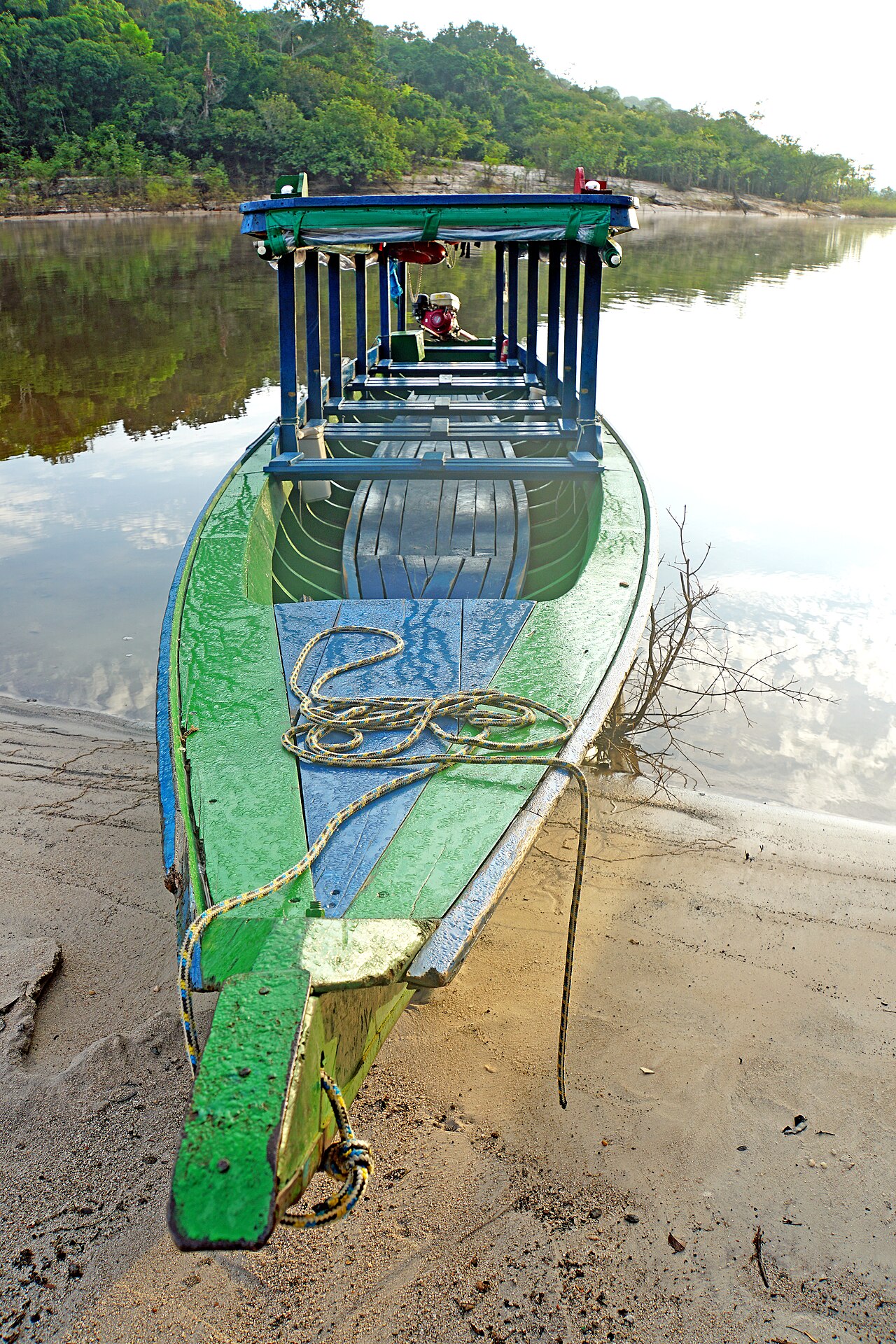
Photo: Dennis G. Jarvis / CC BY-SA 2.0 / Wikimedia Commons
Manaus: The Brazilian Hub
Manaus is the main starting point for the central and eastern Amazon basin. The city mixes industrial port activity with 19th-century architecture, such as the Teatro Amazonas. Most river cruises begin here.
If you plan your route from Manaus, you will likely choose between the Rio Negro and the Solimões. The Rio Negro is an acidic, blackwater river with fewer mosquitoes and mirrored reflections of the canopy. The Solimões is a whitewater river, rich in sediment, which supports different wildlife. Most itineraries include the Meeting of the Waters, where the two rivers run side-by-side for miles without mixing.
Iquitos: The Peruvian Gateway
Iquitos is the gateway to the Peruvian Amazon and is necessary for a Manaus to Iquitos itinerary. Because there are no roads into Iquitos, all cargo and tourists arrive by plane or boat. This isolation has kept a frontier atmosphere.
From Iquitos, routes usually lead into the Pacaya-Samiria National Reserve. This area is known for its biodiversity and is best explored via small riverboats or expedition cruises. Unlike the large ships in Manaus, Iquitos uses smaller vessels that can enter narrow tributaries where elusive wildlife lives. For tips on spotting these creatures, see our Amazon Wildlife Guide.
Planning a Manaus to Iquitos Itinerary
Crossing the Amazon from Brazil to Peru is an ambitious, multi-week expedition that requires specific logistics.
The Slow Boat Experience
The most common way to travel between these hubs is the public riverboat system. These are multi-decked vessels where locals travel with livestock, produce, and family. For adventurous travelers, this is a test of endurance. You usually sleep in a hammock on the deck, eat simple meals provided by the crew, and watch the jungle pass for days.
This route involves multiple stops at river ports. You will see the daily rhythm of the Amazon basin, including the loading of goods and the markets of small villages. It is a slow process that often takes two to three weeks.
Expedition Cruises and Private Charters
Expedition cruises are better for those who want comfort and guides. These vessels have air-conditioned cabins, prepared meals, and naturalist guides who explain the ecology of the tributaries. A private charter offers more flexibility, allowing you to stop for bird watching or to visit indigenous communities not on standard maps.
Seasonal Logistics: High Water vs. Low Water
Timing is critical. The Amazon has a high water season and a low water season rather than traditional winter or summer. For more on timing your trips, check our Seasonal Nature Travel guide.
The High Water Season (December to May)
During the high water season, river levels can rise by over 30 feet. This creates a flooded forest called an "igapó." The advantage is accessibility. Boats can sail deep into the forest, and you can glide through the treetops in a canoe. This is a good time for wildlife spotting because animals concentrate on smaller areas of dry land.
However, this season brings more rain. The rainforest is always humid, but this period has intense daily downpours. Your packing list should include waterproof gear and a flexible schedule, as currents can be stronger.
The Low Water Season (June to November)
As waters recede, the river reveals white sand beaches and land that was submerged. This is the best time for hiking. Many routes navigable in February become impassable in August, so your itinerary must be adjusted to avoid shallow channels.
Low water is also better for seeing caimans and river dolphins, as they are pushed into deeper pools. However, the heat is more intense. When booking river transport, make sure your vessel is rated for shallow waters.
Amazon River Transport: Modes and Methods
You will use different transport methods depending on your budget. No single boat covers every need.
Large Riverboats
These are used for long-haul transport between cities like Manaus and Belém or Iquitos and Pucallpa. They are affordable but offer little privacy. If you use this route, bring your own hammock, a mosquito net, and a power bank, as electricity is limited.
Speedboats (Lanchas)
Lanchas are motorized boats used for shorter distances. They are faster than large riverboats but can be bumpy and loud. They are the main way to get from a port to a jungle lodge.
Canoes and Pirogues
For the final leg of exploration, you will use traditional canoes. These are essential for narrow tributaries where engines cannot go. This allows for a silent approach to wildlife.
Tributaries and the Amazon Basin
To understand the river system, you have to look beyond the main stem. The basin is a network of thousands of smaller rivers with different chemistry.
The Blackwater Rivers
Rivers like the Rio Negro are blackwater because of tannins from decaying vegetation. This makes the water look like strong tea. Blackwater rivers are more acidic, which inhibits mosquito larvae, making them more comfortable for travelers. They also host fish and plants adapted to low pH levels.
The Whitewater Rivers
Rivers like the Solimões or the Madeira are whitewater rivers. They are sandy-colored due to sediment from the Andes mountains. These rivers are nutrient-rich, supporting more aquatic life and lush vegetation. Most agricultural activity happens along whitewater routes.
The Clearwater Rivers
Clearwater rivers, such as the Tapajós, are less common. They originate in the Brazilian highlands and carry little sediment. They are known for turquoise waters and white sand beaches.
Essential Jungle Expedition Logistics
Planning a multi-region expedition requires more detail than a standard vacation. The environment is indifferent to your presence.
Health and Safety
Consult a travel clinic before starting any river trip. Yellow fever vaccination is often required, and malaria prophylaxis is recommended. You also need a first-aid kit with broad-spectrum antibiotics, antifungal creams for jungle rot, and insect repellent with DEET or Picaridin.
Gear and Packing
Avoid cotton. It absorbs moisture and does not dry in 90 percent humidity, which leads to chafing. Pack lightweight, quick-dry synthetic fabrics. Long sleeves and pants protect against insects and thorns. For a detailed list of essentials, refer to our Nature Travel Gear Guide.
Essential gear includes:
- A headlamp with extra batteries.
- A dry bag for electronics and passports.
- Binoculars for the canopy.
- A water filtration system to reduce plastic waste.
Communication and Navigation
Do not rely on GPS or cell service. Once you leave Manaus or Iquitos, you are off the grid. Some cruises have satellite internet, but it is slow. Carry a physical map and ensure your guides have a satellite phone or Garmin inReach device.
Multi-Region Expedition Strategy
To see the diversity of the Amazon, you cannot stay in one spot. A multi-region strategy links the Brazilian and Peruvian sectors.
Phase 1: The Brazilian Entry
Start in Manaus. Spend three days in the city and at the Meeting of the Waters. Then, take a 4-day river cruise up the Rio Negro to visit the Anavilhanas Archipelago to see the blackwater ecosystem.
Phase 2: The Transit
Fly from Manaus to Iquitos or take the long river route. If you take the river, prepare for a shift from the managed tourism of Brazil to the frontier of Peru.
Phase 3: The Peruvian Deep Dive
In Iquitos, move toward the Pacaya-Samiria National Reserve. Spend a week in a remote lodge or on a small boat. Focus on tributaries to find pink river dolphins and giant otters.
The Role of Local Guides
No amount of planning can replace a local guide. The jungle is a wall of green, and without a trained eye, you will miss most things. Local guides know the currents and wildlife patterns.
Choosing the Right Guide
Look for guides certified by ecological organizations or those with ties to ribereño communities. A good guide explains the relationship between the animals and the environment and ensures you do not disrupt the ecosystem.
Ethical Exploration
Avoid tours that promise animal handling, such as holding sloths or caimans. These practices are often cruel. Ethical operators focus on observation from a distance. Support community-led tourism where profits go to the villagers.
Budgeting for the Amazon Basin
Costs vary by transport and accommodation.
The Budget Route
Using public riverboats and hostels in Manaus and Iquitos, you can spend 30-50 USD per day. This route is physically demanding and limits wildlife access to main shipping channels.
The Mid-Range Route
Combining small-group tours, boutique lodges, and lanchas costs 100-200 USD per day. This balances comfort and adventure.
The Luxury Route
High-end expedition cruises can cost 500-1,000 USD per day. These provide safety, dining, and expert guides, removing the logistical stress.
Final Logistics Checklist
To make sure your expedition runs smoothly, work through this checklist:
- Passport and Visas: Check requirements for Brazil and Peru.
- Vaccination Record: Carry your Yellow Fever certificate.
- Currency: Carry small denominations of Brazilian Reais and Peruvian Soles. ATMs are rare outside main cities.
- Water Gear: Test your dry bags and ensure rain gear is breathable.
- Itinerary Flexibility: Leave two buffer days for weather or mechanical delays.
Summary of Amazon River Exploration
Exploring the Amazon requires adaptation. Whether you are traveling between Manaus and Iquitos or paddling a tributary in Pacaya-Samiria, the river is your guide. By understanding seasonal shifts and choosing the right transport, you can experience the basin.
Decide on your gateway first. For the scale and mirrored waters of the Rio Negro, start in Manaus. For the roadless frontier of the western jungle, head to Iquitos. Once you choose a hub, map your tributaries, pack synthetic gear, and prepare for the trip.
Frequently asked questions
When is the best time to visit the Amazon rainforest?
It depends on what you want to do. In the high water season (December to May), rivers rise by over 30 feet and boats sail deep into the flooded forest, with animals concentrated on small patches of dry land. The low water season (June to November) is better for hiking and for spotting caimans and river dolphins, though the heat is more intense and some February routes become impassable by August.
How long does the boat trip from Manaus to Iquitos take?
Two to three weeks on the public riverboat system, which is why it counts as an expedition rather than a transfer. You sleep in a hammock on deck, eat simple crew meals, and stop at river ports along the way. If that pace does not appeal, fly between the two hubs or book an expedition cruise with air-conditioned cabins and naturalist guides.
How much does an Amazon river trip cost per day?
Three levels, based on our budget breakdown. The budget route with public riverboats and hostels in Manaus and Iquitos runs 30-50 USD per day. The mid-range route with small-group tours, boutique lodges, and lanchas costs 100-200 USD. High-end expedition cruises run 500-1,000 USD per day but cover safety, dining, and expert guides.
Do I need a yellow fever vaccine for the Amazon?
Often, yes — the guide recommends consulting a travel clinic before any river trip, and you should carry your Yellow Fever certificate with your passport. Malaria prophylaxis is also recommended, and your first-aid kit should include broad-spectrum antibiotics, antifungal cream for jungle rot, and insect repellent with DEET or Picaridin.
Official sources
Details worth verifying before you go — checked against:
Travel Writer & Editor
Emily Johnson writes and edits Do Travel Blog. Every guide on the site starts the same way: with a question she actually had while planning — when to book, which pass to buy, how to get from A to B without overpaying. Where a number matters, she cites the source: park tickets link to the park's own fee page, visa rules to the official consulate, ferry times to the operator. Prices get re-checked against those pages before each update, and a guide is re-dated when its numbers move. Nothing here is sponsored — she doesn't accept payment for coverage. Spotted something stale or wrong? Email hello@dotravel.blog and she'll fix it.