Gili Islands Beyond the Day Trips: A Long-Stay Guide
What the Gili islands look like when the day-trip boats leave: quiet corners, local warungs, and how a long stay changes everything.
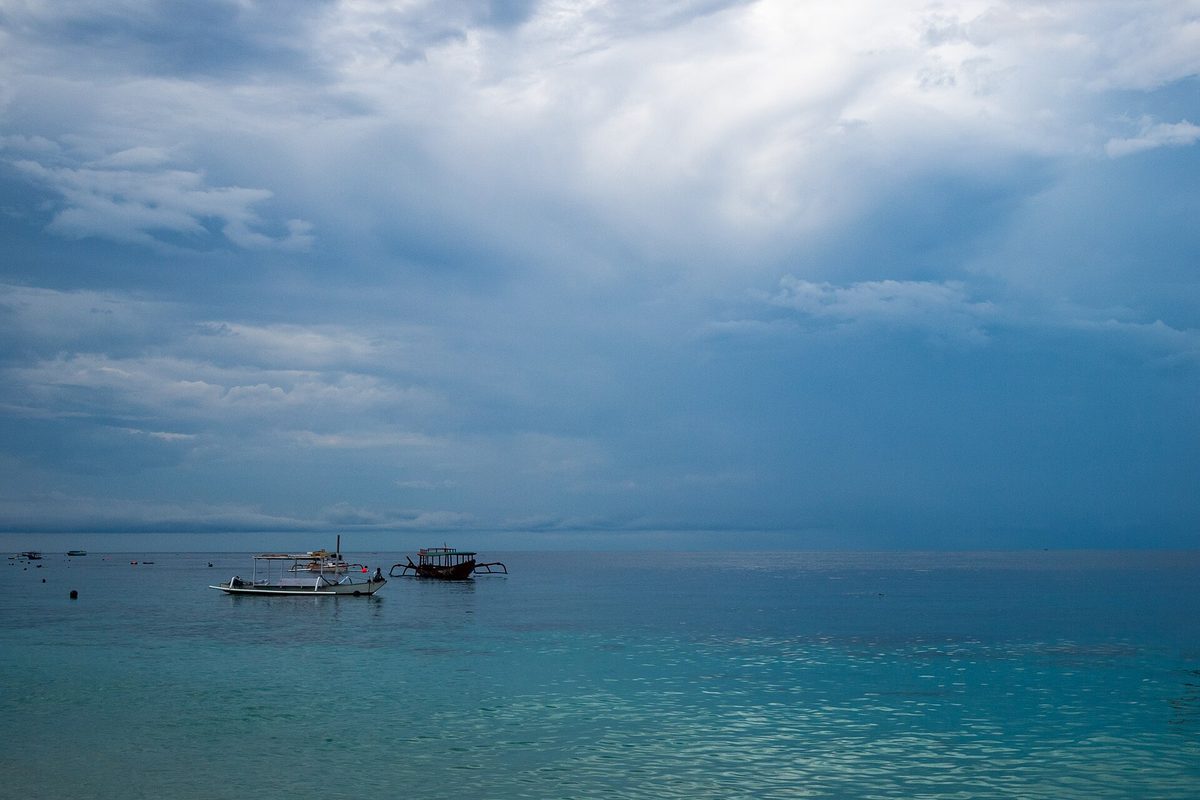
The Gili Islands' hidden gems aren't places, not exactly. They're hours — the stretch after the last day-trip boat pulls out, and the early window before the first one arrives — and you only get them if you're still on the island when the crowd isn't. Stay a week instead of a day and you effectively visit two different islands on one ferry budget.
What actually changes when the day boats leave
Most visitors meet the Gilis on a schedule built in Bali or Lombok. Fast boats deliver them mid-morning and collect them by late afternoon, so the islands' public face is calibrated to people with five hours to fill.
The islands themselves never learned to run on that clock. There are no cars or motorbikes here at all — transport is bicycles and horse carts — and the day follows the tide and the sun instead of a timetable. The first 48 hours are genuinely disorienting; you keep checking a watch the island ignores. The shift I mean is bigger than relaxation, though. It's the move from treating the place as a backdrop to being treated, eventually, as a resident who pays by the week. Island time isn't a marketing phrase here. It's the operating system.
Morning is the asset worth planning around. In this part of Indonesia, rain tends to arrive in heavy afternoon bursts rather than all-day soaks, so the dependable outdoor window runs from roughly 6 AM to 11 AM. A long stay lets you invert the day tripper's rhythm: snorkel and cycle the perimeter early, eat when the light goes flat, and give the rain its slot instead of resenting it. A warung table during a downpour — nasi goreng and a hot ginger tea called wedang jahe — has beaten every sunset bar I've tried on these islands.
Is the long stay worth the money?
Usually, if you pick your month. Across Indonesia, the wet season brings real discounts — my rainy-season island hopping guide covers the regional pattern month by month — while the dry months of May to September trade price for near-guaranteed boat schedules. There's no free month. There's only choosing which risk you'd rather carry, weather or cost.
My opinion, for what it's worth: the long stay is wasted on the main strips. If your week depends on fast wifi, dive-school socializing and a bar with a schedule, base yourself where those are advertised and have a great trip — seriously. But the version of the Gilis people mean when they say "hidden gems" starts a bicycle ride away from all of it, and it asks for a loose plan and the patience to be bored for a day or two first. If that trade doesn't appeal, book the day trip with a clear conscience. The islands don't resent you for it.
What does storm season do to a long stay?
There's a catch, and it's weather. The monsoon usually runs from November to March, and when it settles in, the sea between Lombok and Bali turns hostile. These islands are small and entirely boat-dependent: when the harbor master — the Syahbandar — declares the water unsafe, nothing legal leaves and nothing arrives either.
For a day tripper, that's a ruined holiday. For a long-stayer, it's an inconvenience you can absorb, if you set up for it. The mechanics matter: ATMs die when the power cuts, and power cuts are common in storms; the internet rides microwave links from the mainland and degrades in exactly the weather that strands you; supply boats stop, so menus shrink with the fresh produce. During mass cancellations, rooms fill within hours, which tells you how thin the bed base is in any season — book flexible rates. Keep some cash, keep a power bank, and keep a 24-to-48-hour buffer between your last boat and any international flight. I've written a full storm survival guide for the ugly version of this.
Where do the quiet corners actually come from?
Not from a list, and that's the honest answer. A secret spot published with coordinates is a queue with better scenery. What a long stay buys is idle time, and idle time is the only condition under which quiet corners find you: the cove you reached because the beach path kept going, water clear enough to see sand ripples three meters down; a fisherman who spent an afternoon explaining how the currents shift with the season; the second morning at the same warung, when the owner stops translating the menu and just brings you what's good.
That last one is the whole trick. Familiarity is the hidden gem. You can't buy it and you can't rush it — you can only accrue it, at the speed of a bicycle. A slow travel detour taught me this by force, once; an extended stay repeats the lesson on purpose.
What I'd actually do with a week
- Book the first and last nights near the harbor and play the middle loose. Storm reshuffles are cheaper with slack.
- Do the physical stuff — snorkeling, the perimeter ride — before 11 AM.
- Pick one warung and become a regular on purpose. It's the fastest route to the second version of this place.
- Leave one full day unplanned. Detours only fit into empty space.
When the boats finally ran after my first storm stranding here, I expected relief and felt something closer to reluctance. That's the thing the day trip can't sell you: the islands are only slow because nobody on them is in a hurry, and after a while, that includes you.
Official sources
Details worth verifying before you go — checked against:

Travel Writer & Editor
Emily Johnson writes and edits Do Travel Blog. Every guide on the site starts the same way: with a question she actually had while planning — when to book, which pass to buy, how to get from A to B without overpaying. Where a number matters, she cites the source: park tickets link to the park's own fee page, visa rules to the official consulate, ferry times to the operator. Prices get re-checked against those pages before each update, and a guide is re-dated when its numbers move. Nothing here is sponsored — she doesn't accept payment for coverage. Spotted something stale or wrong? Email hello@dotravel.blog and she'll fix it.