10-Day Japan Itinerary: Tokyo, Kyoto & Osaka Guide
Plan your perfect 10-day Japan itinerary covering Tokyo, Kyoto, and Osaka. Discover must-see attractions, transportation tips, and local insights for an unforgettable Japan travel experience.
Why This 10-Day Japan Itinerary Works
This 10-day Japan itinerary follows a straightforward east-to-west route: start in Tokyo, travel to Kyoto, and finish in Osaka. The route avoids unnecessary backtracking and takes advantage of the shinkansen bullet train for quick transfers between cities. A typical schedule allocates four days to Tokyo, three to Kyoto, and two to Osaka, with the final day reserved for departure from Kansai International Airport. Starting in Tokyo lets you adjust to Japan's pace before moving to Kyoto's traditional atmosphere, and finishing in Osaka provides a convenient departure point from Kansai Airport, making this Tokyo Kyoto Osaka itinerary efficient and enjoyable.
For first-time visitors, this Japan travel itinerary offers a well-paced introduction to the country's highlights. Each city has a distinct character: Tokyo dazzles with skyscrapers and ancient temples, Kyoto immerses you in serene gardens and geisha culture, and Osaka showcases modern street food and entertainment. You'll visit iconic spots like Shibuya Crossing, Fushimi Inari, and Dotonbori, all at a comfortable pace. From Asakusa in Tokyo to the bamboo grove in Kyoto and Dotonbori in Osaka, you'll hit the top spots without rushing. This balanced approach prevents the burnout of a packed schedule, making it an ideal Japan vacation for newcomers.
This guide covers all the essentials for smooth Japan trip planning. It details how to use the Japan Rail Pass for cost-effective transportation, recommends accommodation options in each city for different budgets, lists must-see attractions versus optional ones, and provides cultural tips on onsen etiquette, cash usage, and dining customs. It also covers sim card rental and luggage forwarding tips for a hassle-free experience. Whether you need a Tokyo itinerary or a Kyoto itinerary, this Japan travel guide gives you the practical advice to confidently plan your 10 days in Japan.
Planning Your 10-Day Japan Itinerary
Best Time to Visit Japan for a 10-Day Trip
The best time to visit Japan for a 10-day itinerary spanning Tokyo, Kyoto, and Osaka is spring or autumn. In spring, from late March through early May, cherry blossoms turn parks and temple grounds into pink landscapes. The mild temperatures, usually between 10 and 20 degrees Celsius, make walking tours through Shinjuku Gyoen in Tokyo, the Philosopher's Path in Kyoto, and Osaka Castle Park genuinely comfortable. This season fits a 10 day Japan itinerary well, with iconic photo opportunities and lively festivals.
Autumn, from mid-October through late November, delivers equally striking scenery with red, orange, and yellow foliage. The crisp air and lower humidity are ideal for exploring outdoor spots like Arashiyama's bamboo grove in Kyoto, Ueno Park in Tokyo, and Minoo Park near Osaka. Rain is rare during October and November, so your Japan travel itinerary faces fewer disruptions. These months also skip the intense summer heat and the heavy rain of June's tsuyu rainy season.
For a smooth three-city route, plan around major holidays. Golden Week (late April to early May) and Obon (mid-August) cause domestic travel surges, crowded trains, and higher hotel prices. Spring's peak cherry blossom weeks (late March to early April) are similarly busy but worthwhile. To balance sightseeing comfort and seasonal beauty, book your Japan trip planning for March-May or October-November. Those windows offer the best weather, the most vivid natural colors, and relatively manageable crowds for your 10 days in Japan.
Budgeting and Accommodation for Tokyo, Kyoto, and Osaka
A mid-range 10 day Japan itinerary typically costs around $150 to $250 per person per day, depending on the season and booking choices. This covers budget-friendly accommodation at $50-$100 per night, three meals for roughly $30-$50, and daily transport within cities at $10-$20. Intercity shinkansen tickets add $100-$130 for the Tokyo-Kyoto-Osaka leg, but a Japan Rail Pass can reduce that cost for longer trips.
- Capsule hotels: starting at $25-$40 per night, ideal for solo travelers on a Japan trip planning budget.
- Business hotels: $50-$100 per night, offering private rooms and essential amenities, a solid choice for budget-conscious travelers.
- Hostels: Khaosan Tokyo (near Asakusa and Shinjuku), K's House in Kyoto, and J-Hoppers in Osaka all offer dorm beds with free WiFi and shared kitchens for $20-$40 per night.
- Budget ryokans: $80-$150 per night, providing a traditional tatami experience in Kyoto. In Tokyo, Kyoraku Resort offers tatami rooms with onsen baths for $60-$80 per night.
- Capsule chains: 9hours and First Cabin put a private sleeping pod in a central location for $25-$40 per night; filter for 'shared bath' or 'public bath' when booking, since some Osaka and Kyoto capsules have sento-style baths that turn a basic stay into a spa night.
For convenience, stay in Shinjuku or Ueno in Tokyo, near Kyoto Station or Gion in Kyoto, and Namba or Umeda in Osaka. These neighborhoods give quick access to trains, dining, and major sights, making your Japan travel itinerary smoother.
Traveling on a tighter budget? The same route works on about $1,500 total: roughly $500 for accommodation, $300 for food, $200 for transport, and $500 for activities and incidentals. Conbini meals from FamilyMart, 7-Eleven, or Lawson are what make the food number work — an onigiri runs about $1.50 and a full bento $3-4, so keeping breakfasts and light lunches there while saving restaurant meals for dinner cuts daily food costs by 30-40% compared to eating out three times a day.
One booking note from experience: during cherry blossom season (late March to early April) or the November foliage peak, reserve 3 to 6 months ahead, because budget beds sell out first and early-bird rates can save over $100 across the trip. Outside those windows, 1 to 2 months is usually enough. For two or more travelers, splitting an Airbnb apartment in Shinjuku or Namba often costs less than two hostel beds and throws in a kitchen.
Japan Travel Checklist: Visa, Packing, and Essentials
Securing entry is the first concrete step for any 10 day Japan itinerary. Travelers from over 60 countries, including the United States, Canada, Australia, and most European nations, enjoy visa-free entry for tourism stays of up to 90 days. Those needing a visa require a valid passport, a completed form, a detailed Japan travel itinerary, and proof of accommodation and funds. Processing typically takes five to seven business days, so submitting paperwork a month ahead remains the safest approach.
Packing efficiently for a three-city route means preparing for variable weather and lots of walking. A standard checklist includes:
- Layered clothing (spring and fall can shift 15 degrees Fahrenheit in one day)
- Comfortable walking shoes (expect 10,000 to 15,000 steps daily)
- A universal travel adapter (Japan uses Type A/B plugs, 100V)
- A portable Wi-Fi router or eSIM for constant connectivity
- Sufficient cash (many temples, local markets, and smaller restaurants in Kyoto and Osaka are cash-only)
For navigation, Google Maps functions reliably across Japan's complex rail networks, handling train schedules and platform numbers accurately. While the Hyperdia app was discontinued in 2023, the Japan Travel by Navitime app now serves as the standard alternative for local and Shinkansen routes. For language support, DeepL translator provides more natural Japanese-to-English translations, while Google Translate's camera function remains invaluable for reading menus and street signs during any 10 days in Japan.
Ticking these logistical boxes before departure prevents common hiccups and frees up energy for the cultural and culinary experiences that define a well-crafted Japan vacation.
How to Get Around Japan: JR Pass, Suica, and More
JR Pass and IC Cards: Your Key to Efficient Travel
The Japan Rail Pass gives you unlimited travel on JR trains, including the Shinkansen, for a set period. A 7-day pass costs around ¥50,000, while the 14-day version is about ¥80,000. To activate it, buy an exchange order online before you arrive, then exchange it at a JR office at Narita Airport, Tokyo Station, or other major hubs, and pick your start date. The pass must be activated within 90 days of purchase.
For the classic Tokyo-Kyoto-Osaka route on a 10-day Japan itinerary, whether the pass pays off depends on your side trips. A one-way Shinkansen ticket from Tokyo to Kyoto costs about ¥14,000; a round trip with an extra Osaka-Kyoto leg totals roughly ¥30,000. The 7-day pass at ¥50,000 is not cost-effective if you only travel the main loop. But if your Japan travel itinerary includes day trips to Nara, Hiroshima, or Mount Fuji, the pass makes sense. Many travelers on this 10-day Japan itinerary prefer buying individual Shinkansen tickets and using a local IC card instead.
For local subway, bus, and convenience store payments, an IC card like Suica or Pasmo is indispensable. These rechargeable cards work across Tokyo, Kyoto, and Osaka transit systems. You can also tap to pay at 7-Eleven, FamilyMart, and vending machines. Pick one up at any station ticket machine for a ¥500 deposit; top up as needed. Combining a JR Pass for intercity travel with an IC card for daily moves streamlines your trip.
Riding the Shinkansen: Tokyo to Kyoto in Under 3 Hours
The shinkansen (bullet train) is the backbone of any 10 day Japan itinerary, connecting Tokyo and Kyoto in just 2 hours and 15 minutes. Inside, wide reclining seats, power outlets, free Wi-Fi, and a trolley service selling bento boxes and drinks make the ride comfortable enough to work, nap, or watch the countryside blur past Mount Fuji on the right side of the train.
For a smooth Tokyo Kyoto itinerary, reserve seats online via the JR SmartEX app or at a ticket office up to one month in advance. Reserved seats cost about 140 yen extra but guarantee a spot, especially during peak cherry blossom or autumn foliage seasons. For luggage, use the overhead racks for small bags; larger suitcases need a reserved seat in the last row or a fee-based oversized baggage area.
Other key routes in a Japan travel itinerary: Kyoto to Osaka takes just 15 minutes on the shinkansen or a cheaper limited express, while Osaka to Tokyo runs about 2 hours 30 minutes on the Nozomi train. For budgeting your Japan vacation, compare the JR Pass vs. regional passes: a 7-day JR Pass covers Tokyo-Kyoto-Osaka if you return to Tokyo within 7 days, but for a standard 10 days in Japan without return, individual tickets often cost less.
Pro tip for your Japan trip planning: download the Japan Travel app for real-time departure boards and platform numbers, and always stand behind the yellow safety line on the platform.
City Passes and the Overnight Bus Alternative
Within the cities, daily passes stack well on top of an IC card. The Tokyo Metro 24-hour ticket costs 600 yen and covers both Tokyo Metro and Toei subway lines; a single Shinjuku-to-Asakusa round trip runs about 400 yen, so it pays for itself after two or three rides. In Kyoto, the one-day bus pass at 700 yen is essential, since buses are the main way to reach Kiyomizudera and the northern temples without paying per ride. In Kansai, the 2-day Kansai Thru Pass (4,500 yen) covers subways, buses, and private railways across Osaka, Kyoto, and Nara, which spares you from calculating individual fares.
The single biggest transport saving is swapping one shinkansen ride for an overnight bus. Willer Express and JR Bus run Tokyo to Kyoto for $20-$40 instead of about $130 by train, departing around 10-11 PM and arriving 6-7 AM — you sacrifice a night of sleep but also skip a night of accommodation. I would not do this in both directions, but once on the trip it frees up a meaningful chunk of budget.
Tokyo Itinerary: The Best of Modern and Traditional Japan
Days 1-2: Shibuya, Shinjuku, and Harajuku
Shibuya, Harajuku, and Shinjuku form the core of western Tokyo and fit naturally into the first two days. The JR Yamanote Line connects all three, allowing travelers to move between them in minutes. A Suica card streamlines payments across trains, subway, and convenience stores. These neighborhoods are packed with attractions that define Tokyo, from the busiest pedestrian crossing to serene shrines and neon-lit entertainment zones.
Shibuya Crossing swarms with roughly 2,500 pedestrians per scramble at peak times. The Hachiko statue remains the classic gathering point. For photos, the Starbucks above the crossing offers a clean view, though the free deck at Shibuya Scramble Square is quieter. Arriving before 9 a.m. avoids the heaviest crowds. Shibuya Sky at Shibuya Scramble Square offers a 360-degree rooftop view if travelers want an alternative to the ground-level view at the crossing.
In Harajuku, Meiji Shrine provides a serene start: a ten-minute walk through a forest grove leads to the wooden sanctuary. Takeshita Street then delivers the playful side of youth culture: crepes, vintage threads, and character merchandise. The contrast from calm to chaotic is quintessential Tokyo, and the neighborhoods are a short walk apart. Many travelers schedule Harajuku in the early afternoon to catch the lively Takeshita scene while still having time for Shinjuku in the evening.
Shinjuku offers the free Tokyo Metropolitan Government Building observatory on clear days for a panorama reaching Mount Fuji. After sunset, Golden Gai's narrow alleys reveal a collection of tiny bars where bartenders serve themed drinks in intimate settings, offering vibrant nightlife far from the neon-drenched Kabukicho district just two blocks away. When hunger hits, the gyudon chains Yoshinoya, Sukiya, and Matsuya serve beef bowls for under $5 (a raw egg or miso soup costs a small extra charge), and Ichiran ramen — a chain with individual booths where you customize your broth and noodle firmness — keeps a bowl under $8. Together, these three districts build a strong foundation for a Japan travel itinerary covering Tokyo, Kyoto, and Osaka.
Day 3: Asakusa, Akihabara, and Ueno Park
Day 3 of your 10 day Japan itinerary balances tradition and modernity. Start at Senso-ji temple in Asakusa, Tokyo's oldest temple. Walk through the Kaminarimon gate onto Nakamise Street, a 250-meter lane lined with stalls selling traditional snacks like ningyo-yaki and crafts. This historic area is a staple of any Japan travel itinerary.
Next, head to Akihabara Electric Town, the global hub for anime, manga, and electronics. Browse multi-story shops for the latest gadgets, explore themed cafes like maid cafes, and dive into gaming arcades. Akihabara adds a pop-culture contrast that rounds out your Tokyo days.
Spend the late afternoon at Ueno Park, which offers museums, the zoo, and Shinobazu Pond for a relaxing stroll or boat ride. If museum-hopping appeals, the Grutt Pass (around 2,000 yen) unlocks more than 80 Tokyo facilities, including the National Museum of Modern Art and several near Ueno, and pays for itself after a few visits. Alternatively, take a day trip to Kamakura, just an hour south, to see the 13-meter bronze Great Buddha at Kotoku-in and visit historic temples. This day's variety makes it a highlight of 10 days in Japan.
Optional Day 4: Day Trip to Hakone or Nikko
For travelers following a 10 day Japan itinerary, Day 4 offers a chance to escape Tokyo's neon-lit streets for a day in nature. Both Hakone and Nikko are within two hours of central Tokyo and can be comfortably visited as day trips. The choice depends on whether you prefer volcanic landscapes and onsen with Mount Fuji views or ornate shrines and dramatic waterfalls.
Hakone is the classic choice for Mount Fuji views. The journey takes about 90 minutes from Shinjuku Station via the Odakyu Romancecar. Once there, the loop course includes a cruise on Lake Ashi, a ride on the Hakone Ropeway over the volcanic Owakudani valley, and a soak in a traditional onsen. The Hakone Free Pass covers all transport and discounted entry to attractions. Many ryokan offer day-use onsen for non-guests, letting you soak in geothermal waters while gazing at Mount Fuji on clear days. For the best views, visit on a crisp winter morning.
Nikko appeals to history and nature lovers alike. The Tobu Limited Express reaches Nikko in about two hours from Asakusa. The UNESCO-listed Toshogu Shrine, with its opulent carvings and gold leaf, is the main draw. After exploring the shrine grounds, head to Lake Chuzenji for a scenic walk and a view of Kegon Falls, a 97-meter cascade that is one of Japan's most famous waterfalls. The Nikko All Area Pass covers the train and local buses, making transport seamless.
Both destinations require an early start and a full day to do justice, but they reward visitors with a refreshing contrast to the city. Whether you choose the hot springs and mountain air of Hakone or the cultural splendor of Nikko, Day 4 enriches any Japan travel itinerary with a glimpse of the country's natural and historical depth.
Kyoto Itinerary: Temples, Bamboo Groves, and Cultural Immersion
Day 5: Arriving in Kyoto and Exploring the East
Arriving from Osaka or Tokyo on the morning of day five puts you at Kyoto Station, a glass-and-steel gateway to Japan's cultural heart. Drop your luggage at the hotel and take the JR Nara Line two stops to Inari Station for Fushimi Inari Shrine, Kyoto's most iconic landmark. The Senbon Torii path snakes across Mount Inari through thousands of vermilion gates donated by individuals and companies. The full circuit takes roughly two hours, but you can turn back after the first 20-minute stretch at the Yotsutsuji intersection for a panoramic view of the city below.
From Fushimi Inari, ride the Keihan Main Line to Kiyomizu-Gojo Station and walk uphill to Kiyomizudera Temple, a UNESCO World Heritage site perched on a wooden terrace supported by 18-meter-high pillars. The temple's name means pure water temple, referencing the Otowa Waterfall where visitors drink from three streams for health, longevity, and success. The adjacent Higashiyama district preserves narrow lanes lined with machiya townhouses, ceramics shops, and matcha ice-cream stalls that feel frozen in the Edo period.
As evening falls, head northeast to Gion, Kyoto's geisha district. Hanamikoji Street glows with lantern-lit ochaya teahouses where maiko and geiko hurry between appointments. If you spot one, do not block their path or take photos without permission. For a free stop in the same district, Kennin-ji — Kyoto's oldest Zen temple — lets you view its famous dry landscape garden from the veranda without an admission fee. If your date matches the 25th of the month, Kitano Tenmangu's flea market sets up yatai food stalls with takoyaki and yakisoba at 400-500 yen. End the night at a kaiseki restaurant or a casual okonomiyaki spot off Shijo Avenue. This single day packs three quintessential Kyoto experiences into one efficient loop, so reserve a full afternoon here.
Day 6: Northern Kyoto Highlights
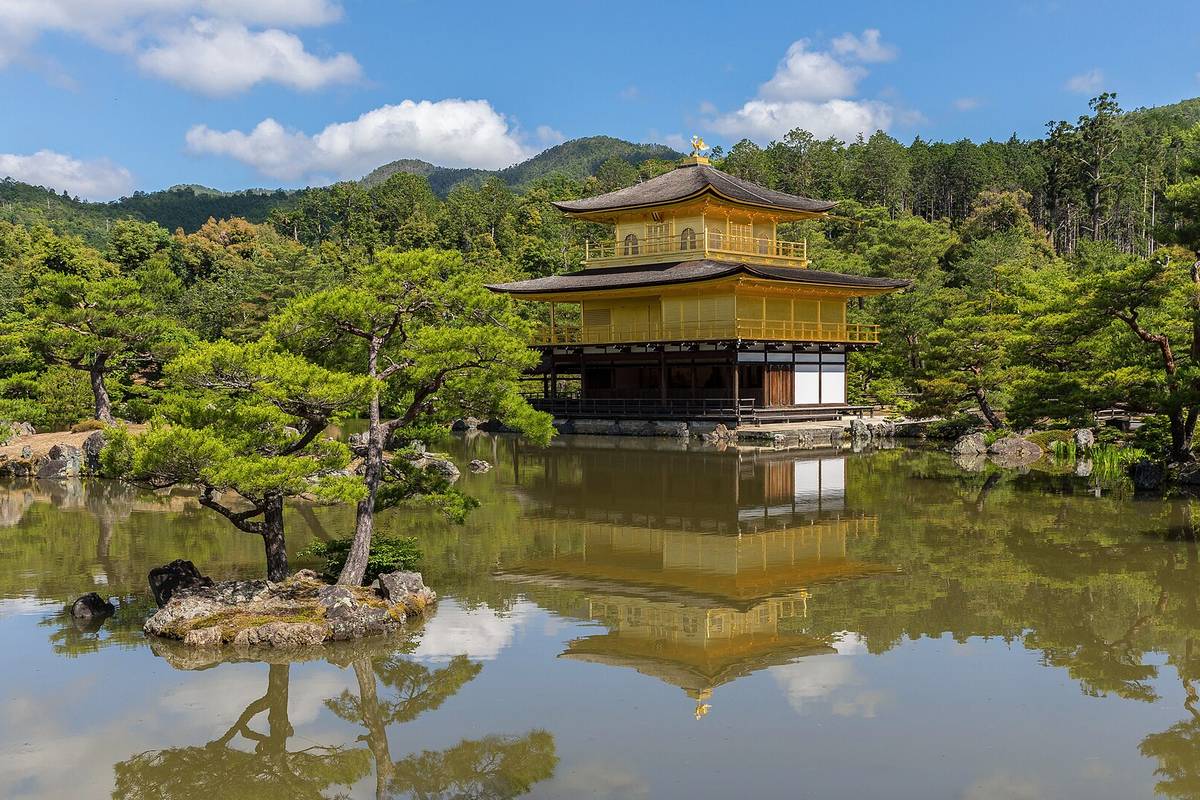
Day 6 of this 10 day Japan itinerary covers Kyoto's northern highlights. Start at Kinkaku-ji, the Golden Pavilion, its top two floors completely covered in gold leaf above a reflective pond dotted with islands. Arriving at 9:00 AM lets you enjoy the carefully maintained garden paths before peak crowds arrive. This temple is a must-see on any Japan trip.
From Kinkaku-ji, take a short bus ride to Arashiyama. Walk through the bamboo grove whose towering stalks rise 30 meters into the sky, creating a natural corridor of green light. Just beyond the grove, visit Tenryu-ji Temple, a UNESCO World Heritage site with a 14th-century landscape garden designed to incorporate the distant Arashiyama mountains into its composition. Cross the historic Togetsukyo Bridge for classic views over the Katsura River.
End your afternoon with the Saga Scenic Railway, a 25-minute journey along the Hozugawa River gorge. The open-sided carriages provide unobstructed panoramic views of especially beautiful cherry blossoms in spring or fiery seasonal maple foliage in autumn. Back in the city center, Nishiki Market — a five-block covered arcade of more than 100 stalls — is the cheapest good eating in Kyoto: grilled skewers, pickles, and tempura run 200-400 yen apiece, enough to assemble a full meal for 800-1,000 yen. For something quieter, Tenryu-ji's own cafeteria serves a shojin ryori (Buddhist vegetarian) set lunch for 1,500 yen, and Enryaku-ji on Mount Hiei offers a basic one for 1,000 yen. This scenic railway caps your Kyoto day and adds variety to the itinerary.
Day 7: Nara Day Trip and Transfer to Osaka
Day seven of the 10-day Japan itinerary shifts focus from Kyoto's temples to Nara, Japan's first permanent capital and home to some of the country's most impressive historical sites. The journey takes just 45 minutes from Kyoto Station via the Kintetsu Nara Line (the faster option, 660 yen) or the JR Nara Line (slightly slower, 720 yen). Either train drops you a short walk from Nara Park, setting the tone for a day that balances walking with wonder.
Nara Park is famous for its 1,200 freely roaming deer, considered sacred messengers of the Shinto gods. Vendors sell shika senbei (deer crackers) for 200 yen, and the deer have learned to bow politely for treats, making for an interactive experience rare in a city itinerary. Beyond the deer, the park leads to Todai-ji Temple, a UNESCO World Heritage site housing a 15-meter-tall bronze statue of Buddha Vairocana. Completed in 752 AD, the Great Buddha Hall (Daibutsuden) is the world's largest wooden building, a humbling sight that many travelers rank among their trip's highlights.
After exploring Nara's highlights, an afternoon transfer to Osaka takes just 30 minutes on the Kintetsu Nara Line (570 yen), making this the smoothest city switch in any Japan travel itinerary. Check into accommodation near Namba, Osaka's vibrant entertainment district, then spend the evening exploring Dotonbori's neon-lit canal side. The energy here is electric, with street food stalls serving takoyaki (octopus balls, 8 pieces for 600 yen) and okonomiyaki (savory pancakes from 800 yen). This transition from Nara's ancient peace to Osaka's modern pulse captures the contrasts that make any Japan vacation memorable.
Osaka Itinerary: Food, Castles, and Entertainment
Day 8: Dotonbori, Osaka Castle, and Shinsekai
Start your morning at Osaka Castle, a reconstructed 16th-century landmark that houses a modern history museum detailing the life of Toyotomi Hideyoshi. Admission is 600 yen, and the surrounding park grounds are free to explore, especially stunning during cherry blossom season in early April. Climb to the observation deck for sweeping city views. If you plan several ticketed stops, the Osaka Amazing Pass bundles unlimited subway rides with free entry to more than 40 attractions, including the open-air rooftop of the Umeda Sky Building. This stop fits perfectly into any 10 day Japan itinerary that wants a mix of history and outdoor space.
By afternoon, head to Dotonbori, Osaka's neon-lit entertainment district along the canal. This is where your Japan travel itinerary shifts to food exploration. Sample takoyaki from Kukuru, octopus balls with a crispy exterior and molten center, or a savory okonomiyaki cooked on a teppan grill right at your table. The famous Glico Running Man sign marks the heart of the action. Crowds peak after sunset, so arrive around 4 PM for a more relaxed stroll.
End the evening in Shinsekai, a retro neighborhood centered around Tsutenkaku Tower. The area feels like a time capsule from Osaka's early 20th-century heyday, with brightly colored signboards and arcades. Take the elevator to Tsutenkaku's observation deck (900 yen) for nighttime views, then grab kushikatsu, deep-fried skewers of meat and vegetables, at Daruma, the local chain that originated the dish. For anyone passing through, this day captures Osaka's unpolished, food-obsessed soul.
Day 9: Universal Studios Japan or Kuromon Market
Day 9 gives you two classic Osaka options: the adrenaline of Universal Studios Japan or the full-on sensory rush of Kuromon Ichiba Market. If you are following a 10 day Japan itinerary that includes amusement parks, Universal Studios Japan has big ticket attractions like Super Nintendo World, where you can walk through the Mushroom Kingdom and ride Mario Kart: Koopa's Challenge, plus the Wizarding World of Harry Potter with a flight on a Hippogriff. Thrill seekers should not miss the Flying Dinosaur roller coaster. Get there early to grab timed-entry tickets for Nintendo World.
Kuromon Ichiba Market, known as Osaka's Kitchen, is a more relaxed but just as immersive alternative. The covered market runs over 580 meters and is packed with fresh seafood grilled on skewers, huge oysters, sea urchin, and seasonal produce. Local snacks like takoyaki and melon pan are everywhere. It belongs on any Osaka itinerary.
If you want to get out of the city, a day trip to Kobe (30 minutes by train) lets you try world-famous Kobe beef, or head to Himeji to see Himeji Castle, a UNESCO World Heritage site. Both are easy additions to any Japan travel guide focused on the Kansai region.
Day 10: Last Day Shopping and Departure
The final morning of a 10 day Japan itinerary is best spent in Shinsaibashi, Osaka's premier shopping district. The long, covered arcade of Shinsaibashi-suji runs for several blocks under a glass roof, packed with everything from high-end boutiques to quirky souvenir shops. It's a good place to pick up last-minute gifts: boxed KitKat flavors only sold in Japan, hand-painted ceramic sake cups, or a traditional furoshiki wrapping cloth. The arcade connects directly to Dotonbori, so you can soak in the canal atmosphere one last time before heading to the airport.
For travelers on this route, tax-free shopping is a practical way to stretch the budget. Stores displaying the 'Tax-Free' sign allow you to purchase goods without paying the 8 percent consumption tax, provided you spend at least 5,000 yen (including tax) per store in a single day. Bring your passport and present it at the counter; the cashier will staple a purchase record inside the passport. Consumables such as snacks and cosmetics must be kept in the sealed bag until you leave Japan, while general goods like clothing or electronics can be used immediately but still require the paperwork.
When it's time to head home, Kansai International Airport is well connected from central Osaka. The fastest option is the Nankai Line from Namba station: the limited express 'Rapi:t' reaches the airport in about 38 minutes for 1,450 yen. Alternatively, the airport limousine bus departs from major hotels and Namba OCAT, taking roughly 50-60 minutes and costing 1,600 yen. For a relaxed end to your Japan travel itinerary, the bus offers the comfort of not dragging luggage through train stations. Whichever you choose, allow at least two and a half hours before your flight to check in and pass security. With careful planning, this final day becomes a smooth conclusion to a memorable trip.
For more tips on Japan trip planning, including how to pack for this itinerary and maximize your time on the ground, refer to the earlier sections of this guide.
Final Thoughts on Your Japan Itinerary
Make the Most of Your 10 Days in Japan
This 10 day Japan itinerary weaves together the cultural depth of Tokyo's ancient traditions and modern energy with Kyoto's serene temples and tea houses and Osaka's dynamic food scene. The Tokyo Kyoto Osaka itinerary offers a perfect balance of iconic landmarks, from the tranquility of Meiji Shrine to the vibrant chaos of Shibuya Crossing, and from the vermilion gates of Fushimi Inari to the neon glow of Dotonbori. Each city reveals a distinct layer of Japan's heritage.
While planning matters, leave room for spontaneous discoveries. Some of the best moments happen off the itinerary: a hidden izakaya in Osaka's backstreets or a festival procession in Kyoto. Embrace customs: bow when meeting, remove shoes indoors, try unfamiliar dishes. The goal of any Japan travel itinerary is not just sights but connection. Let this guide be your foundation but allow yourself to wander. That flexibility turns a good trip into an unforgettable journey.
Frequently asked questions
Is the JR Pass worth it for a 10-day Tokyo-Kyoto-Osaka trip?
Usually not if you only do the main loop. A one-way Shinkansen ticket from Tokyo to Kyoto costs about ¥14,000, and a round trip with an extra Osaka-Kyoto leg totals roughly ¥30,000, while the 7-day pass runs about ¥50,000. The pass makes sense if your itinerary adds day trips to Nara, Hiroshima, or Mount Fuji.
How much does 10 days in Japan cost?
A mid-range trip runs about $150 to $250 per person per day, covering $50-$100 accommodation, $30-$50 for meals, and $10-$20 of daily city transport. On a tight budget the same route works at roughly $1,500 total: $500 for accommodation, $300 for food, $200 for transport, and $500 for activities.
What is the best time of year for this itinerary?
Spring (late March to early May) and autumn (mid-October to late November) offer the best weather, with temperatures of 10-20°C in spring and rare rain in October and November. Plan around Golden Week in late April-early May and Obon in mid-August, when trains are crowded and hotel prices climb.
Do I need a visa to visit Japan?
Travelers from over 60 countries, including the United States, Canada, Australia, and most European nations, get visa-free entry for tourism stays of up to 90 days. If you do need a visa, processing typically takes five to seven business days, so submit the paperwork about a month ahead.
Official sources
Details worth verifying before you go — checked against:

Travel Writer & Editor
Emily Johnson writes and edits Do Travel Blog. Every guide on the site starts the same way: with a question she actually had while planning — when to book, which pass to buy, how to get from A to B without overpaying. Where a number matters, she cites the source: park tickets link to the park's own fee page, visa rules to the official consulate, ferry times to the operator. Prices get re-checked against those pages before each update, and a guide is re-dated when its numbers move. Nothing here is sponsored — she doesn't accept payment for coverage. Spotted something stale or wrong? Email hello@dotravel.blog and she'll fix it.