Staying With a Kyrgyz Mountain Family Taught Me Home
A first-person account of a Kyrgyz family homestay in the Tian Shan mountains, where daily life with shepherds reveals the true meaning of home through bread, tea, and hospitality.
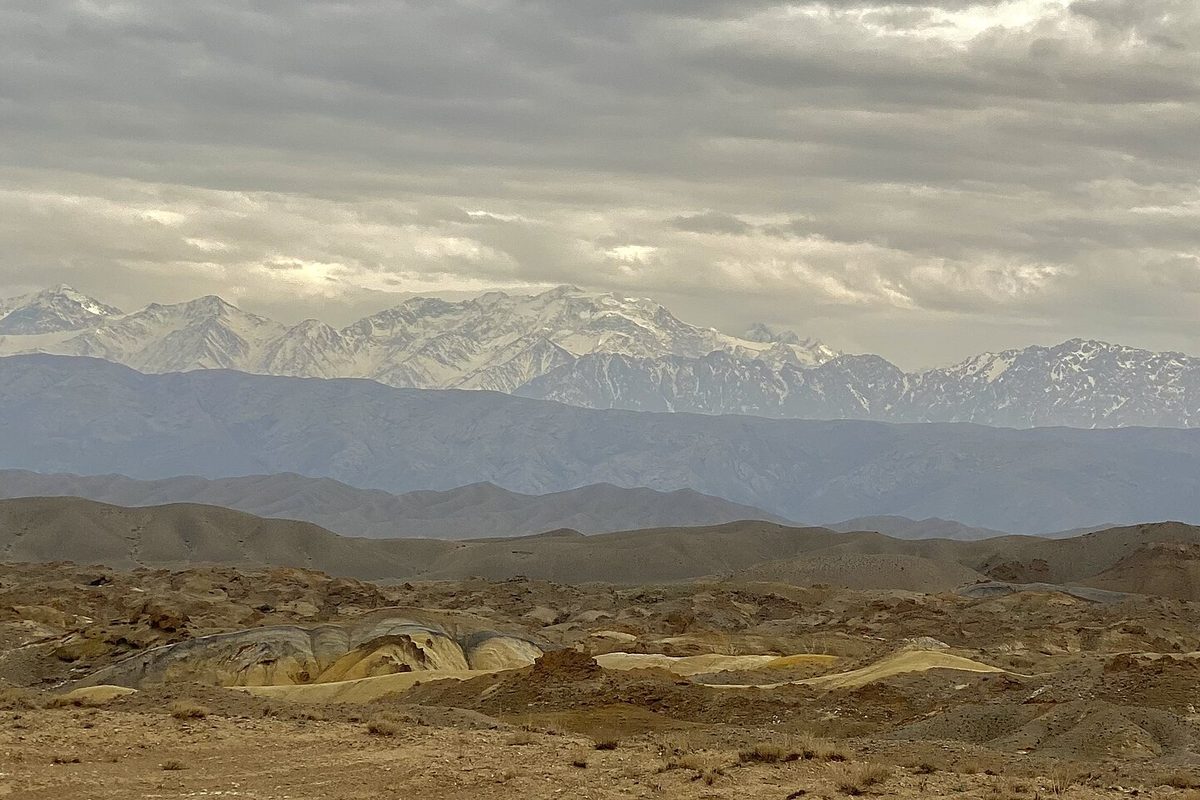
Arriving in the Tian Shan
The journey from Bishkek to the family's summer pasture took most of the day. I rode in a shared minibus to the village of Bokonbayevo, then transferred to the back of a Soviet-era truck that rattled along a dirt track for another two hours. Every few kilometers the landscape shifted: first the rolling foothills, then the sudden jagged teeth of the Tian Shan. By the time we stopped, the only structure in sight was a single white yurt perched on a green slope, with a stream rushing past it. I had no cell service, no Russian phrasebook, just a backpack and a knot of nerves.
My Kyrgyz family homestay was about to begin, and I had no idea what to expect. I had arranged the visit through a local tour operator, but the details were vague: a few days with a shepherd family, sleeping on floor cushions, eating whatever they ate. Standing there, watching a woman in a brightly patterned headscarf step out of the yurt, I felt a wave of doubt. I was a stranger about to live with shepherds in Kyrgyzstan, in a place where daily nomad life followed rhythms I barely understood.
But the woman, Aigul, as I later learned, walked straight up to me, took my hand, and smiled. She said something in Kyrgyz that I couldn't follow, then laughed and pulled me toward the yurt. Inside, the fire crackled, and the smell of fresh bread filled the space. Her husband waved from a low stool, and a toddler peeked from behind a stack of felt blankets. In that moment, all my nervousness dissolved. The warmth of Tian Shan hospitality was not a concept. It was a hand on my arm and a cup of hot tea placed in my hands.
The Daily Rhythm of a Kyrgyz Mountain Family
Morning Chores and Milk Tea
I woke to the low grumble of cows and the clatter of hooves on packed earth. Outside the window, the first light of dawn was just breaking over the Tian Shan peaks, and the air through the wooden shutters carried the sharp, clean smell of straw and dung. The daughter of the family, a girl of about twelve, gestured for me to follow. We walked to the small barn where the yaks and cows were waiting, their breath steaming in the cold. She handed me a three-legged stool and showed me how to rest my forehead against the warm flank of the cow while I pulled. My first attempts were clumsy, but she laughed and corrected my hands. By the time the last bucket was full, my fingers were stiff and the sun had climbed above the ridge.
Back inside, the grandmother was already stoking the fire. Soon the whole family gathered around the stove for the day's first round of milk tea. This wasn't tea as I knew it. Black leaves were boiled in a pot, then topped with fresh milk, a pinch of salt, and a generous spoonful of butter. The liquid was poured into wide bowls and passed around. The same bowl, each of us taking a sip before handing it on. It was thick, slightly salty, and deeply comforting. I learned that this ritual is the anchor of daily nomad life; every visit, every negotiation, every shared story begins here.
We sat in a circle, the flames crackling, and conversation flowed despite the language barrier. I couldn't understand the words, but I could read the warmth in their faces, the pauses for laughter, the way the grandfather gestured toward the mountains as he spoke. The host family experience in Kyrgyzstan is not about perfect communication; it's about presence. That morning, sharing milk tea in a mountain family home, I felt more part of a household than I had in months of travel. The cultural exchange was not in the words, but in the simple act of being together, passing the bowl, and starting the day as one.
Living with Shepherds: Herding and Hunting
The first morning I joined the men on horseback, I understood why they call this work instead of a routine. We left before dawn, the valley floor still dark, and climbed switchbacks into the Tian Shan foothills. My host brother, Bakyt, guided a herd of about 300 sheep across a ridge where the grass was still green in late summer. The horses knew the route better than I did. I just held on and tried to keep my seat as they scrambled over loose scree. Bakyt called out in Kyrgyz to the dogs, and the whole line of animals moved as one living thing.
After three hours of riding, I watched Bakyt's uncle, Marat, prepare for a hunt with his golden eagle. The eagle sat hooded on a wooden perch tied to his saddle. When Marat unhooded her, she scanned the valley below, and within minutes she dove, a blur of talons and feathers, and emerged with a corsac fox. Marat dismounted calmly, took the fox, and offered the eagle a strip of raw meat as reward. No ceremony, no bragging. Just a transaction between man and bird that has happened here for centuries.
That hunt lasted maybe ten minutes, but the herding went on past noon. The physical demands of shepherd life are relentless: cold mornings, hot afternoons, always in the saddle or on foot. Yet the men carried themselves with a quiet pride I had never seen in any office. They were tired, yes, but they owned their exhaustion. It came from feeding their families and keeping their animals alive through Tian Shan winters.
Living with shepherds in Kyrgyzstan reshaped my idea of work completely. Back home, work is something you do to earn time for real life. Here, work is life: eating, moving, sleeping, all in service of the herd and the family. The Kyrgyz family homestay gave me a new yardstick for what a full day actually looks like.
Bread Baking: A Daily Ritual
Every morning by six, the women of the family gathered around the tandoor, a clay oven dug into the ground of the yurt's outer kitchen. The fire had been lit before dawn, and by the time I stumbled out of my sleeping bag, the oven walls were shimmering with heat. Aisha, the eldest daughter, showed me how they mixed the dough: just flour, water, salt, and a starter saved from the day before. No measuring cups, no recipe. Her hands moved by instinct, folding and pressing until the mass turned silky and elastic.
She handed me a fist-sized lump and nodded. I tried to copy her movements, pressing the heel of my palm into the dough and turning it. My first few attempts were clumsy, the dough tearing under my inexpert touch. But she laughed and guided my fingers, showing me how to cup the edges and pull them inward. Within minutes I had a smooth round loaf, ready to be slapped against the inner wall of the tandoor. The heat hit my face like a wave as I leaned in, and I nearly dropped it. Aisha caught my wrist and gently pressed the dough against the clay. It stuck.
Within half an hour, the first loaves emerged: golden brown, blistered in places, with a smoky scent that filled the entire yurt. That smell became the anchor of my days. No matter how cold the morning or how tired I felt from sleeping on a wooden floor, the aroma of fresh bread meant I was home. It meant people were caring for me, even if we shared no common language.
Bread was the first thing offered to every guest. Before tea, before conversation, a round loaf was placed in the center of the dastarkhan. Breaking it together was how you said welcome. By the end of my stay, I understood that living with shepherds in Kyrgyzstan meant learning that home is not a building: it is the daily ritual of feeding one another. The mountain family home I had stepped into gave me that lesson with every loaf.
Finding Connection Through Shared Life
Children and the Unspoken Bond
The children of the mountain family home were shy at first, peeking around doorframes. But within a day, the youngest daughter, Aiperi, had taken my hand and led me to the family's vegetable patch. She pointed at a tomato and said "pomidor" - the same word in Russian, a small bridge. Living with shepherds in Kyrgyzstan meant sharing space with these kids who were both curious and watchful. They studied everything I did with unblinking attention, their laughter hiding behind small hands.
Without a common language, we fell into games. We played a version of tag around the yurt, where the rules were universal - run, laugh, dodge. I taught them clapping games I remembered from my own childhood. They taught me a hand-slapping rhythm that had no name but everyone knew. The host family experience became richer with every giggle. Language barriers dissolved into shared silliness, and I felt the Tian Shan hospitality radiating through these simple moments.
I taught them English words: "cat," "bird," "home." They taught me Kyrgyz names for the animals we saw every day: "at" for horse, "koi" for sheep, "uy" for cow. These small exchanges were pure cultural exchange - no translation needed, just a finger point and a repeating voice. The daily nomad life in the foothills was anchored by these interactions. The children held the keys to connection, turning my unfamiliarity into something comfortable.
In the end, it was the children who bridged the deepest gap. They didn't need words to include me. They offered me a piece of bread from their hand. They showed me how to milk the goat. The village stay in Kyrgyzstan became a place where I was no longer a guest but part of the family, thanks to the unspoken bond formed through play and shared laughter. The children's openness taught me that home is a feeling, not a language - and that belonging can arrive through the simplest gestures.
Evening Stories by the Fire
Each evening, after the last light faded behind the Tian Shan peaks, the family gathered around the fire in the center of the yurt. The flames cast dancing shadows across the felt walls, and the smoke curled upward through the opening in the roof. During my stay, this was the hour when the day's work stopped and stories began.
The grandmother would start, her voice low and steady, telling folktales passed down through generations. I could not understand every word, but the rhythm of her speech and the expressions on the children's faces told me these were stories of clever animals, lost travelers, and the spirits of the mountains. Living with shepherds Kyrgyzstan meant learning that oral tradition is not just entertainment. It is how history survives in a place where winter closes in for months.
The fire itself seemed to hold the family's warmth. As the flames crackled, the children leaned closer, and the adults passed around bowls of hot tea. I felt the same pull toward the hearth, a quiet invitation to be part of their circle. The mountain family home was not just a structure of felt and wood. It was the space created by these shared moments.
One night, I tried to offer my own story, about the small apartment I had left behind, and how I had never quite felt settled there. I spoke haltingly, using hand gestures. The grandmother listened, then nodded slowly. She said something in Kyrgyz, and the daughter translated: 'Home is where you sit by the fire with people who remember your name.' In that moment, the cultural exchange became something deeper. I was no longer a visitor. I was part of the story.
The Gift of Hospitality
I arrived at the yurt feeling like a stranger carrying a heavy pack. Within the first hour, the grandmother had pressed a bowl of warm kumis into my hands and draped a felt blanket over my shoulders. By evening, I was no longer a guest. I was being called "kyzym" (my girl) and handed a wooden spoon to help stir the dinner pot. That is the nature of a Kyrgyz family homestay: you arrive as a traveler, but you leave as someone who has been folded into the rhythm of daily life.
- Bowls of tea appeared the moment my cup was half-empty.
- Fresh bread and dried fruit were pushed toward me at every meal.
- At night, extra blankets were piled on my sleeping mat without asking.
The Kyrgyz word for guest is "konok," but it carries a weight that the English translation misses. A konok is not just someone passing through. A konok is a blessing, a reason to pause work and share what you have. During my days living with shepherds in Kyrgyzstan, I watched the family give their own dinner portions to a neighbor who stopped by unannounced. No one hesitated.
That experience reshaped my understanding of generosity. Tian Shan hospitality is not about obligation; it is a quiet, constant offering. The mountain family home I stayed in had little by my standards, yet they gave everything without counting. I learned that home is not measured by walls or possessions, but by how freely you open the door to a stranger.
Since returning to Lisbon, I have tried to carry that lesson into my own hosting. When someone knocks, even if the flat is small and the fridge is sparse, I remember the shepherds of the Tian Shan and offer tea first.
Language and Cultural Exchange
Learning Kyrgyz Words and Warmth
I arrived in the Tian Shan foothills knowing exactly three words of Kyrgyz: salam, rakhmat, and jaksy. My host mother, Aigul, would laugh warmly every time I tried to say something more complicated, and I would laugh too. There was no shame in my mangled vowels, only a shared joy in the effort. The first few days I pointed, nodded, and smiled my way through meals and chores, feeling the weight of not being able to say what I meant. But every small victory felt huge.
- Salam (hello) became my morning greeting, often returned with a hand on the heart.
- Rakhmat (thank you) I said dozens of times daily, for every cup of tea, every blanket, every ride on the family horse.
- Jaksy (good) was my all-purpose compliment: the bread was jaksy, the view was jaksy, the yurt was jaksy.
Aigul's husband, Nurlan, an elderly shepherd, would correct me gently. 'Rakhmat, rakhmat,' he'd repeat, drawing out the vowels so I could hear the rhythm. Slowly, those three words opened doors. Once I could say salam properly, the neighbors stopped staring and started smiling. Once I used rakhmat to thank them for letting me help milk the goats, they invited me for tea the next day.
Language became the smallest yet most powerful tool of cultural exchange. I was never going to hold a fluent conversation, but my willingness to stumble through syllables showed respect. In a mountain home where hospitality was measured in shared bread and poured tea, those few words were enough to say: I see you, I am grateful, I am trying to belong.
Relearning the Meaning of Home
I arrived in Kyrgyzstan believing I understood home. To me, it meant an apartment with my name on the lease, a kitchen stocked with familiar ingredients, a lock on the door. It was a place I controlled. That definition had served me well enough, or so I thought. I had never paused to examine it.
Then I spent ten days with a shepherd family in the Tian Shan foothills, and my tidy definition crumbled. Their home was a yurt, heated by a single stove, with no running water and no furniture beyond low mattresses and a small table. Yet the warmth inside was unlike anything I had known. The mother woke before dawn to stoke the fire. The children helped carry water from the stream without complaint. Every meal was shared, every story told aloud. Their contentment was not tied to possessions but to presence. Living with shepherds in Kyrgyzstan forced me to see how much of my own restlessness came from mistaking comfort for happiness.
That Kyrgyz family homestay became a mirror. I saw how often I had used my home as a retreat from the world, rather than a base for connection. I had filled it with things that required maintenance - organizing, cleaning, repairing - leaving little time for the kind of unhurried listening the host family practiced daily. Their village stay hospitality was not a show for guests; it was simply how they lived.
I left the Tian Shan carrying a new definition. Home is not a fixed place. It is what happens when people gather with intention, share what they have, and make room for one another. That mountain family home gave me a gift I am still unwrapping: the knowledge that belonging is not something you build, but something you step into.
Redefining Home After the Homestay
Weeks after leaving the jailoo, the lessons from my Kyrgyz family homestay settled into me like river stones smoothing over time. Living with shepherds in Kyrgyzstan forced me to drop every assumption about what a good life requires. The mountain family home had no running water, no electricity, yet the warmth around the felt-lined yurt each evening filled a space I hadn't known was hollow. I learned that home isn't a building or a zip code. It's the people who pass you a bowl of kumis without ceremony and the daily rhythms that hold everyone together.
That realization crystallized one morning when the grandmother, Apa, handed me a pair of scissors and pointed to the sheep. Her instruction needed no words. For that hour, trimming fleece alongside three generations of her family, I was part of something older than any lease or mortgage. The host family experience taught me that belonging grows from shared tasks: carrying water, patting bread dough, laughing at nothing in particular. The Tian Shan hospitality I received was not performative. It was simply how life works when people depend on one another.
Now back in Lisbon, I catch myself recreating small pieces of that daily nomad life. Sunday afternoons become slow cooking sessions with my daughter, no phones, just hands in flour. I linger over meals the way the Kyrgyz do, never rushing to clear the table. The cultural exchange didn't end when I left the village. It reshaped how I inhabit my own home.
A village stay in Kyrgyzstan offers more than scenery. It can rewrite your understanding of shelter and connection. If you ever have the chance to share tea with a family in a yurt, take it. You might come home to a different version of yourself.
Official sources
Details worth verifying before you go — checked against:
Travel Writer & Editor
Emily Johnson writes and edits Do Travel Blog. Every guide on the site starts the same way: with a question she actually had while planning — when to book, which pass to buy, how to get from A to B without overpaying. Where a number matters, she cites the source: park tickets link to the park's own fee page, visa rules to the official consulate, ferry times to the operator. Prices get re-checked against those pages before each update, and a guide is re-dated when its numbers move. Nothing here is sponsored — she doesn't accept payment for coverage. Spotted something stale or wrong? Email hello@dotravel.blog and she'll fix it.