Acatenango vs Fuego: Difficulty, Dawn Views, and Cost
Acatenango vs Fuego compared: difficulty, dawn lava views, and cost. Why Fuego ascents are not permitted, and how to watch Fuego from Acatenango.
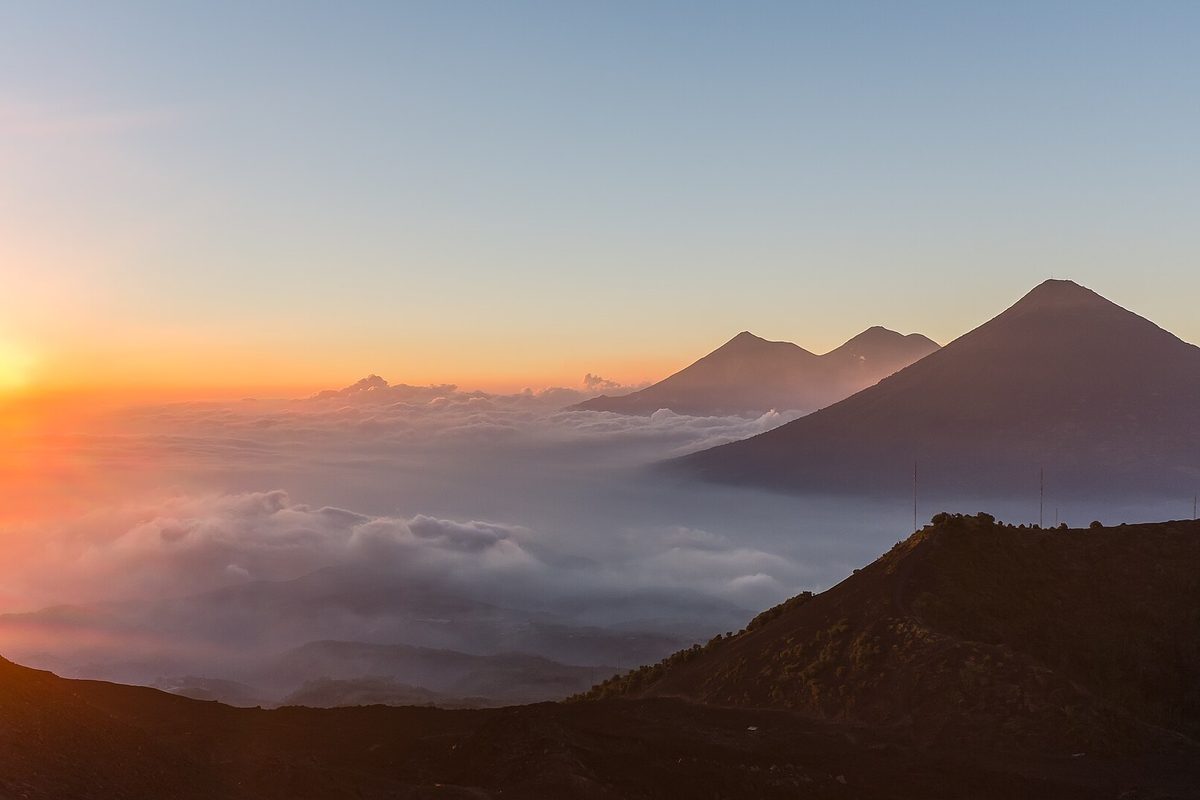
Acatenango vs Fuego: Choosing Between Guatemala's Twin Volcanoes
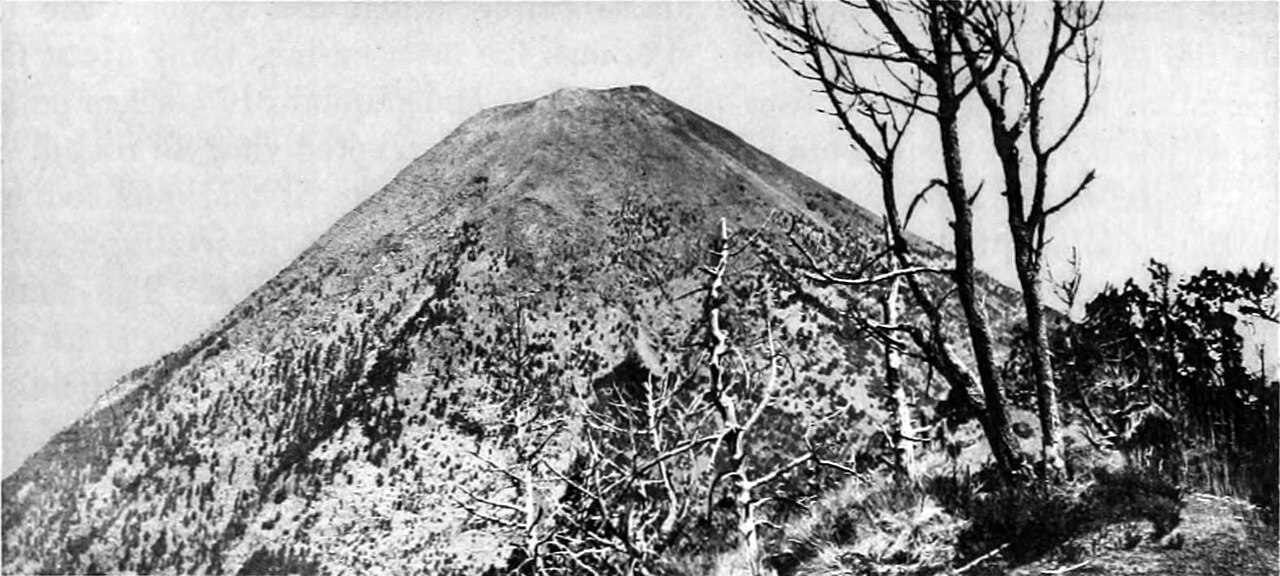
Photo: Alfred Percival Maudslay / Public domain / Wikimedia Commons
The twin peaks of Acatenango and Fuego rise above the colonial rooftops of Antigua Guatemala and make one of Central America's notable hiking pairs. Acatenango stands at 3,976 meters. The active Fuego erupts with near-daily explosions visible from nearby trails. For slow travelers building a Guatemala itinerary, picking between the two mountains affects both budget and daily pace. This article compares the overnight Acatenango sunrise trek with what Fuego offers hikers. The focus is practical: the overnight Acatenango sunrise trek is a 2-day trip that brings hikers to a high camp for a 4:30 a.m. summit push to watch dawn light the Fuego crater lava. Fuego itself is different: ascents are not permitted on the active volcano, so the Fuego side of this comparison means viewpoint hikes on its lower slopes, with close views of ash plumes but no summit and no long overnight climb. The Acatenango Fuego comparison comes down to trek difficulty, time spent, and the reward each mountain gives. Which Guatemala volcano to climb depends on fitness, schedule, and tolerance for cold camping. Local guide rates in 2024 averaged $50 to $75 per person for the Acatenango overnight, with meals and gear rental from Antigua outfitters such as Casa Santo Domingo Tours. The same village cooperatives manage the Fuego viewpoint hikes, and day trips start at $35. The next sections lay out each route's demands and viewpoints.
Overview of the Two Volcanoes
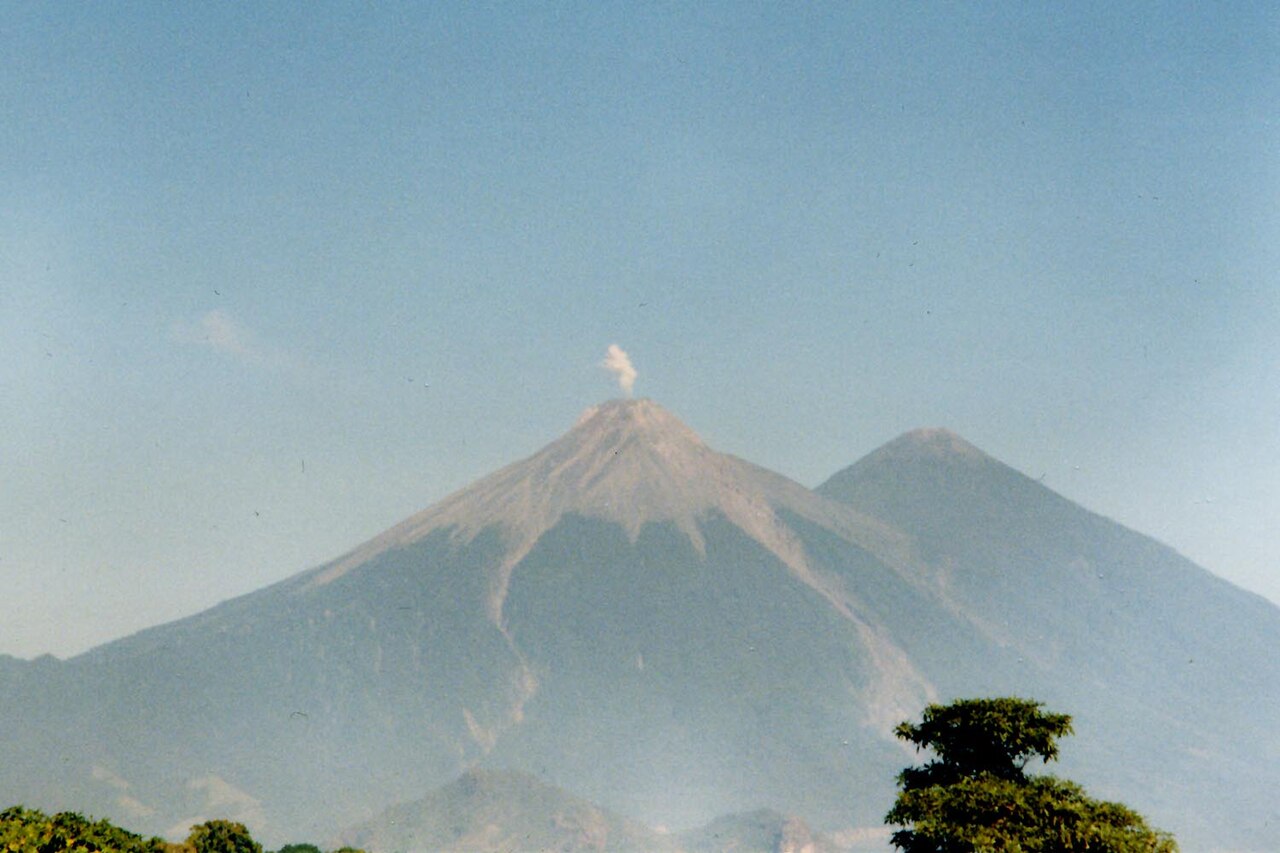
Photo: User:Stan Shebs / CC BY-SA 3.0 / Wikimedia Commons
Acatenango: The Quiet Volcano with a View of Fuego
Acatenango rises in the Guatemalan highlands about 25 kilometers west of the colonial city of Antigua. At 3,976 meters above sea level it is the third highest peak in Guatemala. The volcano is part of the Central American Volcanic Arc and sits next to its active neighbor Fuego. Acatenango has not erupted since 1972, so travelers often call it the calm sibling in the Acatenango vs Fuego pairing. The standard route starts at La Soledad village on the northern flank. The trailhead sits at 2,300 meters, so the climb covers 1,676 vertical meters to the summit. Hikers do the overnight climb for the view of Fuego's crater. From high camp at 3,600 meters trekkers watch Fuego erupt every 15 to 30 minutes on average, with glowing rocks rolling down its sides after dark. Local guides prohibit climbing Fuego itself because of lethal pyroclastic flows, so Acatenango gives a safe perch for the show. In short: one volcano is climbed for the view, the other is watched from afar. Guatemala has 37 volcanoes but only three see regular activity, and Fuego is the most reliable. The tourism board counted 2.1 million international arrivals in 2023, many drawn to sights beyond the highlands. Slow travel visitors often combine the volcano trek with trips to Lake Atitlan's Mayan villages or the markets of Chichicastenango. Planners weighing the two note that Acatenango gives a big payoff for moderate effort, while the Fuego route stays a distant observation. For any itinerary, Acatenango's quiet slopes are the best seat in the country for the nightly eruption.
Fuego: The Volcano That Erupts Daily
Fuego cannot be climbed to a summit — ascents are not permitted on Guatemala's most continuously active peak, which rises 3,763 meters. What guided day treks from San Jorge La Antigua offer instead is a viewpoint route: 7 km round trip with 800 m elevation gain, about four hours over loose scree. Instead of overnight camping, the viewpoint route ends at a 3,200 m ridge facing the crater, where hikers feel heat from below. Fuego is the Guatemala volcano that erupts daily. INSIVUMEH logged 12 to 18 explosions per day in 2023, sending ash 500 m above the crater. At night from the ridge, the crater shows lava and glowing bombs fall every 20 to 30 minutes. In February 2024, guides saw lava flows 1.5 km down Barranca Seca ravine, something dormant Acatenango lacks. Proximity is the other difference: the two peaks share a 3,100 m saddle, so Fuego ash often lands on Acatenango camps. The viewpoint trek is harder than its distance suggests because of steep scree and sudden gas surges. Operator Volcano Trek Guatemala stops ascents when sensors detect tremor, a real hazard. For travelers choosing between them, the Fuego viewpoint delivers drama but needs caution near live vents.
How the Two Treks Compare
The choice between Acatenango and Fuego hinges on trek length and overnight commitment. A quick comparison table sketch highlights the core contrasts between the two Guatemala volcano routes. The Acatenango overnight trek covers roughly 11 kilometers round trip with a 1,500 meter ascent to the 3,976 meter summit, where hikers camp at 3,700 meters and wake for sunrise. The Fuego route is a shorter day route, about 6 kilometers with 800 meters of gain, reaching a 3,000 meter lookout in four hours and returning before dark.
The overnight versus shorter hike split defines the experience. Acatenango requires two days of physical effort, proper sleeping bags rated for freezing temperatures, and a guided camp setup. Slow travelers often prefer this immersive night to watch Fuego's crater lava erupt repeatedly. The Fuego option trades depth for speed, fitting a half-day window for visitors on a tight Guatemala itinerary. Volcano trek difficulty differs sharply: Acatenango ranks moderate to hard due to altitude and loose terrain, while the Fuego day path is easy to moderate with a well-trodden trail.
Which Guatemala volcano delivers more value depends on goals. The Acatenango vs Fuego debate favors Acatenango for dramatic sunrise above active eruptions, but the Fuego trek wins for budget and time efficiency. Most hikers choose the overnight trek for the lava spectacle, while a minority opt for the shorter climb. Both routes start from La Soledad village near Antigua and require licensed guides per local rules. Typical 2024 prices show the Acatenango overnight package at $55 per person with tent rental, while the Fuego hike runs $30 with a local guide. This cost gap matters for budget planners tracking Central America expenses. First-timers are better off starting with Acatenango.
Which Guatemala Volcano Matches Your Trip
Travelers choosing between the two peaks should weigh their fitness and schedule before booking. The Acatenango vs Fuego decision affects both the physical demand and the time spent on the mountain. For a relaxed itinerary, a Fuego viewpoint hike offers a half day option from Antigua. Acatenango needs an overnight commitment: most groups leave Antigua at 8 am, hike 5 to 7 hours to base camp at 3,600 meters, then summit at 4 am for sunrise. The two trips split between a short burst and a slow alpine climb. Volcano trek difficulty differs sharply between them. The Fuego route to the viewpoint at 2,300 meters uses rugged but manageable trails, fine for travelers with moderate fitness who can walk 4 to 5 hours. Acatenango needs strong endurance: the ascent gains about 1,500 meters, and cold camp temperatures test preparation. A practical planner suggests visitors with tight schedules or lower stamina pick Fuego, while those wanting the crater lava view of Fuego from Acatenango's ridge need two full days. Both hikes start from La Soledad, which keeps logistics simple. Tour cost depends on group size, gear inclusion, and meal plans. Standard Acatenango 2 day tours run $55 to $90 USD per person with guide, tent, and three meals, and private groups reach $150. The Fuego hike costs less, usually $35 to $60 with transport from Antigua and a local guide. Budget travelers can save by renting sleeping bags in town for $5 instead of through operators. The right pick comes down to effort, time, and spend against the reward of Fuego's nightly eruptions.
One more option sits outside the Acatenango vs Fuego frame. If the draw is lava underfoot rather than a summit, Pacaya is the easy-lava alternative: an active volcano closer to Antigua, walked on guided trails across old lava fields, with none of Acatenango's overnight cold or altitude. It will not give you an eruption above your camp at dawn, but it fits a morning.
Difficulty and Physical Demands
Acatenango Trek Difficulty
The Acatenango vs Fuego debate often starts with physical readiness, and the Acatenango trek is the tougher test of stamina. The standard trail from La Soledad village begins at 2,300 meters and gains roughly 1,500 meters to the summit shelter at 3,600 meters, then a final push to the 3,976 meter peak. Most hikers take 4 to 5 hours for the ascent, a steep grade that averages 15 to 20 percent on the upper slopes. Guatemala's tourism board rates this route moderate to hard, and altitude sickness becomes a real risk above 2,500 meters. Trekkers frequently report pounding headaches and shortness of breath, especially those flying in from sea level within 48 hours of the climb. Overnight cold compounds the challenge. Temperatures at base camp drop to -5 Celsius in December and January, with wind chill on exposed ridge. Proper camping gear is non-negotiable: a sleeping bag rated to -10 Celsius, insulated pad, and windproof layers. The Fuego ascent is a day trip, but the Acatenango overnight demands carrying 5 to 8 kilos of personal gear plus rented equipment. In any Acatenango Fuego comparison, the longer trek wins on reward because the crater lava view of Fuego erupting at night is unmatched. Choosing between them depends on fitness, but Acatenango requires serious preparation. Local guides from the San Jorge La Soledad community charge 50 to 70 dollars including tent and meals, a practical investment for a safe summit.
Fuego Volcano Hike Demands
The Fuego trail has a different physical profile than Acatenango when you compare the two. Most guided routes from the Alotenango trailhead run 4 to 6 kilometers round trip and reach the 2,400 meter base camp or higher lava viewpoints. That is shorter than the 12 kilometer Acatenango overnight trek, but the ground is much harder to walk on. The trail climbs through sharp a'a lava blocks and loose scree, and every step can slide. Hikers need rigid ankle-support boots and trekking poles to handle the volcano trek difficulty, which comes from unstable rock rather than a long climb in elevation. Heat and ash set the Fuego climb apart from its colder neighbor. At 1,800 meters the temperature can reach 30°C by midday, and radiant heat from ongoing Strombolian eruptions warms the air near the crater. The choice between them has to account for ashfall: the June 3, 2018 eruption dropped 2 centimeters of ash on San Miguel Los Lotes and killed 194 people. Even routine 2023 activity sent plumes 500 meters above the summit. Visitors should bring N95 respirators, sealed goggles, and long sleeves to block airborne particles near any crater lava view. Safety rules shape everything here. Guatemala's INSIVUMEH posts the hazard level each day, and an orange alert stops even the viewpoint hikes. Fuego summit pushes are not permitted at all — the volcano is far too active — so licensed operators like Old Town Outfitters run legal viewpoint routes only, at about 350 quetzales for guide and permit. On Fuego's slopes you need faster decisions, because gas and sudden lava bursts limit safe time near the crater. Ropes on anchor rocks help on the last 200 meter scramble, but a certified local leader is required.
Fitness Prep and Training
Travelers weighing the Acatenango vs Fuego choice face different physical demands. The Fuego climb is a hard day ascent to 3,763 meters. Acatenango's overnight push reaches 3,976 meters. Volcano trek difficulty depends on a cardio base and leg strength built over 4-6 weeks. Aim for stair-climbing sessions with a 6 kg pack three times per week and 5 km trail runs to condition calves and quads. Squats and lunges twice weekly build tolerance for the 1,200 meter vertical gain on both routes. Acclimatization near an active crater is critical. Visitors should spend at least 48 hours in Antigua (1,530 m) before either summit. Fuego's sulfur plumes require a fitted N95 mask above 3,000 m, especially when the wind shifts. Drinking 3 liters daily with electrolyte tabs cuts altitude headache risk. Packing for both treks means shared and route-specific gear. Both hikes need broken-in boots, headlamp, 2 L water capacity, and trekking poles. Acatenango's cold night requires a 0°C sleeping bag and insulated layer. The Fuego route needs a lightweight gas mask and quick-dry shirt for the heat near vents. Fitness for either trek comes down to this prep.
Age Limits and Safety
Most guided treks in the Guatemalan highlands enforce strict age policies that directly shape the Acatenango vs Fuego decision for families. On the overnight Acatenango route, licensed operators such as OX Expeditions and Guatemala Adventures set a minimum age of 12, citing the 1,500-meter elevation gain and sleeping altitude of 3,600 meters. The Fuego route, often run as a single-day ascent from the village of Alotenango, accepts children as young as 8 when accompanied by a parent, though some companies require a private guide for anyone under 14. These tour operator rules exist because volcano trek difficulty spikes sharply after nightfall and during cold winds above the treeline. For families, the practical split is clear. The Fuego day hike delivers a crater lava view within four to five hours of walking, making it a feasible family option for active kids. By contrast, the overnight camp demands stamina that pre-teens rarely sustain. Verify each operator's insurance certificate before paying, since permit costs vary widely. Emergency protocols on both mountains follow standards set by INGUAT, the national tourism institute. Every legal guide carries a VHF radio linked to Antigua base stations, a pressurized first-aid kit, and oxygen for altitude sickness. In 2022, a protocol update required operators to file hourly headcount reports during the Acatenango ascent. If a hiker cannot continue, evacuation uses mules to 2,800 meters then a 4x4 road; serious cases trigger helicopter rescue coordinated with Guatemala's national disaster agency CONRED. Travelers should register their passport details with the tour office and carry $20 cash for emergency mule fees.
Views, Experience, and Cost
The Acatenango Sunrise View
From the high camps of Acatenango, watching Fuego erupt at dawn is the classic Guatemala volcano experience. In the Acatenango vs Fuego choice, this view is the main reason most trekkers pick Acatenango. At the 3,600 meter base camp, hikers start the final summit push around 4:00 am and reach the viewpoint before first light. Fuego's eruptive activity usually produces a Strombolian explosion every 15 to 20 minutes, and during the active phase of January 2024 the interval dropped to under 10 minutes. As the sky lightens, the silhouette of the adjacent 3,763 meter peak emerges, its crater continuously venting ash and incandescent fragments. In the Acatenango Fuego comparison, this remote vantage point offers safety and scale that the lower Fuego ash trail cannot match. Travelers deciding between the two often cite the distant lava display as the deciding factor. The crater lava view from this distance remains one of the most photogenic sights in Central America. Glowing ejecta arcs 200 to 300 meters above the rim, visible without optical aid though binoculars reveal molten blocks tumbling down the southeast ravine. The sunrise moment makes the cold climb worth it. After hours of cold and altitude, the moment at 5:45 am when the sun clears the horizon triggers collective silence among trekkers. Most overnight hikers describe the scene as the highlight of their trip.
Seeing Fuego's Crater Lava Up Close
The Fuego viewpoint gives travelers a direct look at one of Central America's most active peaks. From the 2,800 meter ridge, they watch eruptions every 12 to 20 minutes. This closeness to live vents is what draws a minority of hikers away from the Acatenango camp view. The Fuego volcano hike places trekkers within 3 km of the crater, much closer than the distant view from Antigua. The ground shakes when the volcano throws out glowing rock.
Tour Cost for Both Treks
Travelers comparing Acatenango and Fuego usually look at tour cost first, because the two treks differ a lot in price and what they include. The standard overnight Acatenango sunrise trek from Antigua Guatemala costs $55 to $95 USD per person in 2025, depending on group size and the operator. A guided Fuego viewpoint hike typically costs $35 to $65 USD for a single day. The higher Acatenango price comes from camping at 3,700 meters and the longer route. Operators like Tropicana Hostel and Wajux Expeditions include a bilingual guide, a shared tent, sleeping bag, and two hot meals in the base price. Some packages offer a mule to carry gear for an extra $15, which makes the hike easier for less fit travelers. The tour cost for both treks usually excludes tips, so plan on $5 to $10 more per guide for fair wages. The Fuego viewpoint price generally covers a local guide, trekking poles, and a basic lunch, but not thermal layers or headlamps, which travelers must bring. Neither trek includes the $20 national park entrance fee, paid in quetzals at the trailhead. On the Fuego hike, some budget agencies charge $30 but leave out the guide's shuttle, so you pay a separate $10 ride from Antigua. For slow-travel budgets, booking directly with Antigua agencies instead of online platforms saves $10 to $20. The overnight trek costs more, but the night view of Fuego's lava crater explains the premium for most visitors. When choosing between them, weigh the tour cost against the experience: a $60 Acatenango permit buys a sunrise above the clouds, while a $45 Fuego viewpoint hike gives closer ash trails without the overnight show.
Booking Tips and Best Time to Go
The dry season from November through March gives the clearest skies and most stable trail conditions for a Guatemala volcano expedition. Rainfall drops below 20 millimeters per week on average in these months, so the Acatenango vs Fuego routes have less mud than they do in the wet summer. Travelers who book between December and February should expect colder nights near the 3,976-meter Acatenango summit, with temperatures around -5 Celsius, but they get uninterrupted sunrise views in return. Acatenango draws the biggest crowds of any Guatemala volcano. Permits from the Antigua tourism office show more than 120 overnight hikers per day on the Acatenango trail in January 2024, while the Fuego route gets roughly 40 day-trippers on those same dates. The difference comes from the overnight camp and the crater lava view of Fuego across the valley. Both trails stay busy, but Acatenango's few camp platforms mean you must reserve ahead. Local tours run from budget co-operatives to established outfitters. In Antigua, Ox Expeditions and Fuego Adventures run guided treks from 350 Guatemalan quetzals per person with gear and meals included. For a slower, community-based option, the village of La Soledad has family-run stays that make the volcano trek easier by splitting the climb across two half-days. Booking directly with these locals avoids commission and supports the rural economy.
Bottom line
Travelers comparing Acatenango and Fuego should first look at how different the two experiences are in effort and payoff. The Acatenango overnight trek runs about 12 kilometers round trip and climbs 1,500 meters, so hikers need to be fit and ready for sub-zero cold at the 3,976-meter summit. The Fuego hike usually means shorter guided walks on nearby ridges or Acatenango base camps where you watch Fuego's crater throw lava, not climb Fuego itself. Fuego stays closed to summit attempts because it is an active hazard. Acatenango pays you back with a sunrise above the clouds after a hard night; Fuego gives you a constant eruption show without the punishing climb.
Budget planners will see the standard Acatenango tour from Antigua costs $60 to $90 with guide, tent, and meals. A day trip to a Fuego viewpoint runs $25 to $40, which fits travelers short on time or cash. Slow-travel trip planners say the Guatemala volcano you pick should fit your style. Families with kids under 12, casual walkers, or anyone on a tight schedule should take the Fuego lava view from a safe distance.
Adventure seekers who want a summit sunrise and two days of high-altitude camping should pick Acatenango. The trek is rated challenging, and you should spend a few days in Antigua at 1,500 meters to adjust before going up. Hikers who care more about lava than a personal summit can add the Fuego viewpoint from Acatenango's ridge and get both. The Acatenango vs Fuego call comes down to whether you want to top a peak or watch the earth erupt from a respectful ridge.
Frequently asked questions
Which hike is harder, Acatenango or Fuego?
Acatenango. The overnight route climbs about 1,500 meters to the 3,976-meter summit, takes 4 to 5 hours of steep walking, and ends with a camp at 3,600 meters where temperatures drop to -5 Celsius in December and January. The Fuego viewpoint route is shorter, but loose scree makes every step slide, so it is harder than its distance suggests.
Can you climb Fuego itself?
No. Fuego ascents are not permitted — it is Guatemala's most active peak, with lethal pyroclastic flows. What you can book is a guided day hike to a viewpoint ridge; licensed operators like Old Town Outfitters charge about 350 quetzales for guide and permit. When INSIVUMEH posts an orange alert, operators stop even those.
How much does the Acatenango overnight tour cost?
Expect $55 to $95 USD per person in 2025, depending on group size and operator. Base packages from Tropicana Hostel or Wajux Expeditions include a bilingual guide, shared tent, sleeping bag, and two hot meals. Budget extra for what is not included: the $20 national park entrance fee, a gear-carrying mule at $15, and $5 to $10 in tips.
When is the best time to hike Acatenango?
The dry season from November through March gives the clearest skies and most stable trails. Nights near the summit drop to around -5 Celsius between December and February, so pack a sleeping bag rated to -10. Book well ahead: the trail counted more than 120 overnight hikers per day in January 2024, and the camp platforms are few.
Official sources
Details worth verifying before you go — checked against:
Travel Writer & Editor
Emily Johnson writes and edits Do Travel Blog. Every guide on the site starts the same way: with a question she actually had while planning — when to book, which pass to buy, how to get from A to B without overpaying. Where a number matters, she cites the source: park tickets link to the park's own fee page, visa rules to the official consulate, ferry times to the operator. Prices get re-checked against those pages before each update, and a guide is re-dated when its numbers move. Nothing here is sponsored — she doesn't accept payment for coverage. Spotted something stale or wrong? Email hello@dotravel.blog and she'll fix it.