Bangkok Neighborhoods Ranked by Budget (Guide)
Compare Bangkok neighborhoods by budget tier - from Khao San backpacker digs to Riverside luxury. Find the best area to stay in Bangkok for your trip with pros and cons.
Why Choosing the Right Bangkok Neighborhood Matters for Your Budget
Bangkok has 50 districts, 8 million residents, and a public transit system that covers only a fraction of its sprawl. For first-time visitors, the sheer number of neighborhoods, each with its own personality, price range, and transport quirks, can feel overwhelming. A wrong choice can mean spending your vacation in traffic or paying triple for a room in a less convenient area.
This guide ranks Bangkok's major neighborhoods by budget tier, from backpacker to luxury. We compare Sukhumvit vs Khao San, Silom hotels, and Riverside Bangkok accommodation, giving you the Bangkok area pros cons for each. The goal is to help you find the best area to stay Bangkok by budget, whether you're a solo traveler on $30 a day or a family splurging on a five-star suite.
Bangkok neighborhoods compared side by side reveals surprising differences. Khao San Road offers $5 guesthouses and a party atmosphere, while Sukhumvit delivers mid-range options with easy access to the BTS Skytrain. Silom caters to business travelers with reliable hotels, and Riverside Bangkok accommodation leans toward luxury resorts with river views. This Bangkok districts guide walks you through each tier, highlighting what you gain and what you sacrifice at every price point.
By the end, you'll know exactly where to stay Bangkok first time, with a clear budget breakdown and honest pros and cons for each district. No more guesswork, just a practical decision based on your wallet and travel style.
Budget-Friendly Bangkok: Best Neighborhoods Under $40 per Night
Khao San Road - The Backpacker Hub
Khao San Road is the backpacker capital of Bangkok and the cheapest option in any Bangkok neighborhoods compared guide. Dorm beds start at $6-8 per night, private rooms at $10-15, making it the best area to stay in Bangkok by budget for cost-conscious travelers. The street comes alive at night with bars, music, and street food stalls serving pad thai for $1-2. Temples like the Grand Palace and Wat Pho are within walking distance. But the trade-offs are significant: noise continues until dawn, crowds are dense, and the area feels less authentically Thai. Pickpocketing and scams are common, so caution is required. In the broader Bangkok area pros cons analysis, Khao San wins on price but loses on peace and authenticity.
This neighborhood is ideal for young solo travelers and budget backpackers on their first trip to Bangkok. It is not suitable for families, couples, or those seeking a quiet, local experience. When comparing Sukhumvit vs Khao San, the latter is far cheaper but requires more effort to get around. Transport is limited: the nearest BTS station (Phaya Thai or Ratchathewi) is a 20-minute walk, so most visitors rely on taxis and tuk-tuks. This isolation is a key trade-off: Khao San offers a self-contained party zone but lacks the connectivity of Silom hotels or Riverside Bangkok accommodation.
For travelers asking where to stay Bangkok first time on a shoestring, Khao San is the classic choice. The Bangkok area pros cons are clear: unmatched affordability and social energy versus noise, crowds, and limited transport. Those who prioritize comfort and convenience should look at Silom or Sukhumvit, but for pure budget, Khao San remains the undisputed hub.
Pratunam - Budget Shopping District
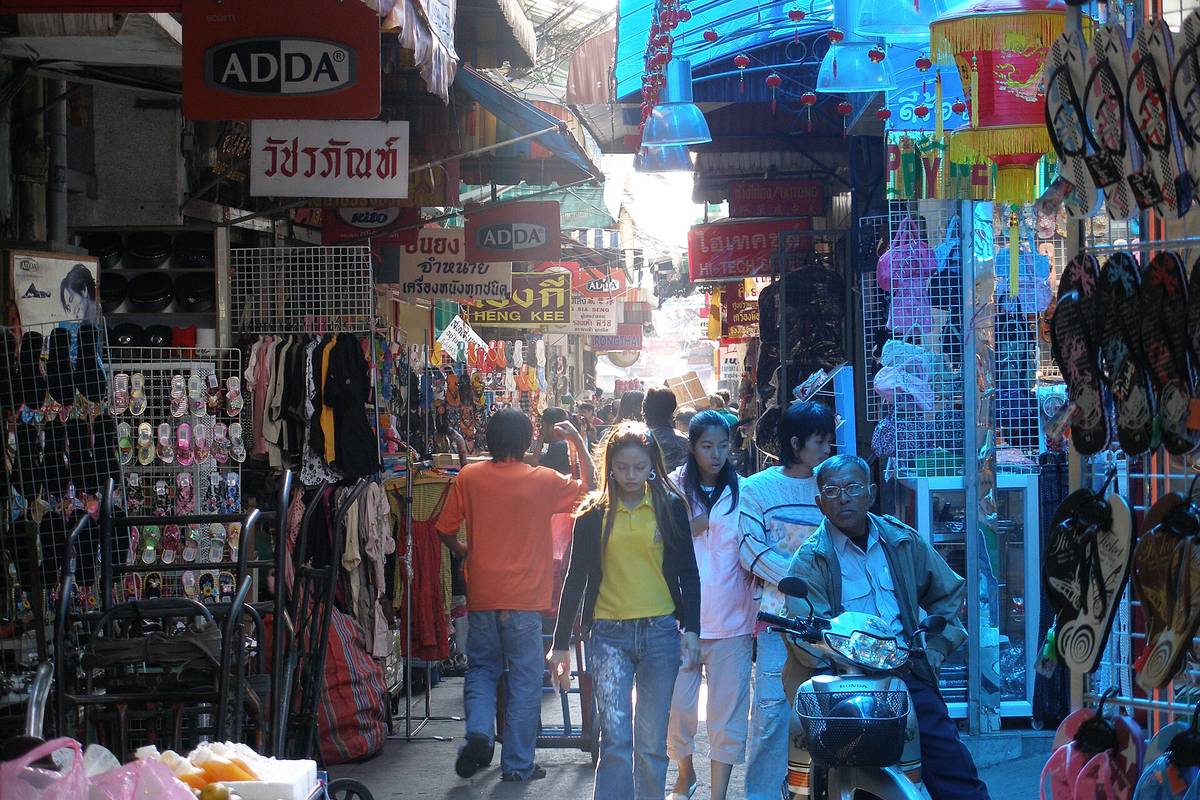
Pratunam sits in the middle of Bangkok's garment district, a dense grid of narrow streets lined with wholesale textile shops, street stalls, and low-rise guesthouses. For travelers comparing Bangkok neighborhoods, Pratunam is one of the cheapest central areas for accommodation, with basic private rooms often available for $20 to $30 per night. Its location is hard to beat: a 10-minute walk to Chit Lom BTS station and a direct connection to Ratchaprarop station on the Airport Rail Link, making it a practical base for first-time visitors on a tight budget.
The main draw is the wholesale market scene. Pratunam Market, Platinum Fashion Mall, and numerous shophouses sell clothing, accessories, and electronics at prices that attract local buyers and international resellers. Guesthouses are concentrated along Soi 19 and Soi 15, many offering air-conditioned rooms with private bathrooms for under $30. For budget shoppers, this is the best area to stay in Bangkok when you want to maximize purchasing power.
The trade-offs are significant. Traffic is relentless, sidewalks overflow with delivery carts, and motorbikes weave through pedestrians at all hours. Nightlife is almost nonexistent; rather than bars or clubs, the streets are packed with late-night food stalls and 24-hour markets. Some alleyways feel poorly lit and sketchy after dark, and navigating the area requires constant attention to avoid getting lost. For atmosphere and safety, Pratunam ranks lower compared to Sukhumvit or Silom.
Pratunam works best for travelers who prioritize cost and location over comfort and calm. Budget shoppers, solo backpackers, and anyone wanting central access to the BTS and Airport Rail Link without the price tag of Sukhumvit or Riverside will find it a practical choice. For those weighing Bangkok area pros and cons, Pratunam delivers value but demands a tolerance for chaos.
Phra Nakhon and Banglamphu - Historic Budget Gems
For travelers comparing Bangkok neighborhoods on a tight budget, Phra Nakhon and Banglamphu offer the best value under $40 per night. This historic district, hugging the Chao Phraya River, puts you an easy walk from the Grand Palace and Wat Pho, two of the city's most iconic landmarks. Canal-side hostels and guesthouses start at $8 to $15 per night, making it the most affordable base for culture-focused travelers. Unlike the high-energy Sukhumvit or Khao San Road, these streets are quiet and traffic-free, perfect for history buffs who want to explore at a slower pace.
The trade-offs are clear: fewer modern amenities and limited dining options after 10pm. You won't find the rooftop bars of Silom or the 24-hour convenience stores of Sukhumvit here. Most restaurants close by 9pm, so late-night eaters need to walk to Khao San Road (15 minutes) or settle for 7-Eleven snacks. For first-time visitors wondering where to stay in Bangkok, this area rewards those who prioritize cultural immersion over nightlife. Public transport relies on walking and river boats. The Chao Phraya Express Boat connects to the Skytrain at Saphan Taksin, but there's no BTS or MRT station within the district itself.
When weighing Bangkok area pros and cons, Phra Nakhon and Banglamphu are ideal for travelers who want to wake up to temple bells and canal views, not rooftop pools. The best area to stay in Bangkok by budget for culture lovers is right here, where history and affordability meet. This neighborhood earns top marks for authenticity and value, even if you trade a few creature comforts.
Mid-Range Bangkok: Best Value Neighborhoods $40-$100 per Night
Sukhumvit (Lower) - Convenient and Lively
Lower Sukhumvit, spanning Soi 1 through Soi 31, offers the best balance of convenience and value for mid-range travelers spending $40 to $100 per night on accommodation. This corridor connects directly to the BTS Skytrain (Nana, Asok, Phrom Phong stations) and MRT (Sukhumvit and Queen Sirikit stations), giving guests easy access to the entire city. The area is packed with hundreds of restaurants, from street food stalls on Soi 11 to air-conditioned mall food courts at Terminal 21 and EmQuartier. Accommodation options range from boutique hotels like the Adelphi Suites to family-sized serviced apartments, making it one of the most versatile districts in any Bangkok neighborhoods compared guide.
The downsides are worth noting when evaluating the best area to stay Bangkok by budget. Lower Sukhumvit is consistently noisy - motorcycle taxis, nightlife on Soi 11, and construction can disturb sleep. Traffic congestion during peak hours turns a 2-kilometer taxi ride into a 20-minute crawl. And while it is not the most expensive area in Bangkok, it is pricier than Khao San or Silom hotels in the same mid-range tier, especially for rooms with windows facing the street.
For first-time visitors, lower Sukhumvit is the most practical choice if you value walkability and transit access over quiet and cost. Couples and families who want to step out of their hotel and immediately find restaurants, convenience stores, and Skytrain entrances will appreciate Soi 1-31. The key trade-off is exchanging a little peace for a lot of convenience - a compromise many mid-range travelers happily make.
Silom - Business District with Nightlife
Silom occupies a unique position among Bangkok's mid-range neighborhoods, functioning as the city's financial heart by day and a lively nightlife district after dark. Hotels in the area typically fall between $40 and $100 per night, making it one of the more consistent options for travelers who want a central location without the premium prices of Sukhumvit's prime sections. The neighborhood's dual personality appeals to a specific type of visitor, but it also comes with trade-offs that are worth understanding before booking.
The transportation infrastructure is a clear advantage. Silom has its own BTS line (the Silom Line) with stations like Sala Daeng and Chong Nonsi, plus the MRT station Si Lom right at the intersection with Ratchadamri Road. This connectivity makes it easy to reach both the Riverside and Sukhumvit areas. The Patpong Night Market runs along the main soi, offering a classic Bangkok evening experience with bargain shopping and street food. During the work week, the area hums with office workers and dinner crowds.
The downsides emerge on weekends, when many office buildings empty out and the streets can feel surprisingly quiet, especially in the side sois away from the main thoroughfares. Some of the smaller lanes near the nightlife strip have a noticeably seedy atmosphere after dark, which may not suit first-time visitors or solo female travelers looking for a relaxed vibe. This is one of the key distinctions compared to neighborhoods like Khao San Road or Riverside Bangkok accommodation, where the energy stays more consistent.
For business travelers or anyone who wants to combine work with play, Silom strikes a practical balance. Lumphini Park, Bangkok's largest green space, sits at the northern edge of the district and provides a welcome escape for morning runs or evening strolls. When comparing Bangkok neighborhoods by budget, Silom offers a solid middle ground for travelers who value transport links and a dynamic workday atmosphere over a curated tourist experience.
Siam - Shopping and Connectivity Hub
When comparing Bangkok neighborhoods, Siam stands out for its transport links and shopping density. This district is a strong contender for the best area to stay Bangkok by budget for travelers who prioritize connectivity over local character. The BTS Siam station is the only interchange between the Silom and Sukhumvit lines, giving you direct access to both corridors without transferring. You can reach Chatuchak Market in 20 minutes or Thong Lo in 15.
Siam is built around a cluster of huge malls: Siam Paragon, CentralWorld, Siam Square, and MBK Center. For first-time visitors and shoppers, this is a major draw. You can walk between them via elevated skywalks, and the entire area feels polished and safe. The downside is that the area can feel artificial, compared to the organic chaos of Sukhumvit or the backpacker buzz of Khao San. Authentic street food is scarce here; most meals cost $5-10 in food courts rather than $1-2 on a sidewalk stall. Mid-range hotels in Siam also command a premium. A decent 3-star property near the BTS typically runs $60-80 per night, while a similar room in Sukhumvit or Silom might cost $40-60. This is a trade-off worth noting.
For travelers debating Sukhumvit vs Khao San or looking at Silom hotels and Riverside Bangkok accommodation, Siam is a helpful benchmark. It excels at one thing: getting you to other districts quickly. If your priority is minimizing travel time between attractions, Siam is the most efficient base. You can hit the Grand Palace in the morning (15 minutes by taxi), explore Chinatown for lunch (20 minutes by MRT), and be back at your hotel by 2 PM. That convenience makes it a strong candidate for where to stay Bangkok first time, as long as you accept the trade-offs in atmosphere and price.
Luxury Bangkok: Top-End Neighborhoods $100+ per Night
Upper Sukhumvit (Thonglor / Ekkamai) - The Hippest High-End Area
Upper Sukhumvit, the Thonglor and Ekkamai enclaves, consistently tops the list in any Bangkok neighborhoods compared guide for its upscale, cosmopolitan energy. Travelers determining the best area to stay Bangkok by budget will find this district firmly in the luxury tier, with rents and hotel rates often exceeding $100 per night. The area rewards its visitors with Michelin-starred restaurants like R-Haan, hidden speakeasy bars, and art-filled cafes such as Roast or Roots. Tree-lined sois are filled with luxury condos and boutique hotels that attract a fashionable expat and local crowd, giving the neighborhood a distinctly modern, trendy vibe.
Yet this sophistication comes with trade-offs. Accommodation costs are among the steepest in the city, and the notorious traffic on Sukhumvit Road can leave you stuck for twenty minutes just to cross a block. Public transit is limited to the single Thonglor BTS station, making commutes to central Silom or Riverside time-consuming. Note: Thonglor and Ekkamai are ideal for expats and design-conscious travelers who value style over budget savings, but less suited for first-time visitors on a tight budget (unlike the backpacker scene on Khao San Road). This Bangkok area pros cons analysis shows that the neighborhood sacrifices convenience and affordability for cachet.
Accommodation options here lean toward spacious serviced apartments. The Ascott Thonglor Bangkok offers one- and two-bedroom suites with full kitchens, while the Residence on Thonglor provides a pool and direct BTS access. These properties give luxury travelers a home base that feels more like a stylish apartment than a hotel room, cementing Upper Sukhumvit's place as a top pick for those seeking a modern, high-end stay in Bangkok.
Riverside - Iconic Views and Five-Star Hotels
Riverside Bangkok offers the city's most iconic skyline views, anchored by legendary hotels like the Mandarin Oriental, The Peninsula, and Shangri-La. Staying here means waking up to the Chao Phraya River's gentle current, with hotel-operated shuttle boats providing direct access to central piers and the BTS Saphan Taksin station. The atmosphere is notably serene, removed from the traffic noise of Sukhumvit and the backpacker bustle of Khao San; Riverside feels like a private enclave within the city. For travelers comparing Bangkok neighborhoods, this area stands out as the top luxury option, ideal for those who prioritize tranquility and panoramic scenery over nightlife or street-food density.
The trade-off for this calm is connectivity. Riverside is isolated from the BTS Skytrain network; the nearest station, Saphan Taksin, is a 15-20 minute walk from most hotels, and many properties require a taxi or hotel boat to reach it. Taxi fares to Sukhumvit or Silom run 150-200 baht during non-peak hours, and traffic can double that. Dining options are dominated by hotel restaurants and a handful of upscale riverside venues; affordable local eats are scarce within walking distance. This area is unequivocally expensive; hotel rates start at $100 per night and climb quickly, making it one of the priciest districts in the city.
Riverside accommodation is best suited for honeymooners and families seeking a relaxed, luxurious stay rather than non-stop exploration. The Mandarin Oriental's award-winning spa, The Peninsula's riverside pool, and Shangri-La's Horizon Club lounge represent the pinnacle of five-star hospitality. For first-time visitors wondering where to stay in Bangkok first time, Riverside is a strong choice if the budget allows and the goal is a romantic or rejuvenating escape. When comparing Sukhumvit vs Khao San vs Silom hotels, Riverside carves its own niche: unmatched views, serene atmosphere, and a pace that encourages slow travel over fast sightseeing.
Sathorn / Charoen Krung - Business Luxury with Culture
Sathorn and Charoen Krung form a unique corridor where Bangkok's glass-and-steel business district meets the city's oldest streets. The area offers a quieter, more refined alternative to the commercial buzz of Sukhumvit, yet remains well-connected via the BTS Silom Line and MRT Blue Line. High-end hotels here often occupy sleek towers with river views, while a five-minute walk can lead into narrow alleyways lined with century-old shophouses and temples. For travelers comparing Bangkok neighborhoods, this blend of contemporary luxury and historic character is hard to find elsewhere.
The trade-off is that Sathorn and Charoen Krung feel less touristy than Khao San or Sukhumvit. Attractions are spread out along the Chao Phraya River, making walking between them impractical even for short distances. Taxis, tuk-tuks, and the river ferry become essential, adding a small layer of planning. This is why the neighborhood suits executives and luxury travelers who want an authentic Bangkok vibe without the constant crowds. It is also a strong candidate for the best area to stay in Bangkok by budget for those willing to spend $100+ per night on a quiet, culturally rich base.
Charoen Krung, in particular, has blossomed into a creative hub. Warehouse galleries like ATT 19 and the Warehouse 30 complex host rotating contemporary art exhibitions, while riverside dining spots such as The Never Ending Summer serve modern Thai cuisine in converted industrial spaces. The neighborhood's street art scene, led by projects like Bukruk, adds color to the faded facades. This area offers a compelling mix of old and new that few other parts of the city can replicate.
Bangkok Neighborhoods Compared by Key Travel Needs
Best for First-Time Visitors: Where to Stay in Bangkok First Time
For first-time visitors, the best area to stay in Bangkok by budget is lower Sukhumvit (before Soi 55) or Siam. These neighborhoods offer the most convenient access to attractions via the BTS Skytrain, which runs above the main streets. The BTS connects major shopping malls like Siam Paragon and Siam Square, as well as cultural sites such as the Grand Palace (via a short taxi ride). The area is English-friendly, with signs, menus, and staff speaking English widely available. Among all the districts, these are the most beginner-friendly.
In a Sukhumvit vs Khao San comparison, Khao San Road draws budget travelers with cheap hostels and street food, but it lacks BTS access and can be overwhelming. Silom hotels cater to business travelers, but the area is less pedestrian-friendly for sightseeing. Riverside Bangkok accommodation offers stunning views but is isolated from the BTS, requiring taxis or boats. Among Bangkok neighborhoods compared, Sukhumvit and Siam offer the best balance for first-timers.
Proximity to the BTS is crucial. In Sukhumvit, stations like Nana, Asok, and Phrom Phong place you steps from restaurants, markets, and entertainment. The English-friendly environment means you can navigate easily without speaking Thai. For a first-time visit, staying within a 10-minute walk of a BTS station is a smart rule.
Safety tips: Bangkok is generally safe, but first-timers should avoid walking alone late at night in quiet alleys, keep valuables secure, and use official taxis or ride-hailing apps. In Sukhumvit, stick to well-lit main streets. With these precautions, any first-timer will feel comfortable exploring.
Best for Nightlife: Sukhumvit vs Khao San vs Silom
Bangkok's nightlife splits into three distinct scenes, each suited to a different budget and crowd. Khao San Road is the backpacker epicenter: cheap beer buckets, hostel bars, and street-side revelry where dress codes are nonexistent and a night out costs under $15. Sukhumvit, by contrast, offers upscale rooftop bars like Sky Bar at Lebua, speakeasies in Thonglor, and the famous Nana Plaza for go-go bars. Sukhumvit vs Khao San is a classic choice between backpacker chaos and cosmopolitan polish. Silom rounds out the trio with the densest red-light district (Patpong) alongside live-music venues and gay-friendly clubs like DJ Station.
| Neighborhood | Nightlife Style | Noise Level | Dress Code | Typical Night Cost | Best For |
|---|---|---|---|---|---|
| Khao San | Backpacker party street | Very high (street noise till 2am) | None | $10-20 | Budget travelers, first-time backpackers |
| Sukhumvit | Upscale bars, rooftop, Nana Plaza | Moderate to high (varies by soi) | Smart casual at rooftops | $30-80 | Couples, business travelers, upscale partygoers |
| Silom | Red-light, live music, LGBTQ+ | Moderate (Patpong loud, Silom quieter) | Casual at bars, none at Patpong | $20-50 | Nightlife seekers, LGBTQ+ travelers, curious explorers |
Your choice depends on your crowd. Party backpackers and solo travelers on a shoestring should head straight to Khao San for its low costs and energetic vibe, but be prepared for sleep-deprived nights. Travelers who want a polished night out with craft cocktails and skyline views should pick Sukhumvit, especially around Thonglor or Asok, though drinks cost three times what they do on Khao San. Those seeking the raw red-light experience or inclusive LGBTQ+ venues will find Silom's Patpong and Soi 4 unmatched. In comparing Bangkok neighborhoods, the best area to stay Bangkok by budget for nightlife is Khao San for tight wallets, Sukhumvit for comfort, and Silom for a middle ground with edge. Choose based on your preferred party style.
Best for Families: Riverside vs Sukhumvit vs Banglamphu
When comparing Bangkok neighborhoods for families, three distinct options stand out: Riverside, Sukhumvit, and Banglamphu. Riverside offers luxury with high-end hotels like the Mandarin Oriental and Shangri-La, which feature kids' clubs and pools, but nightly rates start at $200. Sukhumvit provides unmatched convenience with BTS Skytrain access, family-friendly malls like EmQuartier and Siam Paragon, and serviced apartments from $50 a night. Banglamphu, centered on Khao San Road, delivers cultural immersion with the Grand Palace, Wat Pho, and street food, but accommodations are mostly budget guesthouses starting at $15.
Safety is generally high across all three. Sukhumvit's main roads are well-lit and patrolled, while Banglamphu's narrow alleys require extra caution with young children. Riverside's hotel compounds are secure but isolated. For accessibility, Sukhumvit wins with the BTS connecting directly to major attractions. Families should weigh the trade-offs between luxury, convenience, and culture.
Parks and playgrounds are a key consideration. Lumphini Park in Silom offers playgrounds, paddle boats, and open lawns. Families in Sukhumvit can reach it via a short BTS ride. Riverside lacks a central park but compensates with hotel gardens and pool areas. Banglamphu has Sanam Luang, a large open field near the Grand Palace, though it has limited playground equipment. For families deciding the best area to stay in Bangkok by budget, Sukhumvit's combination of mid-range accommodation, easy access to attractions, and nearby parks makes it the most practical choice.
Best for Transportation: BTS vs MRT Access Across Districts
For travelers weighing the best area to stay in Bangkok by budget, transportation access can make or break the experience. The city's elevated BTS Skytrain and underground MRT cover different districts, and knowing which neighborhoods connect to which system directly affects daily costs and time spent in Bangkok's notorious traffic.
Sukhumvit stands out as the most rail-connected district. It has dual access: the BTS Sukhumvit Line runs through the entire corridor, and the MRT Blue Line intersects at stations like Asok and Sukhumvit. This means a traveler staying near Nana or Phrom Phong can reach Siam, Silom, or Chatuchak without touching a taxi. The convenience comes at a premium, but the savings on Grab rides (often 100-200 baht per trip) offset the higher accommodation cost for budget-conscious visitors who plan to move frequently.
At the opposite end, riverside districts offer minimal rail access. The BTS Silom Line reaches Saphan Taksin, but most Riverside Bangkok accommodation lies further north along the Chao Phraya, requiring a taxi or the ferry. The ferry is cheap (15-30 baht) but slow, adding 30-45 minutes to any journey to central areas. Khao San Road has no BTS or MRT at all. Travelers there rely on tuk-tuks, taxis, or the river boat from nearby Phra Arthit Pier. A taxi from Khao San to Sukhumvit can take 45 minutes in traffic and cost 150-200 baht, eating into a tight budget.
For a first-time visitor deciding where to stay in Bangkok first time, Sukhumvit offers the best transit value despite higher room rates. The combination of BTS and MRT eliminates the need for frequent taxis, keeping daily transport costs under 100 baht. Silom hotels also benefit from the BTS Silom Line and MRT Silom station, making it a strong second choice. Riverside and Khao San appeal to those who don't mind using boats or taxis, but the added transit time and cost should factor into your choice.
Best for Safety and Quiet: Which Area Is Safest in Bangkok?
Bangkok is generally a safe city for travelers, but the level of petty crime varies by district. The Royal Thai Police and Tourist Police consistently report that pickpocketing and bag-snatching incidents are concentrated in crowded nightlife zones and market areas. By contrast, residential and business districts see far fewer problems. When comparing Bangkok neighborhoods, the quietest and safest corners are often the ones with the least nightlife.
The Lumphini Park area, upper Sukhumvit (beyond Ekkamai), and Sathorn stand out for their calm atmosphere. Sathorn, a tree-lined business district, is home to many Silom hotels that offer soundproofed rooms and 24-hour security. Residents here enjoy wide sidewalks and low foot traffic after dark, making it a top choice for families and solo travelers who prioritize sleep. Upper Sukhumvit, from Thong Lo to Phra Khanong, feels more residential than central Sukhumvit, with fewer touts and more local cafes. For those comparing Sukhumvit vs Khao San, the difference in noise and safety is stark.
Khao San Road and the Patpong night market area are the exceptions. Patpong, a red-light district in Silom, attracts aggressive touts and common scams like inflated drink tabs. Khao San is a backpacker hub where loud music, street vendors, and pickpocketing are routine. Both areas are safe in the sense that violent crime is rare, but the constant pressure to buy, the noise, and the higher risk of petty theft make them less suitable for anyone seeking a quiet stay.
No matter which district you choose from this Bangkok districts guide, a few simple habits keep you secure. Keep valuables out of back pockets, use only official taxi meters or ride-hailing apps, and avoid walking alone down unlit alleys after midnight. For first-time visitors wondering where to stay Bangkok first time, a quiet base like Sathorn or Riverside Bangkok accommodation offers peace of mind. The best area to stay Bangkok by budget does not need to sacrifice safety; a modest guesthouse in a calm neighborhood beats a party hostel every time.
Bottom Line: Choosing the Best Area to Stay in Bangkok by Budget
Your Guide to Picking the Perfect Bangkok Neighborhood
Whether you are traveling on a shoestring or seeking a five-star experience, this Bangkok neighborhoods compared guide helps you find the best area to stay in Bangkok by budget. Khao San Road offers dorm beds from $10 or private rooms from $15-30, with a lively atmosphere. Mid-range travelers find Sukhumvit and Silom hotels for $30-80, connected by BTS Skytrain. Luxury seekers book Riverside accommodation starting at $100, rising to $500-plus at the Peninsula or Mandarin Oriental.
This Bangkok districts guide has compared each neighborhood's price, atmosphere, and convenience, giving you full Bangkok area pros and cons. Use the comparison table above to quickly see which district fits your budget and priorities. The table summarizes average hotel cost, transport, attractions, and nightlife, making it easy to decide between Sukhumvit vs Khao San or other areas.
To make your final choice, prioritize what matters most. Budget travelers head to Khao San. Culture seekers stay near the Old City. Luxury lovers choose Riverside. First-time visitors wanting modern comfort and convenience pick Sukhumvit. Each area has its own character, and there is no wrong choice, only the right one for your trip. Book your accommodation based on your priority: budget, culture, or luxury.
Official sources
Details worth verifying before you go — checked against:

Travel Writer & Editor
Emily Johnson writes and edits Do Travel Blog. Every guide on the site starts the same way: with a question she actually had while planning — when to book, which pass to buy, how to get from A to B without overpaying. Where a number matters, she cites the source: park tickets link to the park's own fee page, visa rules to the official consulate, ferry times to the operator. Prices get re-checked against those pages before each update, and a guide is re-dated when its numbers move. Nothing here is sponsored — she doesn't accept payment for coverage. Spotted something stale or wrong? Email hello@dotravel.blog and she'll fix it.