10 Days in Vietnam North to South: What I Did & Skipped
Read my honest 10-day north-to-south Vietnam travel diary: what I did, what I skipped, and what you should prioritize on your own itinerary.
Why I Chose a North-to-South Vietnam 10-Day Itinerary
I had always wanted to see Vietnam's incredible diversity, from the misty mountains in the north to the floating markets in the south. But with only 10 days of vacation, I knew I had to be strategic. The classic Vietnam 10 day itinerary that runs north to south seemed like the most logical way to pack in the contrasts without backtracking. Flying into Hanoi and out of Ho Chi Minh City meant I could move in one direction, letting the country unfold in front of me.
That decision shaped every planning choice. It meant starting with Hanoi's old quarters and a Ha Long Bay cruise, then taking a night train to Hue for the imperial citadel, a short drive over the Hai Van Pass to Da Nang and Hoi An, and finally flying south to Ho Chi Minh City with a side trip to the Mekong Delta. Each leg had its own rhythm, and I had to accept that I would be moving fast. But a north to south Vietnam trip forces you to prioritize, and that honesty is exactly what this article is about.
What follows is my personal Vietnam travel diary, a no-nonsense breakdown of what genuinely impressed me, what felt like wasted time, and the mistakes I made along the way. I will tell you which experiences justified the travel chaos and which ones I would skip entirely if I could do it again.
Days 1-2: Hanoi - Chaotic Charm and Culinary Delights
Arrival and First Impressions of Hanoi's Old Quarter
Stepping out of Noi Bai Airport into the Hanoi heat was a full-body wake-up call. The taxi ride to the Old Quarter felt like a videogame, a constant flow of motorbikes, cars, and cyclos merging without rules, horns honking not in anger but as a constant announcement of presence. I clutched my bag and let the driver do his thing. It took about 45 minutes to cover the 30-kilometer drive, but that first ride already taught me the unwritten rule of Vietnamese traffic: slow down, look, and keep moving.
Our hotel was a small family-run place on Hang Bac Street. After dropping our bags, we stepped out for our first walk through the Old Quarter. It's an assault on the senses in the best way. The smell of grilled pork skewers from a street cart mixed with incense from a nearby temple. A grandmother fried spring rolls on a tiny stool while her grandchild played with a stray cat. Every lane had its own personality, one street sold only metal goods, another only silk. The energy is relentless, but it has a rhythm. It's chaotic, yes, but it's also alive.
For accommodation, I'd recommend booking early and picking a street off the main tourist drag. Hang Tre or Hang Bong are quieter at night but still central. To get oriented, download Google Maps offline and learn the grid of streets named after their trade (Hang Gai for silk, Hang Bac for silver). It helps a lot.
One decision I made before arriving was to skip the night train to Sapa. Many travelers do it for the rice terraces, but with only 10 days, I chose to spend my time in the north on a full day in Hanoi rather than rushing up and back. Instead, I saved the mountain scenery for later stops in central Vietnam.
For anyone planning a similar route, know that this is where your Vietnam 10 day itinerary truly begins. Hanoi feels like the nerve center of the whole journey, and adjusting to its pace on day one is the first of many lessons this country will teach you.
Street Food Tour and Cultural Must-Sees
My first taste of Hanoi came on a street food tour, and it set the tone for the entire trip. We started with bun cha at a smoky alley stall: grilled pork patties swimming in a sweet-savory broth alongside a heap of fresh herbs and rice noodles. Then came a steaming bowl of pho at a place where the broth had been simmering since dawn, the beef slices melting on the tongue. I finished with egg coffee at a tiny upstairs cafe, the frothy, condensed-milk top almost dessert-like. It was the kind of meal that makes you slow down and take notes in your Vietnam travel diary.
After eating, we walked off the calories around Hoan Kiem Lake. The red bridge leading to Ngoc Son Temple is as photogenic as everyone says, and the turtle tower on the little island makes the whole scene feel storybook. The temple itself is small but peaceful, with a giant preserved turtle in a glass case, a reminder of the lake's legends.
The next morning we faced a decision: Ho Chi Minh Mausoleum or something else? The queue was already long by 7 AM. The mausoleum is undeniably important historically, but honestly, I found it stiff and impersonal, a quick walk past a glass coffin with no room to linger. The nearby One Pillar Pagoda, a tiny lotus-shaped temple on a single stone pillar, was far more charming and took five minutes to see. If you are short on time, skip the mausoleum and spend that hour at the Temple of Literature instead, one of those Vietnam trip mistakes I was glad I avoided.
That evening we found our way to Bia Hoi Corner, where plastic stools spill onto the sidewalk and a glass of fresh beer costs less than a dollar. I ended up chatting with a couple from Australia and a solo traveler from Japan, swapping stories about trains and motels. Those unplanned moments, street food, cheap beer, strangers becoming friends, are the ones I scribbled into my Vietnam travel diary before bed. They are what make any Vietnam 10 day itinerary feel fuller than the number of days suggests.
Days 3-4: Ha Long Bay - Natural Beauty vs. Overtourism
Sailing Among the Limestone Karsts
I booked the two-day one-night Ha Long Bay cruise through my hotel in Hanoi, a decision that quickly became the defining experience of the trip. The junk boat sliced through the emerald water as limestone karsts rose around us, each one more dramatic than the last. Lunch was served on deck while the captain wove past islands that looked like they had been painted there.
That afternoon we kayaked into hidden lagoons, paddling through a low cave entrance to reach a pocket of water so still it mirrored the sky. Swimming was optional, but I jumped off the kayak into the cool water without hesitation. Later, we followed a guide into a small cave formation where stalactites dripped from the ceiling like frozen rain.
Sunset on the bay deserves every bit of praise it gets. As the sky turned orange and the karsts turned silhouette, I sat on the top deck with a glass of Vietnamese coffee and felt the entire 10 days in Vietnam itinerary justify itself in that single moment. It was quiet, personal, and real.
But there is a contrast you cannot ignore. Our boat took an alternate route away from the main thoroughfares, avoiding the floating karaoke bars and mass tourist barges. In the quieter channels, you see Ha Long Bay as it was meant to be seen. The crowded spots like Titop Island felt rushed and loud. If you are planning a Vietnam route plan, choose a cruise that prioritizes these backwaters. It is, without question, the northern highlight of any Hanoi to Ho Chi Minh journey.
What to Skip: Overhyped Cruise Add-Ons and Crowded Spots
People often ask me what to skip in Vietnam, and overhyped Ha Long Bay cruise extras top my list. Squid fishing sounds charming in the brochure but involves standing on a noisy deck under bright floodlights with a dozen other guests holding hand lines. We gave it twenty minutes, caught nothing, and went back to the cabin. Karaoke nights are another easy pass. On a bay this beautiful, sitting indoors singing to a tinny speaker feels like a missed opportunity. Instead, we sat on the top deck and watched the lights of passing boats.
Titop Island was the most crowded stop on our north to south Vietnam trip. The small beach was packed shoulder-to-shoulder, and the climb to the viewpoint turned into a slow, hot shuffle behind a long line of tourists. We spent our hour there feeling rushed and disappointed. I would not trade an afternoon of cruising among the karsts for that stop. If your itinerary includes it, keep your expectations low.
Your choice of cruise affects everything. For our Vietnam 10 day itinerary I booked a small junk carrying sixteen passengers rather than one of the large party boats. That meant quieter meal times, more space on the sun deck, and a captain who took us away from the main routes when other boats appeared. Smaller operators also tend to skip the floating village stops that feel commercialized, giving you more time on the water.
If you have flexibility, head to Bai Tu Long Bay instead. It runs along the northeastern edge of Ha Long Bay and shares the same dramatic limestone scenery but sees only a fraction of the visitors. A couple we met during the trip had sailed there and described kayaking through empty lagoons with the karsts rising around them in silence. That sounds like the authentic experience worth paying for, not another round of karaoke.
Days 5-6: Central Vietnam - Hue, Da Nang, and the Hai Van Pass
Hue's Imperial Citadel and Royal Tombs
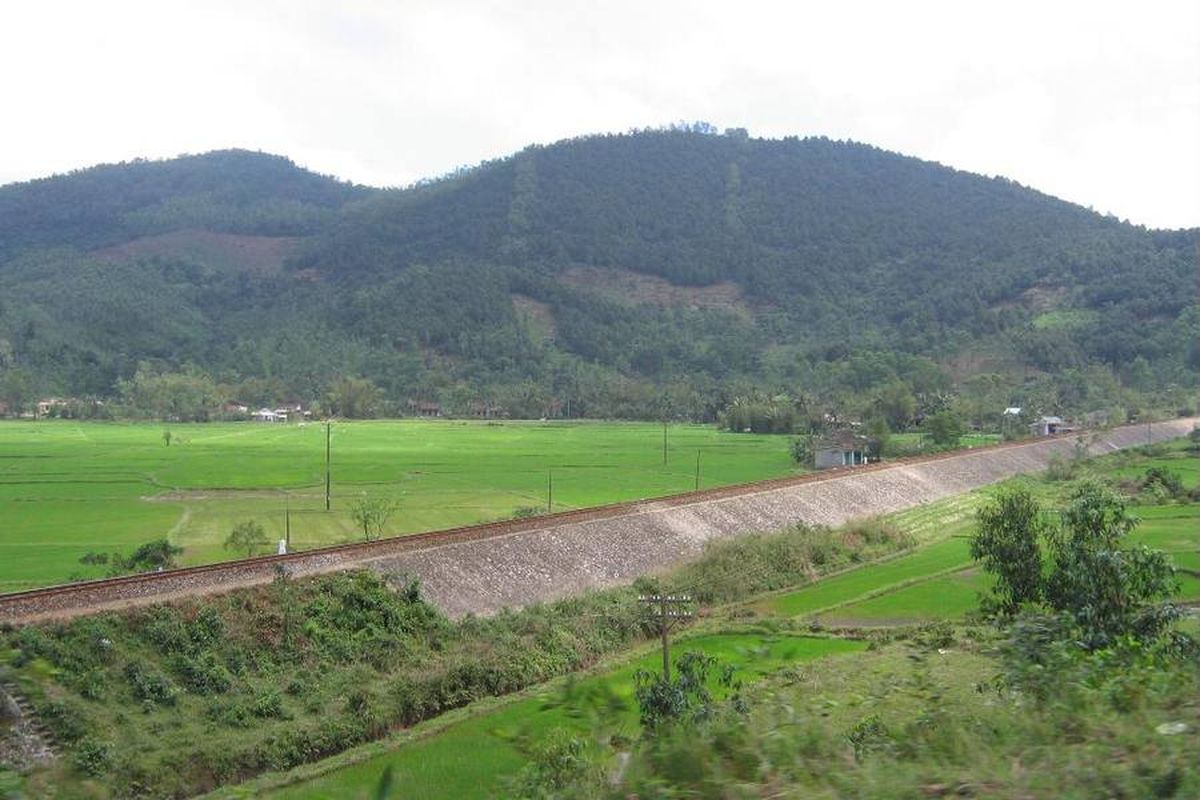
The overnight train from Hanoi to Hue was my first real test of the Vietnam route plan I'd sketched out. I booked a soft sleeper in a four-berth cabin on the Reunification Express - it cost around $30 and took about 13 hours. The carriage was worn but clean, and the gentle rocking put me to sleep by 10 p.m. The shared bathroom was basic, so I'd recommend packing wet wipes and a sleep mask. It's a common mistake to skip the train in favor of flying, but the experience of waking up to misty countryside rolling past felt essential to any north to south Vietnam trip.
In Hue, I spent a full day exploring the Imperial Citadel. The Forbidden Purple City inside it was heavily damaged during the war, but enough remains to feel its former scale - the gardens, the throne room, the ceremonial gates. I paid the 200,000 VND entry fee and walked for three hours. Later that afternoon, I took a short taxi ride to Thien Mu Pagoda, perched on the Perfume River. Its seven-story tower is Hue's most recognizable landmark, and the view from the riverbank is worth the trip alone.
The tomb of Emperor Khai Dinh was unlike anything else I saw. It blends Vietnamese, French, and even Gothic elements into one extravagant hillside complex. The centerpiece is a mosaic dragon made from broken porcelain - detailed, almost surreal. If you're deciding what to skip in Vietnam, some people say the other royal tombs are interchangeable, but this one stands out as a genuine oddity.
I ended the day with a boat ride on the Perfume River. The tourist boats hawk drinks and souvenirs, but if you go at sunset with a small wooden boat rather than a packed one, you get the stillness the name promises. For my Vietnam travel diary, that quiet glide past the pagoda's silhouette was the highlight of Hue.
Driving the Hai Van Pass to Da Nang
For the drive from Hue to Da Nang, I had to choose between renting a scooter or hiring a private car. I went with a scooter, and it was the right call for this leg of the journey. The Hai Van Pass rewards those who take it slowly, and on a scooter you can pull over whenever something catches your eye without worrying about a driver waiting. My husband rode with our daughter in a baby carrier strapped to his chest, and I followed behind, both of us grinning under our helmets. A car would have been more comfortable in the rain, but we had dry weather, and the freedom to stop at every viewpoint made the 20-kilometer stretch feel like a full-day adventure rather than a commute.
The viewpoints along the pass are the main event. At the Lang Co Bay lookout, the turquoise water stretched out below with fishing boats bobbing in the calm. Further up, the old French bunkers have been overtaken by graffiti and souvenir stalls, but the panorama of the coastline curving north toward Hue is worth a five-minute pause. We stopped three times in total the whole way, each time finding a different angle of the Truong Son mountains meeting the East Sea. The road is narrow in places and big tour buses do come around blind corners, so I would tell anyone driving to take it easy and keep an eye on the rearview mirror.
Da Nang's beaches were a welcome change of pace after the pass. My Khe Beach, sometimes called China Beach, has a long stretch of fine white sand and gentle waves perfect for cooling off. We spent a late afternoon there, letting our daughter dig in the sand while we watched the sun drop behind the Son Tra Peninsula. The peninsula itself is worth a separate visit, especially the giant Lady Buddha statue at Linh Ung Pagoda, which you can see from miles away. We skipped the crowded Monkey Mountain area but the ride around Son Tra's coastal road offered quiet coves and jungle-covered slopes that felt far from the city.
Before leaving Da Nang, we made a quick detour to the Marble Mountains, a cluster of five marble and limestone hills just south of town. We took the elevator up rather than climbing the 156 stone steps, and from the top the view of Da Nang's coastline and the surrounding countryside was fantastic. The caves inside the mountain have small Buddhist shrines and natural skylights that make for dramatic photos. The whole visit took about an hour, which is enough for the main caves without feeling rushed. For anyone planning a Vietnam 10 day itinerary, this central leg from Hue to Da Nang via the Hai Van Pass is the scenic highlight of any north to south trip.
What to Skip in Central Vietnam - Touristy Spots and Time Wasters
Travelers on a Vietnam 10 day itinerary often try to pack too much into Central Vietnam. One of the biggest Vietnam trip mistakes is booking the full-day DMZ tour from Hue. While historically significant, it eats up an entire day with long drives to remote sites like the Vinh Moc tunnels and Khe Sanh combat base. The emotional weight of war remnants can feel draining, especially on a quick trip. Similarly, the Dragon Bridge fire show in Da Nang happens only on Saturday and Sunday evenings at 9 p.m. Even then, it's a brief burst of flames and water, often underwhelming given the crowd it draws. If your visit doesn't line up with a weekend, it's not worth rearranging your schedule.
Another trap is relying on crowded tourist buses between cities. The Hai Van Pass is spectacular, but cramming into a bus of 40 people ruins the experience. Consider a private car hire or the scenic train instead; the extra cost pays off in comfort and photo stops. For a well-balanced Vietnam route plan, allow time for relaxation. After the intensity of Hue's historical sites, spend a relaxed afternoon on Da Nang's My Khe Beach or explore Hoi An by bike. This prevents burnout and leaves room for spontaneous discoveries, a key principle in any Vietnam travel diary.
In short, curating your 10 days in Vietnam means knowing what to skip. Avoid these central Vietnam traps and you'll have a more enjoyable, less rushed journey.
Days 7-8: Hoi An - Lanterns, Tailors, and Tourist Traps
The Magic of Hoi An's Ancient Town and Lantern Festival
The magic of Hoi An's Ancient Town hits you at dusk. I walked through streets strung with hundreds of silk lanterns, their reflections trembling on the Thu Bon River. Couples released paper boats with candles, and the air smelled of grilled meat and incense. The Japanese Covered Bridge, built in the 1590s, still connects the old quarters. You can see the tiny temple inside. Nearby, the Phuc Kien and Cantonese assembly halls display intricate wood carvings and ceramic dragons that hint at the town's mercantile past.
The next morning, I joined a cooking class that started at the central market. Our guide, Mrs. Hoa, showed us how to pick the best herbs and shrimp by sight and smell. We took a boat to a cooking school on the river's edge and made cao lau, banana flower salad, and spring rolls. Frying them ourselves and sprinkling crushed peanuts on top made it unforgettable. Hands-on and practical, no pretense.
On day eight, I rented a bicycle and rode through the rice paddies to An Bang Beach. The path was quiet, with water buffalo and farmers in conical hats. I swam for an hour and ate grilled squid at a beach shack. For my Vietnam travel diary, this kind of spontaneous day made the entire trip feel complete. If you are following a 10 days in Vietnam itinerary, do not skip the bike ride. It is the antidote to the tourist crowds.
What to Skip: Tailor Shops, Overpriced Tours, and Crowds
One of the hardest things about Hoi An is resisting the famous tailor shops. When planning a 10-day itinerary in Vietnam, the promise of a custom dress or suit for a fraction of Western prices sounds incredible. But quality varies wildly. I watched a fellow traveler get a dress that looked perfect in the shop but unraveled after one wash. Unless you have time for multiple fittings and know your fabrics, skip the expensive custom pieces. Stick to a simple lantern or scarf as a souvenir instead.
The basket boat ride in the coconut forest appears in every Hoi An itinerary. Yes, spinning in those round coracles while locals show off tricks is genuinely entertaining. But it feels engineered for tourists, with a photo op at the end. If you only have two days in Hoi An, skip this and spend the time on the old town or a cooking class instead.
The old town crowds in the afternoon are suffocating. We walked through around 2 PM and left after ten minutes. The magic of the lantern-lit streets disappears when you can barely move. Go early, before 9 AM, or after 8 PM, when the lanterns glow and souvenir shops are closed. That is when Hoi An truly shines.
One more skip: the My Son Sanctuary day trip. If you love Cham ruins and have a deep interest, go. But if you have visited any other temple complex in Southeast Asia, or are short on time, the two-hour drive each way feels underwhelming. We chose a morning cooking class instead and had a far more memorable time.
Knowing what to skip in Vietnam is just as important as knowing what to see. In our case, Hoi An taught us that lesson. By ignoring rushed tailor shops, touristy boat rides, and midday crowds, the real charm of the town shines through.
Days 9-10: Ho Chi Minh City and the Mekong Delta
Ho Chi Minh City - Modern Energy and War History
Stepping off the train from Hanoi to Ho Chi Minh felt like landing on another planet. My north to south Vietnam trip had taken me from quiet, misty temples to the roar of a million motorbikes. Saigon's energy hits you immediately. Skyscrapers tower over chaotic streets, and the constant stream of scooters weaves through intersections with a rhythm I never fully mastered. It was the perfect final stop for my 10 days in Vietnam.
The next morning I visited the War Remnants Museum. It is a sobering experience and, in my opinion, an absolute must-see. The photographs and artifacts tell a side of the war I had only read about in textbooks. I left quieter, more grateful. This is not something to skip in Vietnam.
Ben Thanh Market was overwhelming in a different way. Stalls of souvenirs, spices, and counterfeit goods. I walked through quickly, bought a coffee, and headed to Nguyen Hue Walking Street. The wide pedestrian boulevard lined with modern cafes felt like the city's living room, full of families and young couples taking evening promenades.
For a panoramic view, I took the elevator up to one of the rooftop bars near Bitexco Tower. Looking out over the glowing skyline, I could trace my entire Vietnam route plan: from the Old Quarter in Hanoi down through the central coast, all the way here. It was the kind of view that makes you feel small in the best way.
Ho Chi Minh City closes my Vietnam travel diary on a high note. The energy, the history, the food. It all converges in this final city. If you are planning your own 10 days in Vietnam, save time for Saigon.
Mekong Delta Day Trip - Authentic or Tourist Factory?
The Mekong Delta day trip was one of those experiences I had to try, even knowing it might be a tourist trap. I booked a bus tour from Ho Chi Minh City that promised floating markets, coconut candy workshops, and honey tea tasting. The boat ride through the narrow canals was genuinely beautiful, with overhanging palm trees and the slow rhythm of the water. But the floating market at Cai Be was more of a show than a working market: a few boats with fruit arranged for photos, not the bustling trade I had read about. Still, seeing vendors selling from their boats gave me a glimpse of the river life that defines this region.
The coconut candy workshop and honey tea tasting felt like assembly lines. We watched a short demonstration, tasted a few sweets, and were immediately led into a gift shop. Our group of 30 moved in a herd from one stop to the next. The honey tea was pleasant enough, but it was clear the whole operation was designed for volume, not authenticity. I left wondering what a real visit to a family-run coconut farm would have been like.
If you want a more authentic experience, skip the big bus tours. Look for small-group tours with fewer than 10 people. Ask if the tour includes a homestay meal with a local family rather than a buffet lunch. Seek out operators that visit less crowded canals, like those in Ben Tre or Tra Vinh. In my research, companies like Mekong Eyes and Delta Adventure Tours get good reviews for smaller, more meaningful itineraries. It costs more, but you trade the factory feel for actual connection.
In hindsight, I would still include a Mekong Delta day trip in my Vietnam 10 day itinerary, but I would choose a smaller group. It is not that the standard tours are bad. They just show you a smoothed-over version of life here. On a route like this, the Delta is a necessary stop, but how you experience it makes all the difference.
What to Skip in Southern Vietnam - Burnout and FOMO
The final two days in Ho Chi Minh City are where FOMO hits hardest. You know you are running out of time, so the temptation is to cram in three day trips, a cooking class, and a walking tour before your flight. I nearly fell into that trap, and it would have ruined the ending of the trip. The most common mistake I see in backpacking Vietnam itineraries is trying to visit the Cu Chi Tunnels on a half-day tour. Yes, the tunnels are informative and historically important, but the crowds are extreme. You shuffle through narrow passages shoulder-to-shoulder with hundreds of other tourists, and the experience feels more like a theme park queue than a reflective historical site. Unless you are a military history buff, I would skip it and read about it instead.
Another easy skip: the so-called 'traditional' village visits marketed by budget tour operators. They bus you to a local house where women pretend to weave baskets for your photo, then pressure you to buy souvenirs at triple the market price. These stops are pure tourist traps that teach you nothing about real life in the Mekong Delta. Instead, use those precious daylight hours to explore Ho Chi Minh City's neighborhoods on foot. Districts 1, 3, and 5 each have a completely different vibe and cost nothing to wander.
The real danger in southern Vietnam is travel burnout from trying to do too much in two days. A 10-day Vietnam itinerary from Hanoi to Ho Chi Minh is already ambitious. Adding Mekong Delta boat rides, Cao Dai Temple, Cu Chi, and Ben Thanh Market into 48 hours guarantees exhaustion. You will spend more time in transit than experiencing anything. Prioritize one thing: either a morning in the Cuu Long Delta with a single boat trip, or a slow day eating your way through HCMC. That is how you end a Vietnam travel diary feeling satisfied, not wrecked. Save the rest for next time.
Conclusion - Final Thoughts on the North-to-South Vietnam Journey
What I Would Do Differently and What I'd Keep
If I had to pick the moments that made my Vietnam trip, they would be the limestone karsts of Ha Long Bay from the deck of a traditional junk boat, the warm glow of lanterns in Hoi An's Old Town at dusk, and walking through the imperial citadel in Hue imagining centuries of dynastic history. Those three stops formed the backbone of my north to south Vietnam trip.
I would skip the overpriced luxury cruises on Ha Long Bay again. They cost four times as much as a standard overnight trip with almost identical routes and less actual time on the water. Tourist traps like the so-called bamboo circus in Hoi An and the aggressively marketed massage parlors near Hoan Kiem Lake felt like a waste of time and money. Stick to authentic experiences, not the ones advertised on every street corner.
Ten days in Vietnam is tight, no doubt. But with a solid Vietnam route plan you can hit the highlights without feeling completely exhausted. The key is not trying to squeeze in every city listed in guidebooks. I cut Dalat and Nha Trang to focus on quality time in fewer places, which made the Hanoi to Ho Chi Minh journey manageable rather than frantic. The biggest Vietnam trip mistakes I saw other travelers make were booking too many internal flights and skipping rest days.
The moments that taught me most happened when I abandoned the plan. Chatting with a noodle vendor in Hanoi about her family recipe or taking a spontaneous boat ride through the Mekong Delta with a local fisherman. Those interactions cost nothing but left the deepest impression. For your own Vietnam 10 day itinerary, my main advice is to pick the experiences that excite you most, skip the ones everyone says you must do, and leave room for the unexpected.
Official sources
Details worth verifying before you go — checked against:

Travel Writer & Editor
Emily Johnson writes and edits Do Travel Blog. Every guide on the site starts the same way: with a question she actually had while planning — when to book, which pass to buy, how to get from A to B without overpaying. Where a number matters, she cites the source: park tickets link to the park's own fee page, visa rules to the official consulate, ferry times to the operator. Prices get re-checked against those pages before each update, and a guide is re-dated when its numbers move. Nothing here is sponsored — she doesn't accept payment for coverage. Spotted something stale or wrong? Email hello@dotravel.blog and she'll fix it.