Northern Lights in Vík, Iceland: When to Go, Self-Drive Routes, and Quiet Viewing Spots
Plan northern lights in Vík, Iceland: month-by-month darkness hours, self-drive aurora routes with parking and safety, and the quietest south coast spots.
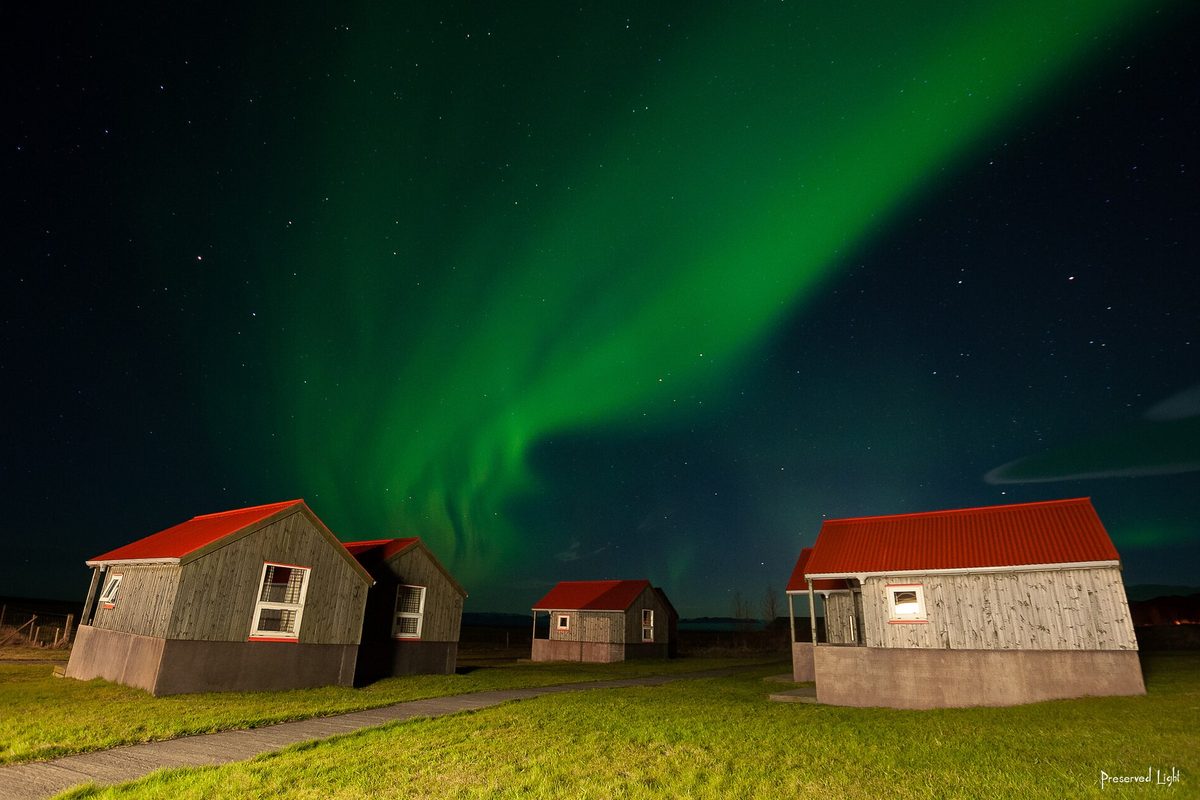
Seeing the Northern Lights at Vík in Iceland's Remote South
I still remember the winter my partner, our young daughter, and I rented a drafty aurora cabin above Vík to chase the northern lights without the crowds of Reykjavík. The village is a dot on the map — a church, a fuel station, a row of guesthouses — but it sits where the southern highlands fall into the North Atlantic, and the nearest real city glow is hours away. We stepped outside minutes after dusk, and over a week we watched the sky from the black beach, the church hill, and once from a frozen field with nobody else around.
This guide gathers everything I wish we had known on that first trip. When the season actually opens and how many darkness hours each month really gives you. Which viewpoints are worth the walk and which fill with tour buses. How to self-drive the hunt safely when the Ring Road is sheathed in ice, and what to do with the daylight hours. There are settings for photographing the lights with minimal gear, a note on guided tours if you would rather not drive at night, and a short word on keeping the darkness dark. One plan, from the first forecast check to footprints in the black sand.
Why Vík's Skies Go Green
Vík sits at about 63.4 degrees north, close to the Arctic Circle, so the auroral oval often passes directly overhead. That latitude is the main reason remote Iceland gets such strong displays: even a weak solar wind shows up from the black sand shores. Darkness is the second factor. No large town sits within an hour's drive, and the lava fields around the village swallow what little light remains. In our budget cabin we could see the Milky Way clearly enough at midnight to walk by it. Standing in a dark field beats any paid tour. Geomagnetic activity completes the picture, though the numbers deserve their own section below. Our rescue cat Biscuit stayed home in Lisbon, but the wilderness pulled us to slow down and watch.
Aurora Season and Darkness Hours, Month by Month
The practical season runs from late August to early April, though August itself usually shows only a faint glow, and the darkness fades gradually through April. Outside that stretch nothing you plan matters: from late May to mid-July the midnight sun keeps the sky in permanent twilight, and aurora viewing is simply impossible, no matter how strong the solar wind.
Here are the darkness hours near Vík, which I keep as rough planning figures rather than gospel — clouds override all of them:
- September — 8 to 10 usable hours; average temperatures 8–10 °C and calmer coastal winds than winter
- October — around 9–10 hours by mid-month, past 14 by month's end; frequent short clear spells between fronts
- November — about 18 hours; coastal temperatures minus 2 to minus 5 °C with a sharp Atlantic wind
- December — dark from roughly 4 pm to 11 am around the solstice; over 20 hours of darkness, under 3 of usable daylight
- January — about 18 hours; the sun sets before 4:30 pm and rises after 10 am
- February — 17 to 18 hours, with the season's clearest high-pressure nights
- March — around 10 hours of astronomical darkness early, 7–8 late
- April — down to about 6 hours of faint twilight by mid-month; the sky no longer reaches full astronomical dark by month's end
The equinoxes matter more than the solstice, which surprises people. Around September and March, Earth's tilt lines up with the solar wind flow — physicists call it the Russell-McPherron effect — and geomagnetic storms come more often, so activity peaks twice, not once at the longest nights. The sun itself adds a slower layer: an 11-year cycle between quiet minimum and stormy maximum, and we are near a maximum in the mid-2020s, which is why displays have run brighter than the long-term average. I watch sunspot numbers before booking, not just the forecast for the week I am away.
Now the honest weakness. Vík sits on the south coast, directly under the North Atlantic storm track, and it is statistically cloudier than Iceland's north around Akureyri and Mývatn. What you trade in cloud statistics you get back in access: dark spots ten minutes from a guesthouse instead of a five-hour drive, and a village that absorbs a storm day without ruining the trip. Plan around Iceland weather windows rather than dates. After a rainy October afternoon I have stood near the black sands and watched clouds tear open at 10 pm, revealing a green arc within minutes. A calm February high can outperform a stormy December.
Month by month, this is how I would actually allocate nights. September is the gentle opening: the weeks around the autumn equinox, especially September 20 to 28, bring the steadiest oval activity, and I plan outings from 21:00 to 01:00. A short drive to Dyrhólaey or the open fields near Reynisfjara clears the village glow. October sharpens the cold and lengthens the nights; patience gets rewarded by short clear spells, and the south coast towns mark the month with light festivals. November delivers long, steady darkness, but roads near Vík ice early — I book guesthouses with cancelable rates and keep a spare day or two. December is the polar night, dark enough that a modest solar wind still shows, and the right month to target the new moon because even a sliver of moonlight washes out faint bands; just know guesthouses sell out from December 20 to January 2, the church services and community events keep the village warm through the holidays, and cloudy evenings go to hot springs and slow baking. January is the most dependable sky: cold high pressure settles over the coast, temperatures drop to around minus 5 °C, the frost burns off the cloud, and the forecast shows frequent Kp 3–4 nights. February gives those 2–4-night windows of still air near minus 2 °C, colder in the residual breeze; leave the village by 9 pm to escape streetlight glow, drive ten minutes to Dyrhólaey or the beach. March is my pick for the balance: another equinox peak, roads from Reykjavík mostly clear of ice, guesthouse rates off their winter highs, and the February crowds thinned out. April is the last call — aim for the first two weeks and watch the Met Office cloud map daily. After that, book September instead; shoulder months reward flexible travelers, and flights and cabins cost less before the deep-winter rush.
Using the Kp Index and Aurora Forecasts
The Kp index looked like a cryptic code when I first planned a hunt. It runs from 0 to 9 and measures geomagnetic disturbance from solar wind: 0 is calm, 9 a severe storm. For Vík the location beats the number — at 63.4 degrees north the sky often shows color at Kp 2 or 3, while higher values just push the display brighter and further south along the horizon. I check the live Kp before any midnight outing, but the cloud layer decides more.
The tools I actually use: the Icelandic Met Office posts a daily northern lights forecast with cloud cover, which matters enormously on the foggy south coast, and their evening update shows where gaps open after a front. NOAA runs a 30-minute prediction plus a three-day outlook, and the Aurora Forecast app (aurora-forecast.is) pings me when charged particles arrive. Hello Aurora and My Aurora Forecast overlay cloud on your position, which is the combination that matters — bright forecast plus clear patch. In my own prep I pair those feeds with a weather radio; that habit has saved me from driving to the beach into fog. When a coronal mass ejection appears, forecasters may call Kp 5+ three days out, and I block those nights. A stronger storm brightens the display low on the horizon, sometimes visible from the village itself, though even a modest event makes the night. If you join a tour, ask the guide to read the Kp on site — the good ones do it unprompted.
Viewing Spots around Vík
Reynisfjara black sand beach
Reynisfjara is a five-minute drive east of the village and works as the first stop on any route. The Reynisdrangar basalt stacks rise from the surf and make a natural frame; when green bands appear above those dark columns you already have a foreground without props. Use the main car park — it gets plowed all winter and lets you leave the rental safely while you walk to the shore. Turn your headlights off once parked so your eyes adjust, and arrive before 10 pm while the road is still empty. Note that the lot closes when waves surge, so watch the surf before you commit.
Safety comes before any shot. Sneaker waves here are unpredictable and have swept visitors off the shore. I keep at least 30 meters from the waterline and never turn my back on the sea. Climbing the basalt columns is closed, and wet pebbles get slick while you stare at the sky — a headlamp with a red filter keeps night vision while still showing the ground.
Most visitors park near the entrance and head west, but I prefer the quiet eastern edge. Reach it by the gravel path 400 meters past the restrooms, then the stile by the old hut. The fifteen-minute walk leaves you alone even on busy nights, and the cliff mass — the columns rise to sixty meters in places — blocks most of the village glow from the west and shelters you from the coastal wind. Tidal timing matters more than people expect: the best mirror comes on a falling tide, about an hour after high water, when a thin film of seawater still coats the sand. I check the Icelandic tide tables before dusk and aim for the 23:00–01:00 window. That also happens to be when the coach groups have gone — most leave by 11 pm — so between midnight and 2 am you can have the whole beach to yourself. I avoid weekends, when extra guides add evening departures.
Dyrhólaey peninsula
I always point travelers to Dyrhólaey when they want a panorama, because the cliff top is unbeatable. Park at the lower lot and walk the gentle slope to the lighthouse ridge, a grassy point about 120 meters above the Atlantic. The sky unfolds over water and black lava fields, and the small shielded lighthouse makes a perfect dark foreground — frame the red-and-white tower against the glowing horizon. The gate stays locked from early May through late June to protect nesting puffins and arctic terns, but that is the midnight sun anyway; from September to March the road is open, and early winter dusk gives a long window. Watch for ice on the path and use a headlamp.
The second spot here is the natural arch, a ten-minute walk from the main lot along an unlit, flat-but-uneven trail. From the clifftop the aurora lines up through the rock window, and on clear nights the lights reflect in the water below for a second show. I counted six other people on a whole March evening — rare on this coast. Start the walk an hour before the forecast peak, bring a thermos, and if clouds sit on the peninsula, pair it with Reynisfjara rather than waiting it out.
Quiet spots: hills, valleys, and inland lava
The hills behind Vík are the quietest spots closest to town. From the grassy slope above Víkurkirkja church you see the village, the beach, and the Reynisdrangar stacks under moonlight; a short walk northeast along the ridges gives nearly 180 degrees of open horizon. Tour buses skip these slopes for practical reasons — narrow gravel tracks, no pull-offs, no toilets — which is exactly the point. It is a ten-minute climb for a whole sky.
Farther out, the moss-covered floor of Þakgil valley, twenty minutes from the Ring Road, cuts out nearly all artificial light; on a clear night the sky reflects off still river pools in a full 360 degrees, and in late September the Milky Way competes with the aurora. The isolated Dímon ridges — Stóri-Dímon among them — rise northeast of Vík past the Reynir farm; park at the lay-by where the track leaves the Ring Road and you get open horizons over the sands with zero facilities, which keeps everyone else away. The Eldhraun lava field, formed by the 1783 Lakagígar eruption, is my deep-sky favorite: mossy craters block stray light and make natural windbreaks, and on a clear February night I counted four distinct curtains above the lava with no other car in sight. On the Vík–Hella stretch, a gravel lay-by near the Krossá bridge about 15 km west of town has no streetlights at all — but black ice forms on that flat plain and many pull-offs lack guardrails, so park fully off the road, use hazards, and check road.is first.
Two cautions from my own notes. Inland spots do not dodge coastal cloud — when the front rolls in, the whole south clears or closes together, so always check the Met Office cloud map before choosing between a beach and a valley. And much of this land is private farmland or fragile moss: stay on existing tracks, close gates, take a compass, and tell someone your route, because signal drops fast. Small-group walks toward the highland edge near Hrífunes cap at six people, and if you are driving yourself, the trailhead east of Hvanngil leads fifteen minutes inland to open dark. Staying at a farmstay means stepping out at 11 pm already under stars. This is where the off-the-map routes and remote safety habits earn their keep.
Self-Driving the Aurora Hunt
Choosing and prepping the car
The rental choice makes or breaks the trip. A 2WD hatchback with proper winter tires handles the paved Ring Road fine on clear nights; a 4WD earns its price on snow-packed pull-offs where the plow rarely passes. Icelandic law requires winter tires on rentals from November through April, but some budget agencies fit them only for a fee — confirm they are already on the car before signing. Ask for gravel protection too, because loose stone shoulders are everywhere on the south coast and chipped windshields are routine. I also want ABS, a heated windshield, and full insurance covering ash and sandstorm damage from the nearby Katla volcano. Peak season empties the fleets fast: for October to March, book at least two months ahead. I learned this one February when only expensive last-minute vans remained. Local agencies sometimes hold smaller cars for early birds. Winter-driving fundamentals live in my Iceland driving notes; the short version is long braking distances and no rushing on the way back.
The classic night loop
My standard evening starts at Reynisfjara, then heads west on Route 1 to the two big waterfalls. The Skógafoss turnoff comes about 30 km west of Vík, and Seljalandsfoss sits another 25–30 km on. Both falls carry a winter floodlight, but the surrounding fields stay dark, which suits a hunt. The full loop is roughly 120 km. In December the sun sets near 3:30 pm and full darkness settles by 5 pm; I leave Vík around 7:30 pm after a warm meal, photograph both falls before midnight, and am back by 2 am. The gravel lots fill early, so arrive before 9 pm.
Fuel shapes the route. The N1 station on Vík's eastern edge is open 24 hours and takes all major cards at the pump — but carry a physical card with a PIN, because unmanned pumps reject some foreign chips. The next sizable stations going west are Hvolsvöllur (Orkan), Hella, and Selfoss, and plenty of small ones close by 22:00 in winter. Never let the gauge drop below half: a car idling with heater and defroster at a viewpoint burns more than you expect, and the stretch east toward Fjaðrárgljúfur has long gaps between services. More stops worth knowing are in my Ring Road notes.
A longer loop and an hour-by-hour plan
With more than one night, stretch the hunt east along the Ring Road toward the Diamond Circle sites near Mývatn — about 1,200 km round, so four or five nights through Kirkjubæjarklaustur, Skaftafell, Höfn, and Egilsstaðir, sleeping in small guesthouses rather than wild camping. The logistics are the whole game on that route: full insurance, gravel cover, and a buffer night for cloud. My Ring Road lodging notes list the stops worth a bed.
For a single night in deep winter, this is the plan I actually run. Leave town at 7:30 pm to dodge the worst evening wind. First stop, the signed Hjörleifshöfði pull-off about ten minutes east — forty minutes scanning the sky over the low hills, well away from streetlights. Then the Dyrhólaey lower parking area, which stays open when the upper road closes for the birds; give it thirty minutes over the ocean. If the sky holds, finish at the Sólheimajökull glacier car park for a final hour with the ice tongue as foreground. Drive back on low beams and slow, and pull into the N1 for a fifteen-minute rest, a hot drink, and a last forecast check before sleeping. Heated seats make the waits comfortable.
Parking, night driving, and emergencies
Map legal parking before dark. The reliable lots: the main Reynisfjara car park (spacious but windswept — I have seen it full by 8 pm in October), the Víkurkirkja area above town with its clear horizon, the signed pull-off at Hjörleifshöfði, the Dyrhólaey east lot, and the open field by Hvolsvöllur if you roam farther west. All are plowed and set back from the travel lanes. When the sky lights up mid-drive, the temptation to stop right there is enormous — resist it. Blocking Route 1 is illegal and dangerous, snowplows move fast after dark, and parking on private land needs the farmer's permission. Arrive at your chosen lot an hour before the forecast peak; that buffer buys legal parking, a thermos, and no tow stress.
Check safetravel.is before any hunt — it collects weather alerts, closures, and wind readings for the whole country, and on this coast a clear evening can become a whiteout in under an hour. I check road.is and safetravel.is every couple of hours on travel days; a February 2024 storm shut the Hvolsvöllur–Vík stretch for nine hours, and arriving after a closure traps you on the wrong side of it.
The driving habits that matter: drop 10–15 km/h below the limit and double your following distance, because thin ice hides under fresh snow. Crest blind hills slowly with your foot near the brake — sheep and arctic foxes cross without warning even in winter. Full beam on open stretches, dipped beam at viewpoints and for oncoming cars, since bright light ruins everyone's night vision and photos. Walk around the car before departing to check all lights and clear snow off the lenses. Save your target spots during daylight so you are never on a phone on a curve: download the whole region for offline use in Maps.me or Google Maps before leaving town, including the smaller side tracks the tour buses skip, star each planned lot as a saved place, and drop a GPS pin at any spot worth returning to — signal disappears between Vík and the remote viewpoints, and a blank screen on ice is its own emergency.
The emergency kit is non-negotiable on this wild coast. Icelandic guidance expects a reflective vest per passenger; count heads before locking up. Add an ice scraper, a thick wool blanket plus a sleeping bag rated to minus ten, two liters of water, a charged power bank kept in an inside pocket because cold kills batteries, and — proven useful when the rental slid into a drift near Dyrhólaey — a tow rope and sand traps. The 112 Iceland app shares your GPS position with rescuers, works offline, and has a check-in button for your route; download it on wifi and read my app notes before you go. Save the road assistance number in your phone and study the route exits on paper, since small emergency huts are marked on maps along the south coast corridor but you should not count on finding one in the dark. Tell your host where you will park and when you expect back, and carry a whistle — three short blasts carry far if you slip on ice. If a storm traps you, stay with the car and run the heater in short bursts to save fuel. And watch the cliffs: edges at Dyrhólaey and Reynisfjara hide under snow and become invisible at night, so watch the sky from set-back viewpoints, not the rim.
Photographing the Northern Lights at Vík
Settings that survive the wind
I arrived assuming I needed pro gear. I didn't. Manual mode, ISO 1600 — up to 3200 when the display is faint — and the widest aperture your lens allows, usually f/2.8 or f/4. Exposures run 5 to 20 seconds: start at 8, drop toward 4 when the bands move fast and bright, and take test shots because high ISO adds noise. A sturdy tripod and a remote shutter (or the two-second timer) are the difference between a photo and a smear; beach wind flattens light legs. Focus on the stars, not the foreground: manual focus, zoom live view onto a bright star like Vega, nudge to infinity, then tape the ring. Shoot RAW to keep the dark sand detail. My cold-beach checklist: microspikes for frozen sand, spare batteries inside the jacket, a towel to shield the lens from spray, hand warmers in pockets, and the red-mode headlamp so adjustments do not blind anyone.
For composition, the Reynisdrangar stacks on the left third with aurora above the Atlantic beats any postcard; keep the horizon low so the sky fills the upper two thirds, and use the wet-sand mirror on calm nights after rain. Frame the hexagonal columns along the bottom edge, wait for a lull in the surf before shooting, and block the village glow behind a basalt wall when you can. Full field technique lives in my aurora photography notes.
Beyond the single frame
The aurora spreads wider than one lens can hold, so for the full arc I stitch a panorama: portrait orientation, about 30 percent overlap between frames, focus locked at infinity, settings consistent at ISO 1600, f/2.8, 8 seconds, merged later in Photoshop or PTGui. Noise is the second problem, and stacking fixes it: instead of one long exposure I shoot ten identical frames and let Sequator align and average them, which smooths grain and avoids the star trails a 30-second exposure would leave. Post-processing ties it together — white balance around 3800K keeps the green natural, lifted shadows recover the foreground, luminosity masks protect the bright bands. When I shot the stacks at night, the reflection on wet sand demanded careful contrast control. If landscape work is new to you, my landscape guide covers the basics.
Guided Tours from Vík
When you would rather not drive icy roads, the first choice is a small-group minibus versus a super jeep. I favor groups of eight or fewer: the guide can chase cloud gaps, and the quiet makes the sky feel closer. Super jeeps reach valleys regular cars cannot, but they burn more fuel and can disturb soft tundra — a trade-off that matters to slow travelers. Judge operators by substance, not flashlights: guides with meteorology training or years of winter work, published success rates, and vehicles that are electric or biofuel with capped group sizes, because the moss recovers slowly. A typical evening starts with pickup around 9 pm and runs about four hours with two or three viewing stops and hot chocolate; the best guides watch Met Office updates and the Kp hourly, shift departure times as clouds roll in, and keep guests informed by phone when the start moves. Cancellation follows a pattern too — if clouds defeat the hunt, most operators offer free rebooking or partial credit. If a night with a guide appeals, the glacier-and-ice-cave operators also run winter aurora departures from the village.
Staying Warm and Leaving It Dark
Cold is the first plan, not an afterthought. A proper layering system keeps you functional through a long, still session: merino base that wicks, fleece mid layer, waterproof shell on top, so you can adjust between a warm car and a frozen viewpoint. On one trip the temperature hit minus eight with a wind chill near minus eighteen, and the layers — not the car heater — saved the night. Full kit lists live in my layering guide.
Then treat the darkness as part of the show. My phone screen stays dim, the red headlamp comes on only when I need the ground, and headlights and interior lights stay off once parked in a designated lot. Pack out every wrapper, cup, and lens cloth. Stay on marked paths, because around Vík the ground is lava field and low moss that takes decades to recover from a bootprint, and the frozen winter crust can hide soft spots anyway. After-dark plans should never include bonfires or drones with bright lights. A quiet approach keeps the wilderness dark and the experience personal.
Planning a Vík Aurora Trip
Things to do in Vík besides the aurora
Daytime shows a landscape just as rewarding. I walked behind Seljalandsfoss and later hiked onto Sólheimajökull glacier with a local guide; the walks need crampons but feel safe, and my daughter loved spotting ash layers in the blue ice — a sign the landscape is alive and changing. For food, skip bus buffets and visit the bakery on Vík's main street. I bought rye bread and tried plokkfiskur, a haddock and potato mash, at a family café, and the visitor center lists the markets where farmers sell smoked lamb and berries. Daylight is also when to scout the Reynisfjara shore properly: the basalt columns rise like a cathedral, and knowing the terrain by day makes choosing a night viewing spot far easier. In summer, puffins crowd Dyrhólaey instead of aurora hunters.
Where to stay in Vík for aurora viewing
I stay in one place for several nights rather than moving. For comfort, choose hotels with north-facing windows so you can watch from bed: Hotel Vík í Mýrdal and Icelandair Hotel Vík both have rooms that catch the sky over the horizon, and guesthouses at the edge of the village sit away from the streetlights. A glass-roofed cabin a few kilometers out is the splurge — you watch green bands from under a blanket. September to April fills fast: I reserve three months ahead and keep dates flexible by a week to catch clear skies, with cancelable rates as insurance. Prices spike near the equinoxes, so budget planners aim for late October or February, and if you want the December atmosphere, book before the December 20–January 2 sellout. A base close to your spots works best; seeing the lights is mostly staying put and reading the forecast. I give flights the same flexible week — running the dates through my go-to flight search first usually finds a fare that makes the longer stay easy to justify.
If You Go
The landscape shapes everything here. Reynisfjara and the coastal viewpoints give you foregrounds that do not exist elsewhere in the country, the inland valleys give you silence, and the season — late August through early April, peaking around the equinoxes and the clear January highs — gives you a real chance if you stay put and read the sky instead of chasing it. I have planned plenty of winter routes, and this stretch remains my favorite for its raw beauty and easy logistics. If you have been hesitating, the plan above is the whole barrier: pick a month with long nights, book a flexible bed, prep the car, and let the forecast call the evenings. The display is never guaranteed, but this is how you give yourself the best possible shot.
Official sources
Details worth verifying before you go — checked against:
Travel Writer & Editor
Emily Johnson writes and edits Do Travel Blog. Every guide on the site starts the same way: with a question she actually had while planning — when to book, which pass to buy, how to get from A to B without overpaying. Where a number matters, she cites the source: park tickets link to the park's own fee page, visa rules to the official consulate, ferry times to the operator. Prices get re-checked against those pages before each update, and a guide is re-dated when its numbers move. Nothing here is sponsored — she doesn't accept payment for coverage. Spotted something stale or wrong? Email hello@dotravel.blog and she'll fix it.