The Echoes Remain: Reflections on a Journey into the Unknown
A personal account of spiritual travel and a guide to navigating the supernatural for inner transformation.
The Threshold of Perception
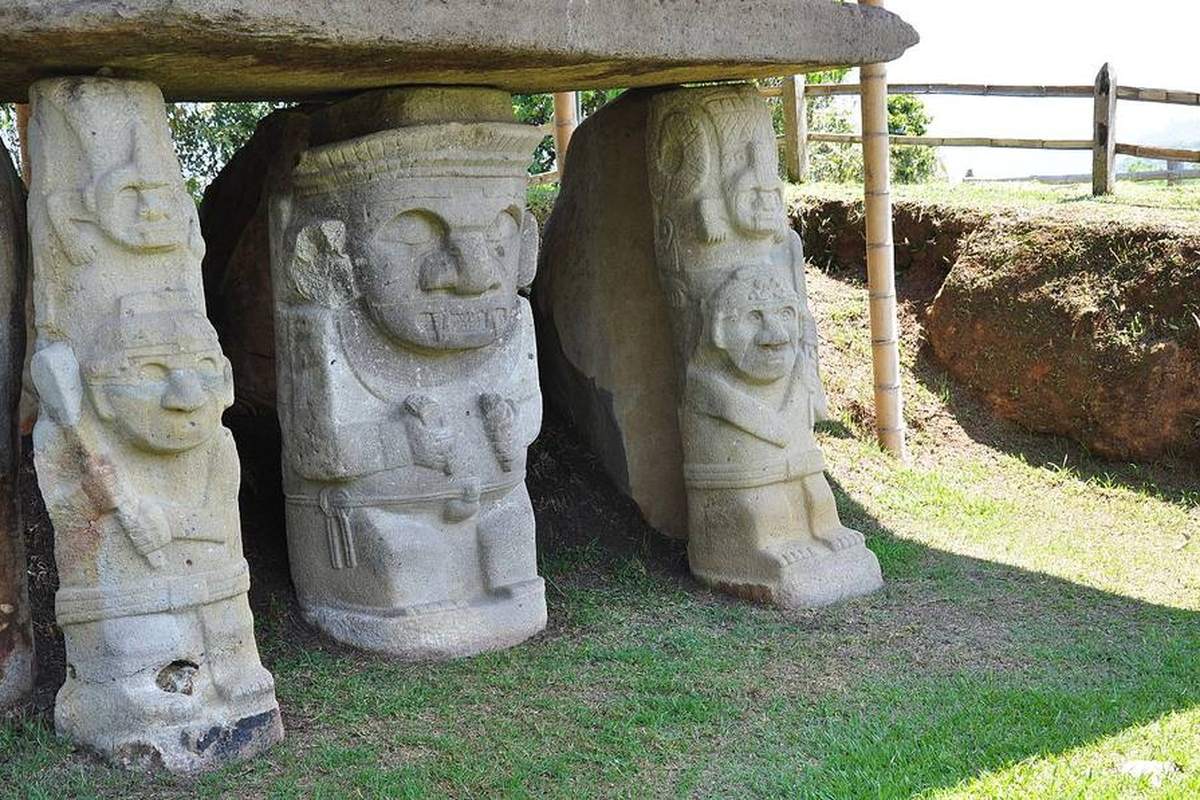
Stepping into the unknown is rarely a sudden leap. It is a slow erosion of the boundaries we build around our understanding of reality. For years, I viewed the world as a series of logical sequences, a physical space where cause and effect reigned supreme. However, my recent spiritual travel began as a quiet curiosity and evolved into a total restructuring of my internal map. When we talk about a spiritual travel experience, we are not just discussing a trip to a geographic coordinate. We are discussing the movement of the soul toward a frequency that the modern mind is trained to ignore.
My journey started with a simple desire to visit sites where the veil is thin. I sought out places where history and mystery overlap, believing that by visiting these locations, I could find a spark of something missing in my daily routine. What I found was not a ghost story or a haunting, but a mirror. The supernatural is often a reflection of the internal state. If you enter a space with fear, you find terror. If you enter with openness, you find wisdom. This realization was the first major shift in my perception. I learned that the observer, not the environment, dictates the experience. This feeling of discovery often mirrors the art of finding hidden spots in a physical city.
The Weight of Silence
One of the most profound aspects of this journey was the discovery of silence. Not the absence of sound, but a heavy, intentional silence that exists in ancient groves and ruined cathedrals. In these spaces, the noise of the ego fades. I spent weeks practicing a specific kind of mindfulness, allowing myself to enter a meditative state where I stopped trying to force a specific outcome. I realized that most people travel to see things, but the true goal of a spiritual travel journey is to see through things. This pursuit of stillness is similar to the silence of the secret we seek in unmapped places.
During my time in the highlands, I encountered a stillness that felt alive. It was here that I first felt the presence of something non-physical. It was not a visual apparition but a pressure in the air, a sudden shift in temperature, and a feeling of being watched by a thousand invisible eyes. Instead of recoiling, I leaned in. This is the core of a spiritual travel mindset: the transition from resistance to acceptance. When you stop fighting the impossibility of the experience, the experience becomes your new reality. For those interested in the intersection of myth and reality, I have written about my encounters with folk wisdom.
Mapping the Unseen
I wanted to map what was happening to me, because mapping is how I make sense of anything. I brought a compass, a notebook with gridded pages. The highlands declined to cooperate. The instruments measured the ground fine; they didn't measure what I was actually tracking, which was my own state moving through it.
So I kept two journals instead of one. The first recorded events: weather, times, places. The second recorded what I brought to them — how I'd slept, what I was avoiding, what mood I'd packed alongside the gear. The second journal turned out to be the real map. On the day I arrived, wound tight from weeks of transit, the stillness read as hostility. By the second week, the same stillness read as company. Nothing in the place had changed. The instrument had.
I don't take that as proof of nothing, and I don't take it as proof of spirits. The skeptic's explanation — wind, drafts, suggestion, a mind that fills in gaps — is always available, and I don't rush it off the table. But "the observer sets the dial" and "there was nothing to observe" are not the same claim, and only one of them survived my notes. I kept a fuller field diary of the mystic region itself, and a method for testing what regional legends are actually made of; both taught me the same lesson. You map the unseen from the inside out, or you don't map it at all.
What Changed When I Came Home?
I expected the shift to fade at the airport. It didn't, exactly — it went quiet. For months afterward I caught myself reading ordinary rooms the way I'd learned to read the highlands: pressure first, sound second, my own state third. Rooms have weather too. Most of the time it's just heating systems and other people's moods. I didn't come home psychic, and I'd distrust anyone who says they did.
What lasted was the ordering. I check myself before I check the room now, because the mirror runs both directions — anxiety makes hostile rooms out of quiet ones, and longing makes company out of drafts. The highlands didn't give me a belief. It gave me a calibration, and the calibration turns out to be portable. Returning from any altered state is its own skill; I've written about the collision of coming back from total detachment — the same problem at higher intensity. The world doesn't renegotiate with the person you became. You just have to keep the new settings running in the old rooms. The silence you found out there is only useful if it survives the noise in here.
What Would I Tell Someone Drawn to the Thin Places?
First, audit what you're carrying. If you enter a thin place afraid, you'll find terror, and if you enter open, you'll find something closer to instruction. That was my finding and I'd stand behind it. The site is a mirror before it's anything else, so the real preparation is internal, and it's free.
Second, don't go hunting proof. Wanting evidence guarantees you'll come home with a reflection of your expectations, which proves only that mirrors work. Go to be present instead. That sounds soft until you try it and discover how hard it is to sit somewhere without demanding it perform.
Third, and this one isn't negotiable for me: the people who live beside these places have rules, and the rules are safety equipment. If locals tell you not to walk somewhere after dark, or not to follow a light off the path, the folklore doesn't need to be literally true for the advice to be correct. Treat it as gear.
My opinion, stated plainly: you don't need to believe in ghosts for any of this to matter, and you don't need to disbelieve either. But if skepticism is what lets you stay open — if believing would have you flinching at every draft — then keep the skepticism. It's the better traveling companion. The mindset that ruins these trips was never doubt. It's hunger.
I still don't know what I met in the highlands. I know what it changed, and I know the change has kept. Maybe that's the only verification worth carrying out of a place like that: the experiment doesn't end when you leave. It keeps running, quietly, in every room you walk into afterward.
Official sources
Details worth verifying before you go — checked against:
Travel Writer & Editor
Emily Johnson writes and edits Do Travel Blog. Every guide on the site starts the same way: with a question she actually had while planning — when to book, which pass to buy, how to get from A to B without overpaying. Where a number matters, she cites the source: park tickets link to the park's own fee page, visa rules to the official consulate, ferry times to the operator. Prices get re-checked against those pages before each update, and a guide is re-dated when its numbers move. Nothing here is sponsored — she doesn't accept payment for coverage. Spotted something stale or wrong? Email hello@dotravel.blog and she'll fix it.