Hiking and Trekking Guide: Volcanoes, Glaciers, and Us
A hiking and trekking guide covering volcano summits, multi-day treks from the Dolomites to Patagonia, trail gear, and the mental side of long routes.
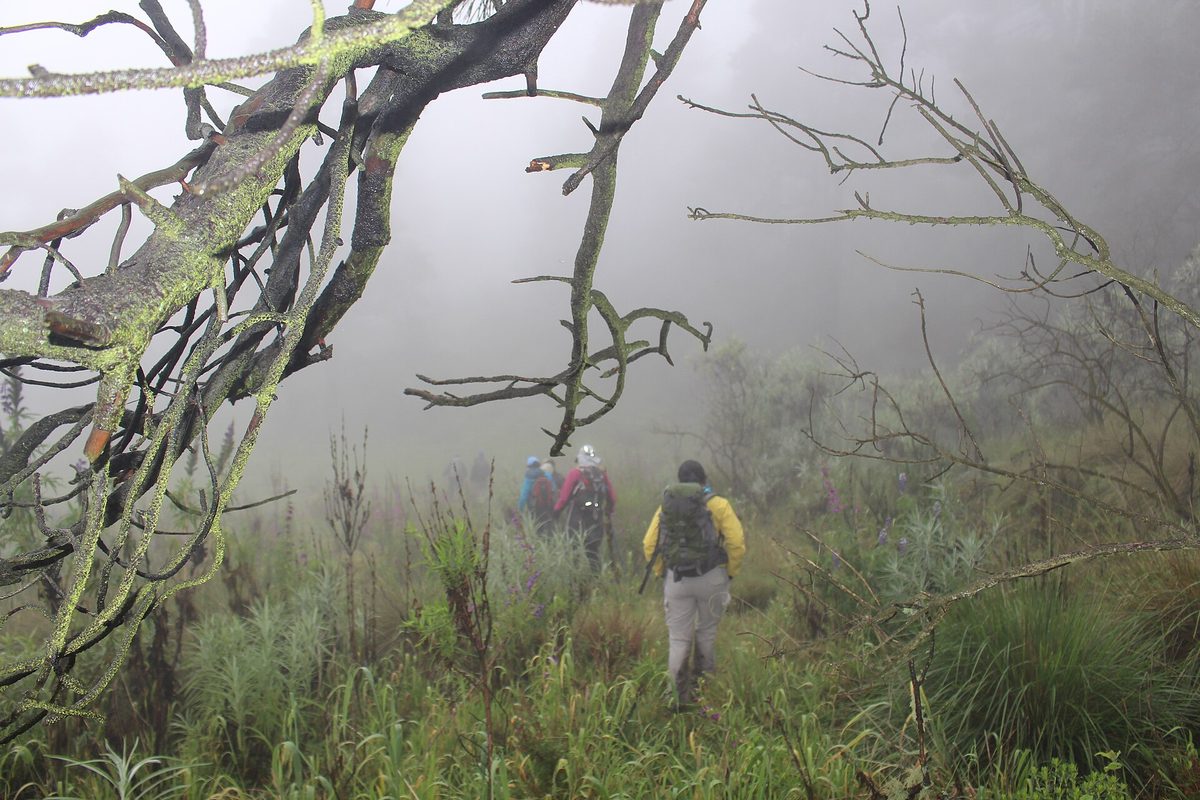
This cluster is the largest on the site after budget travel, and it is the one where the pieces argue with each other in useful ways: one log swears by pre-dawn starts, another documents exactly how a 3 a.m. start failed. The hub puts the trails in order — Central American volcanoes, the Dolomites, Kilimanjaro, the Camino, Patagonia, and the long tail of weather-and-gear lessons that apply to all of them.
Volcanoes before breakfast
Central America is where this cluster is deepest. The pair to start with: the regional overview and the Acatenango sunrise guide. Then the preparation chain — how to prepare, what to pack, and the decision piece, Acatenango against Fuego. Timing has its own article: when the sunrise attempt actually pays off, and the summit-morning reality is in the night-summit log.
The big multi-day treks
Three massifs get the deep treatment. The Dolomites: best trails for solo hikers, the full solo guide, the gear list, and the social side of solo trails. Kilimanjaro: the complete guide, routes compared, preparation, what it costs, and the piece we are proudest of — the halfway quit, documented. The Camino: the Frances end to end, with stages, sleep and cost, the budget log, and albergue against hotel.
Patagonia and the south: multi-day treks, the glaciers, spring conditions,. New Zealand's volcanic plateau has its own mini-saga in four Tongariro pieces — start with the month-by-month weather guide and read the four-seasons-in-one-day account to believe it.
Gear that earns its weight
The ultimate packing list is the reference. Around it: choosing the backpack, the layering system for cold routes, Nepal-specific gear, and the confession piece, ten packing mistakes and what went instead. Night work has its own kit: headlamps and layers reviewed.
Weather is the real opponent
The cluster's most transferable lesson: routes don't fail on legs, they fail on weather. Himalayan shoulder-season windows, the Himalayas off-season, the go/no-go decision framework, and the hardest one to write — what a trail does to your head, which pairs with the longer reflection on trails and change.
Beyond the famous trails
The quieter pieces hold up better than their titles suggest: finding trails without a guidebook, the discovery log, navigating without markers, the surprises nobody lists, and what solitude on a mountain is actually like. The Caucasus and Central Asia entries — Svaneti without a car, Kyrgyzstan's regions, a family stay at altitude — are the cluster's frontier.
Where the cluster is uneven
As with every hub, the honest map. The Morocco desert pieces (the eight-day Morocco trip, the Berber village stay pieces) are included because the High Atlas walking is real, but they are travel pieces first. The Vietnam waterfall-and-jungle piece (rainy-season treks — Indonesia, despite the Vietnam neighbor) sits slightly apart. And the reflection series — attachment to mountain places, mountain living, wild lessons — is where the cluster turns philosophical; read it for the why, not the how.
Official sources
Details worth verifying before you go — checked against:
Travel Writer & Editor
Emily Johnson writes and edits Do Travel Blog. Every guide on the site starts the same way: with a question she actually had while planning — when to book, which pass to buy, how to get from A to B without overpaying. Where a number matters, she cites the source: park tickets link to the park's own fee page, visa rules to the official consulate, ferry times to the operator. Prices get re-checked against those pages before each update, and a guide is re-dated when its numbers move. Nothing here is sponsored — she doesn't accept payment for coverage. Spotted something stale or wrong? Email hello@dotravel.blog and she'll fix it.