The Art of Disappearing: Why We Seek Hidden Beaches
A look at the psychological need for solitude in nature and the slow travel approach to finding secret beaches for mental clarity.
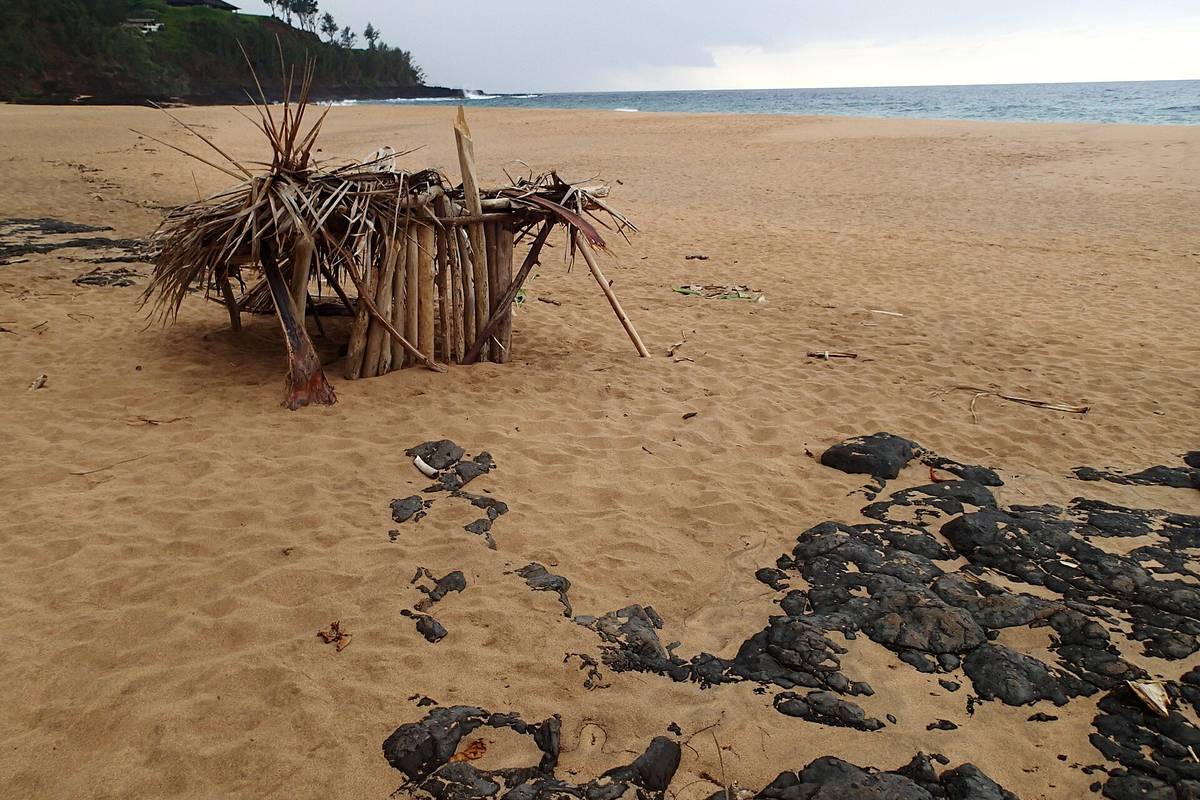
I remember the first time I found a beach that felt truly secret. It was not about coordinates or a hidden map, but persistence. I spent four hours trekking through dense coastal scrub in a region where the tourist maps ended and the actual geography began. My boots were caked in red clay, and the humidity felt like a physical weight. Then, the canopy broke. The sound of the wind shifted from a rustle in the leaves to a rhythmic, heavy roar. I stepped onto a crescent of white sand that looked as if it had never known a footprint.
In that moment, the silence felt like a presence. This is the core of solitude in nature: the realization that the world exists regardless of our observation, our documentation, or our desire to share it on a screen. For most of our waking hours, we are perceived. We are employees, parents, partners, or digital avatars. Finding a place where no one knows you are, and where the only witness is the tide, provides a psychological relief that is hard to explain and impossible to fake.
Why do we seek solitude in nature?
To understand the pull toward the edges of the map, you have to acknowledge how saturated the modern mind is. We live in an era of constant connectivity where the boundary between the public and private self has mostly dissolved. The digital detox beach is a survival mechanism, not a luxury. When we seek out hidden shores, we are looking for the version of ourselves that exists when the noise stops.
Psychologically, this is where Attention Restoration Theory does its work. Urban environments demand directed attention — the focus required to navigate traffic, respond to emails, and filter out sirens — and that focus is exhausting. Nature provides soft fascination instead: the patterns of waves, the movement of clouds, the texture of wind-blown sand, none of which demand anything from you. On a beach with no road access, the brain shifts from high-alert processing to reflective observation, which is the state where thinking actually becomes clear.
Slow travel and the death of the checklist
For too long, travel has been treated as a checklist. We visit famous landmarks, take mandatory photos, and move to the next coordinate. This is the opposite of slow travel, which is not necessarily about the speed of movement, but the depth of engagement. It is the difference between seeing a destination and inhabiting it.
When you seek a hidden beach, you reject the efficiency of the tourist industry. You choose the long way and accept the risk of getting lost or finding nothing. That uncertainty is where the value lies. The journey to a secret location becomes a ritual of shedding: with every mile of unmarked trail, you leave behind the expectations of the city. By the time you reach the water, you have transitioned from a consumer of sights to a participant in an environment.
The paradox of documenting solitude
There is a paradox in the modern search for solitude. The moment we find a place of absolute peace, our first instinct is to reach for a phone. We want to capture the light, the turquoise water, and the emptiness. But documenting a secret beach often destroys the feeling of being the only person there.
When we frame a landscape through a lens, we create a distance between ourselves and the experience. We stop feeling the salt on our skin and start considering how the salt looks in a photo. A true digital detox requires the courage to let the moment remain invisible. There is a quiet power in possessing a memory that cannot be validated by likes or shares — it becomes a private sanctuary you can return to when the world feels too loud.
The ethics of the secret location
This brings us to a difficult crossroads. If we find a pristine stretch of coast, do we have a moral obligation to keep it secret? Social media has turned "hidden gems" into casualties of their own beauty. A single viral post can transform a silent sanctuary into a crowded parking lot within a few months.
Ethical tourism requires a shift from a mindset of ownership to one of stewardship. When we disclose a secret location, we are usually doing so for social capital rather than for the benefit of the place. Foot traffic compacts soil, trash accumulates, and wildlife that never met humans gets a crash course in them. The most sustainable way to love a hidden beach is to leave it off the map — including your own.
Environmental minimalism and inner peace
There is a kinship between the physical minimalism of a deserted beach and the mental minimalism required for inner peace. On a secret shore, there are no amenities: no cafes, no curated experiences, no staff. You are left with the basics — sun, wind, and your own thoughts. The stripping away of luxury forces a confrontation with the self.
In the city, we use distractions to avoid the uncomfortable parts of our internal monologue. On a hidden beach, there is nowhere to hide. The silence acts as a mirror. At first this can be anxiety-inducing, because the lack of stimulation feels like a void. But if you stay long enough, you start to notice the micro-movements of crabs in the sand, the specific gradient of the horizon, and the rhythm of your own breathing. This is where mindfulness stops being a practice and becomes a state of being.
The architecture of escapism
Escapism is often criticized as a way to run away from the problems of real life. But there is a distinction between destructive and restorative escapism. Destructive escapism is a permanent flight from responsibility. Restorative escapism, such as the search for solitude in nature, is a strategic retreat — the act of stepping back so you can return with a clearer perspective.
Seeking a hidden beach is escapism with architecture. You are building a boundary between yourself and the demands of the world, and that boundary lets you reset your baseline. When you spend a day in total isolation, the threshold for what constitutes a stressor changes. Trivial arguments at the office or the pressures of social competition seem smaller compared to the scale of the ocean. The beach does not solve your problems, but it changes your relationship to them.
The ritual of the return
The most important part of the journey is the return to the world. The goal of slow travel is not to live in the wild forever, but to carry that stillness back into the noise. The challenge is to maintain that sense of inner peace when you are back in the traffic and the crowds.
To do this, create "micro-solitude" in your daily life. A morning walk or a quiet cup of coffee can be a miniature version of that secret beach. Practice the same attention you felt by the ocean while standing in a grocery store line. The secret beach is a training ground. It teaches us that peace is not something we find in a specific location, but something we cultivate within ourselves.
Practical steps for ethical solitude
For those who still feel the call of the hidden shore, there is a way to pursue it without contributing to the destruction of these spaces. The key is to change the method of discovery.
First, avoid "top 10 hidden beaches" lists. By the time a place is on a list, it is no longer hidden. Study old topographical maps instead, and look for gaps in the coastline where there are no roads. Use your own legs and curiosity rather than a curated algorithm.
Second, practice Leave No Trace principles. Take your trash with you and leave no physical mark: no permanent fires, no rock stacks, no disturbed nesting sites. The beach's emptiness is an ecosystem, not a backdrop.
Third, embrace the silence of the secret. When you return home and people ask where you went, be vague. Describe the feeling of the place rather than the coordinates.
The future of secret spaces
As the world becomes more mapped and monitored, truly secret spaces are disappearing. Satellite imagery and GPS have stripped away much of the mystery. However, the psychological need for solitude in nature remains, and the search for these places stays a vital human impulse even as the supply shrinks.
We are entering an era where the most valuable luxury is total anonymity. The ability to be unreachable is becoming a status symbol, and that shift in value may do more for environmental preservation than any campaign — if it teaches us that the most beautiful places are those that remain untouched by the human gaze.
The discipline of silence
Seeking a hidden beach is an act of rebellion against a world that demands our attention. It is a practice that prioritizes depth over distance and presence over documentation, and it leads toward both inner peace and a genuine digital detox.
To integrate this into your life, start by seeking small pockets of silence. Commit to one experience per year where you go entirely off-grid, leave the phone behind, and follow a map that does not have a recommended route. Most importantly, when you find a place that speaks to you, keep it to yourself. The greatest gift you can give a secret beach is your silence.
Official sources
Details worth verifying before you go — checked against:
Travel Writer & Editor
Emily Johnson writes and edits Do Travel Blog. Every guide on the site starts the same way: with a question she actually had while planning — when to book, which pass to buy, how to get from A to B without overpaying. Where a number matters, she cites the source: park tickets link to the park's own fee page, visa rules to the official consulate, ferry times to the operator. Prices get re-checked against those pages before each update, and a guide is re-dated when its numbers move. Nothing here is sponsored — she doesn't accept payment for coverage. Spotted something stale or wrong? Email hello@dotravel.blog and she'll fix it.