Sleeping in a Box: My Experience with Capsule Hotels
My honest review of sleeping in a Tokyo capsule hotel. I cover the psychological and practical side of pod living for budget travelers.
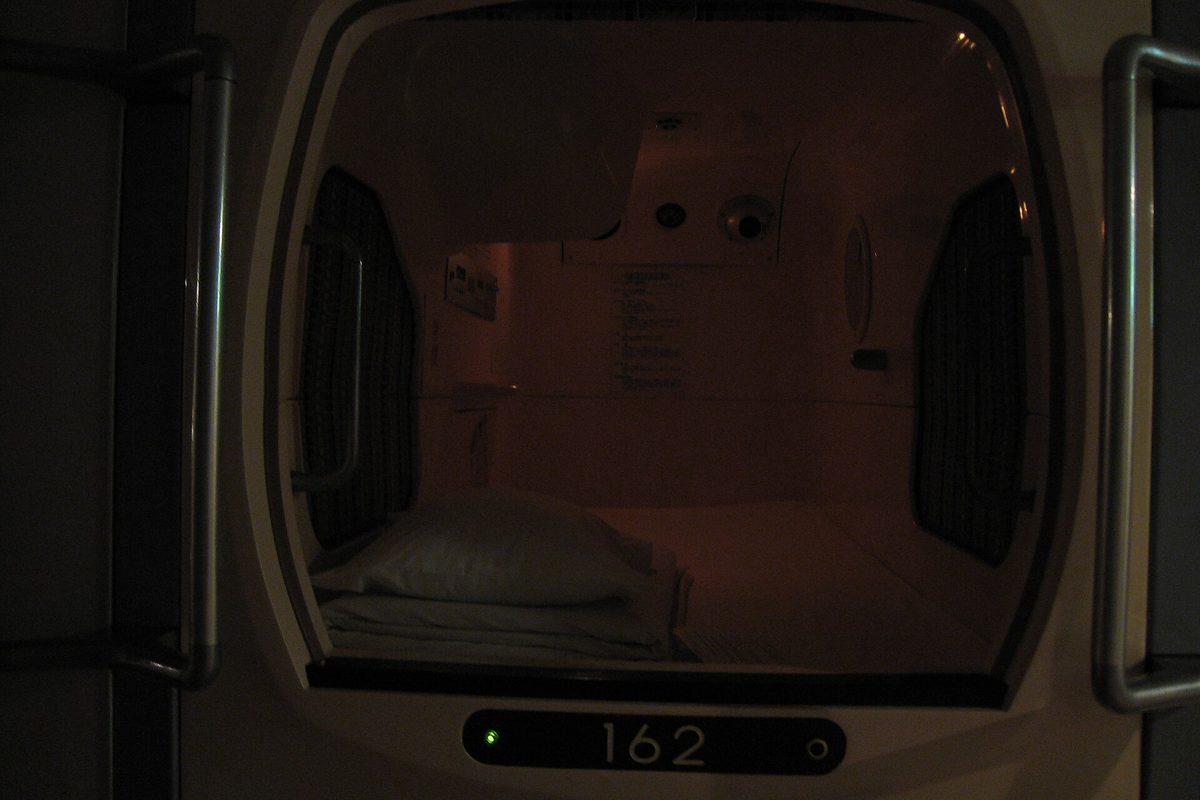
First impressions: stepping into the future
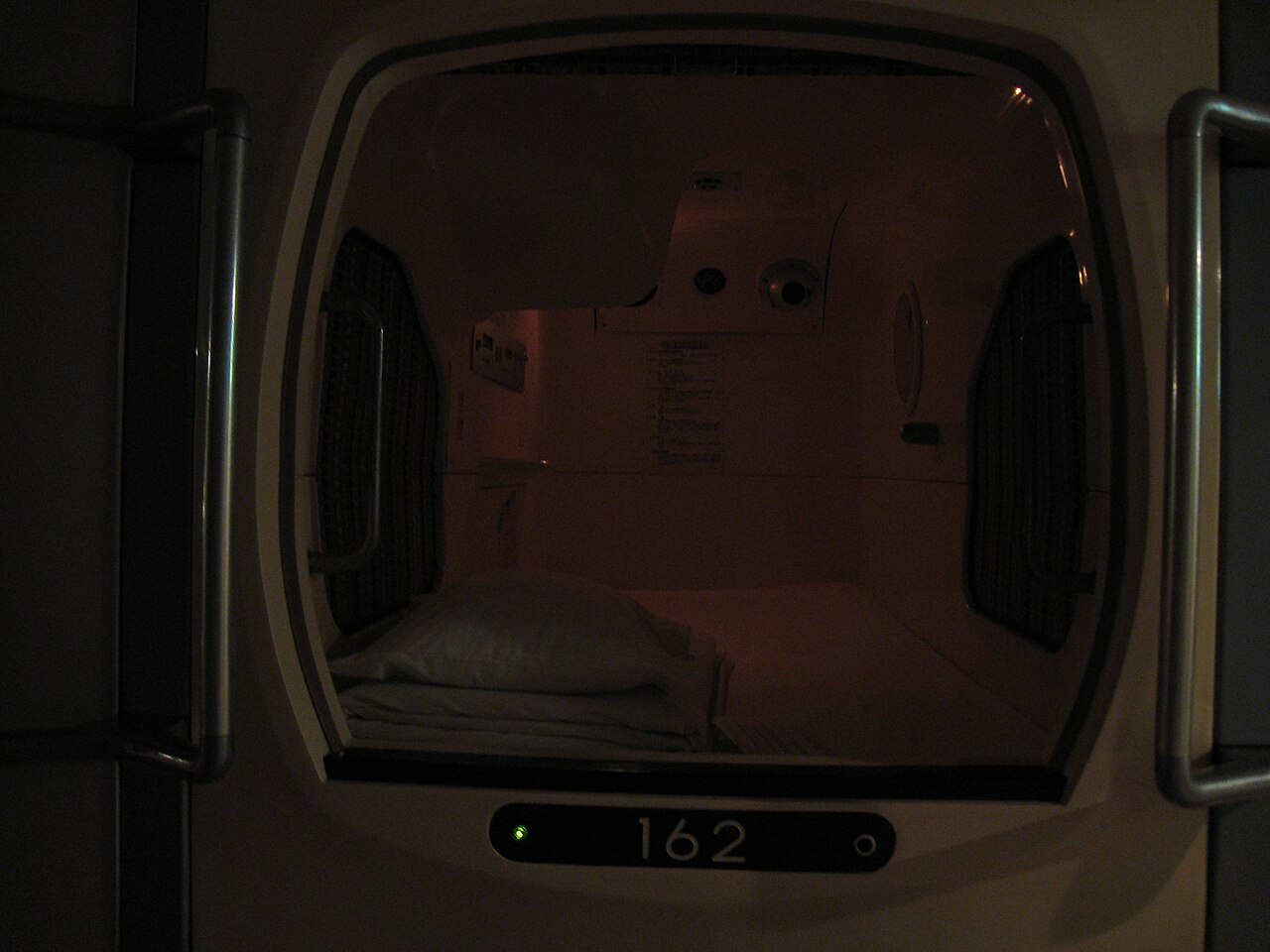
Photo: Syced / CC0 / Wikimedia Commons
I stood in the neon streets of Shinjuku, clutching a confirmation email and feeling a mix of curiosity and dread. Sleeping in a capsule hotel had always seemed like a sci-fi trope, a vision of urban density where humans are stored like batteries in a rack. As someone drawn to minimalist travel, I couldn't ignore the pull. I wanted to know whether this was a viable budget accommodation Tokyo option or just a tourist trap for Instagram photos.
Walking into the lobby, the first thing you notice is the silence. Most of these places operate on a strict code of quiet. You trade your shoes for slippers at the entrance, which shifts your mindset from the chaotic city to a controlled indoor environment. The check-in process is clinical: within five minutes, I had a locker key, pajamas, and a digital key to my pod.
As I followed the staff toward the sleeping quarters, the scale of the operation became clear. Row after row of plastic pods stretched into the distance, stacked two or three high. It looked more like a high-tech honeycomb than a hotel. This is the reality of the capsule hotel experience: you are paying for a bed and a roof, not a room. There is no privacy beyond a plastic blind or a sliding door. You are essentially renting a hole in the wall.
The logistics of sleeping in a capsule
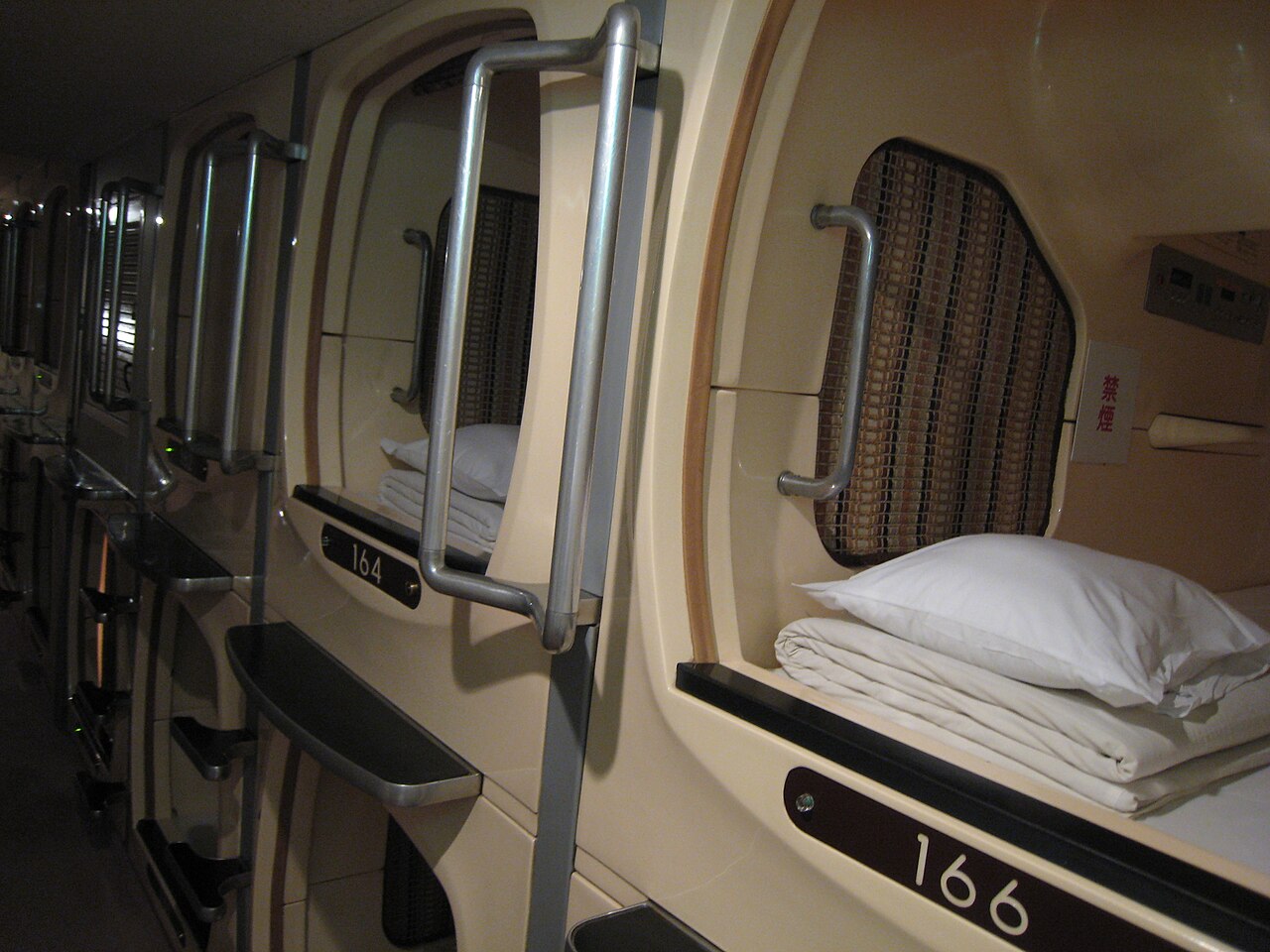
Photo: Syced / CC0 / Wikimedia Commons
Once I reached my pod, the space set in. The dimensions are roughly 2 meters long and 1 meter wide. If you are over six feet tall, you will feel the walls closing in. I sat up, and my head was only a few inches from the ceiling. For some, this is cozy; for others, it is the start of a claustrophobic nightmare.
Sleeping in a capsule requires a complete overhaul of how you manage your belongings. You cannot throw your suitcase in the corner because there is no corner. Everything — clothes, electronics, toiletries — must fit into a designated locker. This forced me into extreme minimalist travel. I wondered why I had packed three pairs of shoes when my locker was the size of a microwave.
Getting into the pod is a choreographed dance. You climb a small set of stairs, slide into the plastic shell, and pull the blind shut. Suddenly, the world disappears. It is just you, a thin mattress, and a small reading light. The air ventilation is a constant hum, a white noise that helps drown out other guests. However, the lack of a door means you can still hear every cough, whisper, and rustle of a duvet from the neighboring pods.
The psychological toll: space saving vs. anxiety
There is a specific kind of travel anxiety that comes with futuristic lodging. In a traditional hotel, the room is your sanctuary. In a pod hotel, that sanctuary is a fragile illusion. I spent the first hour wondering what would happen if there was a fire or if I needed to leave in a hurry. The feeling of being "tucked in" can quickly pivot to feeling "trapped" if you are not in the right headspace.
As the night progressed, I noticed a shift. There is something meditative about the extreme limitation of space. When your physical world is reduced to a 2x1 meter box, your mental world tends to expand. I reflected on the nature of necessity: do we really need 300 square feet of hotel room to sleep for eight hours? The capsule hotel replaces the Western notion of luxury with the luxury of efficiency.
Of course, this peace depends on your neighbors. I had one neighbor who spent an hour trying to find a comfortable position, which resulted in a series of rhythmic thumps against the plastic wall. In a standard hotel, this would be a minor annoyance. In a capsule, it feels like a personal assault. You are aware of the human presence surrounding you, separated only by a few millimeters of reinforced plastic.
Comparing the tiers: budget minimalism vs. luxury pods
Not all capsule hotels are the same. During my time in Japan, I experienced two ends of the spectrum. The first was a classic budget accommodation Tokyo spot. The pods are basic, the linens are thin, and the vibe is purely functional. This is for the backpacker who needs a place to crash between long shifts of sightseeing. The focus is on cost and location. The bathrooms are communal, the showers are small, and the experience is stripped to the bare essentials.
Then I tried a luxury capsule hotel, and it was a different beast. Instead of basic plastic, the pods were lined with sound-dampening materials and had integrated tablets for controlling lighting and temperature. The bedding was high-thread-count cotton, and the common areas looked like a high-end airport lounge with free coffee and ergonomic workstations.
Comparing the two, the luxury version solves many practical issues. The increased soundproofing reduces the anxiety of hearing neighbors, and the better ventilation eliminates the stuffy feeling. But does it defeat the purpose? The appeal of the capsule is the raw efficiency of it. Once you add luxury, you end up with a very small, very expensive hotel room. The true spirit of the pod hotel lives in the budget version — a response to the urban housing crisis that became a travel experience.
The communal experience: the social side of minimalism
One of the most surprising aspects of the capsule hotel experience is the social dynamic. Because the sleeping areas are private, the communal areas become the heart of the hotel. I spent several hours in the lounge, chatting with other travelers. There is a shared sense of camaraderie among people who have chosen to sleep in boxes. We bonded over locker organization and confusion over the complex Japanese shower systems.
These spaces are designed for maximum utility. You will find charging stations, shared computers, and often a small kitchenette. It encourages interaction that you rarely find in traditional hotels, where guests retreat to their rooms. In a capsule hotel, the lounge is your living room. This social integration helps with the loneliness that can accompany solo minimalist travel.
However, the communal bathrooms are where the experience is truly tested. Sharing a shower and toilet with fifty other people requires etiquette. In Japan, this is handled with grace; the facilities are spotless, and there is a clear system. But for a Westerner, the lack of a private bathroom is often the hardest part. It is a reminder that in the world of space saving, personal privacy is the first thing to be sacrificed.
Practical tips for your first capsule stay
If you are considering sleeping in a capsule for the first time, preparation is key. You cannot wing it. First, pack light. I cannot stress this enough. If your luggage does not fit in a standard locker, you will be struggling with your bags in a narrow corridor, which is a quick way to annoy the staff and other guests.
Second, bring high-quality earplugs and an eye mask. Even in the best pod hotels, there will be light leaks and noise. The sound of a zipper closing or a phone vibrating can sound like a thunderclap in the silence of the pod area. These two items are the difference between a restful night and a night spent staring at the ceiling.
Third, read the rules. Capsule hotels have strict guidelines: no talking in the pod area, no smoking, no loud music. These rules keep the experience from devolving into chaos. When everyone follows the etiquette, the environment remains peaceful.
The verdict: is it worth it?
After spending several nights in various pods, my honest experience with capsule hotels is that they are not a replacement for a hotel, but a fantastic alternative for specific scenarios. If you are a solo traveler on a tight budget and spending most of your day exploring, a capsule is perfect. It provides a safe, clean environment that is better than a noisy hostel dorm. For more comparisons on low-cost stays, check out Airbnb vs. Hostels.
However, if you are traveling as a couple, or if you suffer from severe claustrophobia, avoid them. The lack of intimacy and the physical constraints make them unsuitable for many. The value is not in the luxury, but in the experience of urban efficiency. It is a lesson in how to live with less, a practical application of minimalist travel that forces you to prioritize what you actually need.
From a financial perspective, budget accommodation Tokyo options are plentiful, but few offer the novelty of a pod hotel. You are paying for the novelty as much as the bed. But as a piece of futuristic lodging, it works. It is a glimpse into a world where space is the most valuable commodity.
To wrap up this capsule hotel review, here is a quick breakdown of what to expect:
- Space: Extremely limited. You get a 2x1 meter area. Not suitable for those who move around a lot in their sleep.
- Privacy: Low. You have a blind or a door, but sound travels easily through the plastic shells.
- Cost: Very low to moderate. Great for budget travelers, though luxury pods can be pricey.
- Logistics: Requires strict organization. Your life must fit into a locker.
- Vibe: Quiet, futuristic, and disciplined.
If you want to try this, I recommend booking a luxury pod for your first night to ease in — we compare the properties in our Tokyo capsule hotel comparison, and the first night guide covers what to expect hour by hour. Then move to a budget version and learn the art of the locker. It is a strange, challenging, and rewarding way to see the city. Just remember to bring your earplugs and leave your oversized suitcase at home. Your first night sleeping in a box will likely be the most memorable part of your trip, simply because of how different it is from everything else in travel.
Official sources
Details worth verifying before you go — checked against:

Travel Writer & Editor
Emily Johnson writes and edits Do Travel Blog. Every guide on the site starts the same way: with a question she actually had while planning — when to book, which pass to buy, how to get from A to B without overpaying. Where a number matters, she cites the source: park tickets link to the park's own fee page, visa rules to the official consulate, ferry times to the operator. Prices get re-checked against those pages before each update, and a guide is re-dated when its numbers move. Nothing here is sponsored — she doesn't accept payment for coverage. Spotted something stale or wrong? Email hello@dotravel.blog and she'll fix it.