How a Train Stranger from Hanoi to Hue Changed My Route
A chance random meeting Hanoi Hue train led to an unforgettable itinerary change Vietnam. Read how a stranger's advice turned a routine ride into the highlight of my backpacking trip.
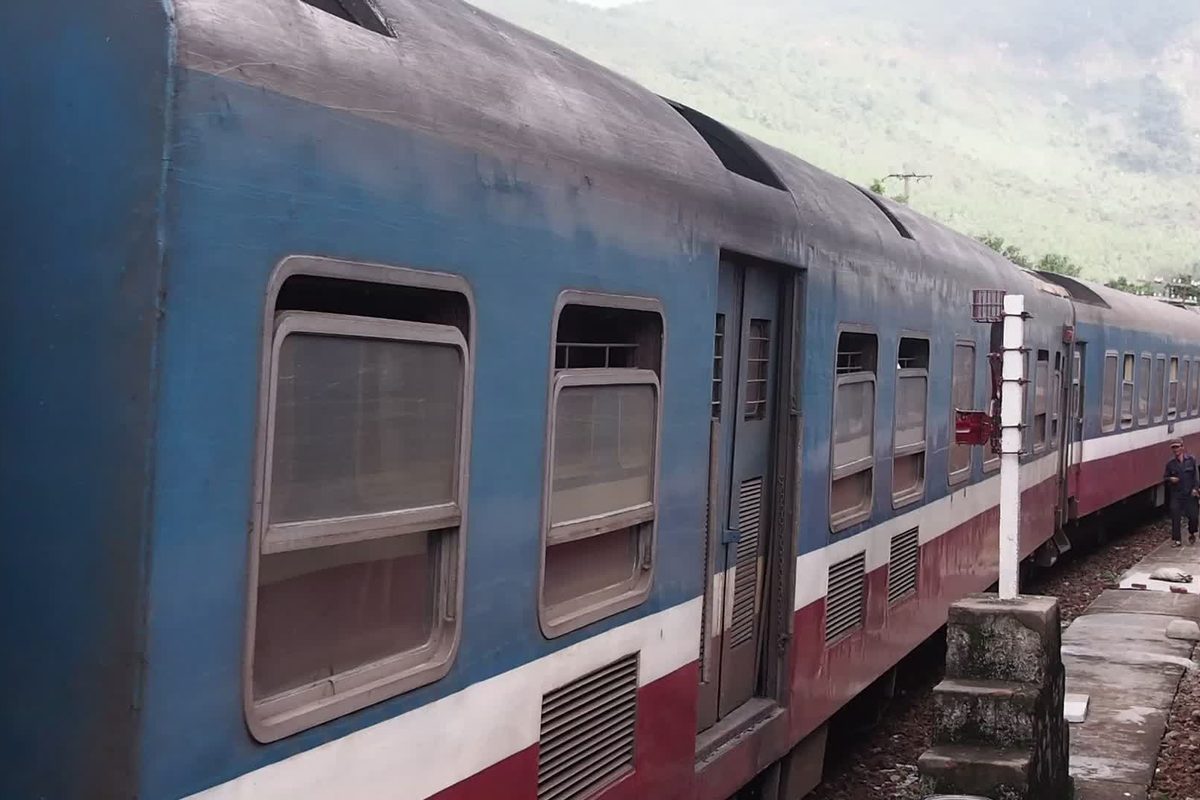
The Ride That Changed Everything
I boarded the Reunification Express in Hanoi with nothing but a window seat, a worn copy of a Lonely Planet guide, and the comfortable illusion that I knew exactly where I was going. The train crawled south through the delta, past rice paddies and water buffalo, and I settled into the rhythm of a routine journey. Twelve hours to Hue, a few days of imperial tombs and royal cuisine, then a flight to Hoi An. Simple. Predictable.
Then, somewhere between Vinh and Dong Hoi, a young woman carrying a basket of mangoes slid into the empty seat across from me. Her name was Linh, and she was returning to her family's homestay in a village near the Phong Nha-Ke Bang National Park. What started as polite small talk about the scenery turned into an invitation I could not refuse. That random meeting on the Hanoi-Hue train rewired my entire trip. I canceled my Hoi An flight on the spot.
This article is about what happens when you let a stranger rewrite your map. It is a Vietnam train travel story that traded tourist trails for farm tracks, and an itinerary change in Vietnam that led to caves, family dinners, and a completely unexpected travel friendship. Sometimes the best route is the one you never planned.
The Departure from Hanoi
Hanoi Train Station at Dawn
The predawn bustle of Hanoi station was a mess of steam and noise. A pho seller ladled broth at the entrance, the scent cutting through the fumes of a nearby diesel engine. Travelers of every kind packed the platform: backpackers with maps, families with woven bags, monks in orange robes, all squeezing through the arched gateways. I gripped my pack and climbed onto the train, feeling the raw energy of a city waking up and a country about to unroll before me. I was backpacking Vietnam with only a vague notion of heading south, and this train was the first real step into the unknown.
Our carriage was part of the Reunification Express, the famous line that traces the Hanoi to Hue railway and continues all the way to Ho Chi Minh City. Built by the French in the early 1900s, it carried soldiers and supplies during the war and later became a symbol of national unity. As we pulled out past the cluttered suburbs into open farmland, I felt the weight of history beneath the steady click-clack of the wheels. The route itself was a story in motion, and I was just a passenger along for the ride.
That openness is what makes a Vietnam train travel story work: you don't command the journey, you surrender to it. The stranger in the facing seat offered a suggestion I hadn't considered: skip a few tourist spots and head off the beaten path. That random meeting on the Hanoi to Hue railway turned into an unexpected travel friendship and an itinerary change I would never have planned on my own. The SE Vietnam train had just started its journey south, and my own route was already transforming.
Settling Into the Cabin
I slid the door open to Cabin 3 and stopped. Four berths, crisp white sheets, a small window with the curtain already tied back. The soft sleeper cabin smelled of clean linen and faint wood polish. I chose the lower bunk near the window, dropped my daypack on the seat, and let out a breath. The cabin was compact but welcoming, like a small room on wheels.
My cabin mates arrived within minutes. A young Vietnamese mother with a toddler boy took the berth across from mine. She smiled and said something gentle to her son, who promptly climbed onto the bunk and started bouncing. In the upper berth on my side, a quiet man in a collared shirt settled in with a book. He nodded once and then opened it. This random meeting on the Hanoi to Hue train already felt warmer than any bus ride I had taken.
The train pulled out of Hanoi station with a soft lurch, then settled into a steady click-clack. I leaned my forehead against the cool glass and watched the city thin into suburbs, then into green. Rice paddies spread out like patchwork quilts, farmers in conical hats bent over the water, and water buffalo stood in the shallows. The rhythm of the wheels matched my breathing. This was the Vietnam train travel story I had hoped for.
I had planned three days in Hue: the Citadel, the royal tombs, and one day for a food tour. The schedule felt tight even when I wrote it. Now, watching the landscape float by, I wondered if I should slow down. An itinerary change in Vietnam was starting to feel inevitable.
The Encounter on the Train
First Words Across the Aisle
I was fumbling with the settings on my camera, trying to capture the lush green rice paddies that blurred past the window, when a voice from across the aisle said, 'Nice lens. What are you shooting with?' I looked up to see a man in his early forties, a sketchbook open on his lap. That simple question about my camera broke the ice on what would become one of the most memorable encounters of my trip: a random meeting on the Hanoi to Hue train.
His name was Minh, a Vietnamese artist from Da Nang who had been visiting family in Hanoi and was heading home. As the train rattled south along the Hanoi to Hue railway, we exchanged the usual traveler pleasantries: where we were from, how long we had been in Vietnam. Then Minh pulled out a bag of dried mango and some sesame candies, offering them with a smile. 'You have to try these,' he said. 'They are from my hometown.' We shared snacks and began talking about travel in a way that felt more like two old friends catching up than strangers on a train.
That unexpected travel friendship grew over the next few hours. Minh told me about his art, his favorite spots in central Vietnam, and the places he thought most tourists missed. He was not trying to sell me anything or give me a rehearsed pitch. He genuinely loved his country and wanted me to see it differently. By the time we crossed into Thua Thien Hue province, I had completely rewritten my itinerary. The backpacking Vietnam itinerary I had so carefully planned was suddenly irrelevant, and I felt a surge of excitement for the detour ahead.
An Unfolding Conversation
Our random meeting on the Hanoi to Hue railway turned into a conversation and a masterclass in Vietnamese life. Tran pointed out the Hai Van Pass, launched into stories about Hue's imperial history and street food. His infectious enthusiasm made this Vietnam train travel story an invitation to see the country through his eyes.
He described Hue's imperial citadel and the lingering scars of the 1968 battle. He recommended bun bo Hue from a family-run shop and warned me away from touristy restaurants. He told me about the abandoned water park and a remote village with traditional mat weaving. I had built my Vietnam itinerary around Lonely Planet's suggestions, but his words made me realize how much I was missing. I had allocated just two nights in Hue, barely enough for the tourist trail. My plan was too rigid, a checklist rather than an experience.
By the time we rolled into Hue station, he had planted the idea of staying longer. He offered to introduce me to his cousin who runs a homestay near the perfume river. I was supposed to catch a night bus to Hoi An the next day, but suddenly the thought of rushing south felt wrong. That split-second decision to change my itinerary started with a single conversation over a shared bag of dried squid.
The Journey South
Scenery Through the Window
The landscape shifted every hour. Soon after leaving Hanoi, the train squeezed through limestone karsts, then alongside flooded rice paddies where farmers in conical hats worked knee-deep. By midday, the mountains parted and we caught our first glimpse of the South China Sea, impossibly blue with fishing boats scattered across the horizon. The tracks hugged the coast for miles. Small villages appeared: clusters of concrete houses, sometimes a bright yellow church, a market spilling onto the tracks, children waving from open doorways.
Around five, the sunset began. The sky transformed from hazy orange to deep pink to violet. Golden light flooded the carriage, turning everything sepia. Neither Linh nor I spoke. We just stared out the open window, the warm air rushing in. A Vietnamese woman across the aisle smiled at us, and we all watched in shared silence. That quiet felt more intimate than any conversation we'd had. The whole carriage seemed to pause, absorbed in the same spectacle.
After the sun slipped behind the mountains, the camaraderie in our cabin deepened. Linh offered me a piece of dried mango; I shared my bag of roasted peanuts. The woman opposite passed over some sticky rice cakes. We traded travel stories - his plan to explore Da Nang and Hoi An, my vague intention to head straight to Hue. He described the Hai Van Pass with such detail, the switchbacks and the ocean views, that I started rethinking my route. That random meeting on the Hanoi Hue train planted the seed for an itinerary change that would define the rest of my Vietnam trip.
Sharing Meals and Stories
Somewhere past Vinh, the train slowed to a halt at a small station I couldn't even find on my map. Minh stood up, gestured for me to stay put, and hopped off onto the platform. He returned a few minutes later clutching two banana-leaf packages, steam curling out from under the folds. "Bánh chưng," he said with a grin, "and grilled pork." I had been surviving on baguette sandwiches and instant noodles since Hanoi, so the warm sticky rice and fatty meat hit like a proper meal. We ate with our hands, passing the packages back and forth, and in that cramped cabin with rice grains sticking to my fingers, the random meeting on the Hanoi Hue train started to feel less like coincidence and more like something intentional.
Between bites, Minh started talking. He told me about the Perfume Pagoda festival north of Hanoi, a three-day trek he said every Vietnamese should do at least once. He described the Hùng Kings Temple pilgrimage, where families spend a whole day walking up Nghĩa Lĩnh Mountain, and the way his grandmother used to sing chèo opera while she packed sticky rice for those trips. I had never heard of any of these. My guidebook listed "top things to do in Hue" and "best pho in Hoi An" - nothing about community rituals or the pride that came with them. In that moment, the conversation stopped being small talk and became something closer to a real cultural exchange, the kind that changes how you see a place. By the time the train pulled into Huế station six hours later, I had already decided to tear up my itinerary. Southeast Vietnam trains would have to wait. I was going north to the Perfume Pagoda.
Changing My Plans
The Decision to Detour
Minh's suggestion to skip Da Nang and linger in Hue was the first serious itinerary change Vietnam had thrown my way. He leaned across the narrow table on the SE Vietnam train and said Hue deserves at least four days, not the rushed overnight I had planned. Da Nang, he argued, was fine for beaches but Hue held the tombs, the river life, the stories you cannot find in a guidebook. I had read that Da Nang was a must-see, but here was a local telling me otherwise, and the random meeting on the Hanoi Hue train was starting to feel less like coincidence and more like a nudge.
"Stay. I'll show you around my hometown," he said. The offer was genuine, no tour pitch, no angle. He named the family-run noodle stall near his house and the spot on the Perfume River where you can watch the sunset away from tourists. An unexpected travel friendship blooming in the cramped carriage made the idea feel safe rather than reckless. Still, I had a hostel booked in Da Nang and a mental map I was reluctant to redraw.
I hesitated for a stop or two. The familiar pull of sticking to the plan argued against it. But the Vietnam train travel story I kept telling myself, that the best moments come from letting go, finally won. By the time the conductor announced the approach to Hue, I had agreed to stay. The itinerary change was immediate: I canceled Da Nang and trusted a stranger's instinct over my own spreadsheet.
A New Itinerary Takes Shape
As the train rattled south through the coastal countryside, Minh pulled out a crumpled map of Hue and started sketching a three-day plan right there on the fold creases. First morning: the Citadel, early to beat the heat. Afternoon: Thien Mu Pagoda by the Perfume River. Second day: the abandoned water park on Thuan An Beach, which he described as a forgotten playground of dragons and cracked pools. Third day: a lazy wander through the markets and back alleys he knew from childhood. He drew tiny circles and arrows, narrating each spot like a seasoned guide.
I remember nodding along, already mentally erasing Da Nang from my plans. That night, sitting cross-legged in my sleeper berth, I canceled my hostel reservation there. The click of the confirmation felt like relief, not regret. This random meeting on the Hanoi-to-Hue train had given me something no guidebook could: a local's route, tailored in real time. The Vietnam train travel story I had been collecting in my journal suddenly had a new chapter, one I hadn't expected to write.
This is what I love about slow travel: the willingness to let an unexpected travel friendship redirect your map. An itinerary change in Vietnam doesn't have to feel like a failure; sometimes it's the best decision you make from a train window. I tucked Minh's map into my passport case and smiled. Flexibility, I've learned, is the real souvenir of backpacking Vietnam.
Reflections on Spontaneity
What I Gained by Letting Go
Minh's recommendations turned Hue into the most memorable part of my Vietnam trip. He steered me away from the crowded tourist spots and toward a family-run noodle shop in a hidden alley, where the broth had been simmering for twelve hours. He also told me about a quiet pagoda at dawn, empty of everyone except monks sweeping fallen leaves. Without that random meeting on the Hanoi to Hue train, I would have stuck to my printed itinerary and missed those moments entirely.
That experience taught me how rigid planning can block authentic travel. Before Vietnam, I treated each day like a task list: arrive at 9am, see the citadel by noon, eat at the top-rated restaurant. There was no room for a stranger's suggestion or a spontaneous detour. But letting go of that control opened the door to a richer kind of travel, one shaped by chance encounters rather than guidebook entries.
The power of saying yes to unexpected opportunities became clear when I decided to spend an extra day in Hue, following Minh's tips instead of rushing to Hoi An. That single choice turned a standard stopover into the highlight of my entire Vietnam train travel story. I learned that the best travel detour story often begins when you set aside your plan and simply say yes to what appears in front of you.
I still plan trips, of course, but I leave more breathing room now. That itinerary change in Vietnam taught me that the unscripted moments - the meal shared with a local, the temple discovered by word of mouth - are what you remember years later.
Lessons for Future Travels
That random meeting on the Hanoi to Hue train changed how I plan every trip now. These days I deliberately leave blank days in my itinerary, unscheduled windows where chance can slip in. Before that journey, I filled every hour with must-see sights from guidebooks. Now I trust that the best experiences often come from local recommendations whispered over a shared meal on the SE Vietnam train, not from a printed page.
The unexpected travel friendship I made taught me that locals hold the real map. The woman I met didn't hand me a tourist brochure; she pointed me to a hidden market in Hue that no guidebook mentioned. That detour became the highlight of my entire trip. I have since adopted the same approach everywhere I go: ask the person next to you on the train, the shopkeeper, the family running the guesthouse.
Vietnam train travel has become my metaphor for openness. The Hanoi to Hue railway stretches along the coast with sudden curves and unexpected stops, exactly like the best journeys. You can plan the route but you cannot control the view that takes your breath away or the person who shares their story with you.
To anyone backpacking Vietnam: leave room in your schedule for spontaneity. Let a random meeting on a train rewrite your plans. That itinerary change might just be the part you remember most.
Final Thoughts: The Unexpected Route
That random meeting on the Hanoi to Hue train reshaped my entire Vietnam trip. Instead of rushing south to Ho Chi Minh City, I spent an extra week along the central coast, following advice from a woman whose name I still remember. She insisted I skip the crowded beaches and head to Phong Nha for the caves, then added a handwritten note about a family-run homestay near the national park. That chance itinerary change turned a rushed schedule into something far more meaningful.
Her kindness confirmed something I have learned across years of slow travel: the best moments rarely come from a perfectly timed schedule. They emerge from the unexpected. A shared meal, a local tip, an invitation to a festival you never knew existed. This SE Vietnam train ride gave me an unexpected travel friendship that mattered more than any checked-off sight. My Vietnam train travel story became less about covering kilometers and more about the conversations that slowed me down. Connection over completion. That travel detour story is the one I tell most often now, and it changed not just one trip but how I approach every journey.
So here is my advice for anyone backpacking Vietnam or planning any trip: leave white space in your itinerary. A day with no plans. A train ticket without a fixed return date. Let a chance conversation guide you. The Hanoi to Hue railway might hand you a stranger who shifts how you see the country. Trust that detour. It might just rewrite your whole route. And in my experience, the unplanned route is always the one worth taking.
Official sources
Details worth verifying before you go — checked against:
Travel Writer & Editor
Emily Johnson writes and edits Do Travel Blog. Every guide on the site starts the same way: with a question she actually had while planning — when to book, which pass to buy, how to get from A to B without overpaying. Where a number matters, she cites the source: park tickets link to the park's own fee page, visa rules to the official consulate, ferry times to the operator. Prices get re-checked against those pages before each update, and a guide is re-dated when its numbers move. Nothing here is sponsored — she doesn't accept payment for coverage. Spotted something stale or wrong? Email hello@dotravel.blog and she'll fix it.