The Moment in Kyrgyzstan's Mountains I Understood Home
In the silence of Kyrgyzstan's mountains, I discovered that home is not a place but a feeling. A personal story of the moment I found home in the Tian Shan.
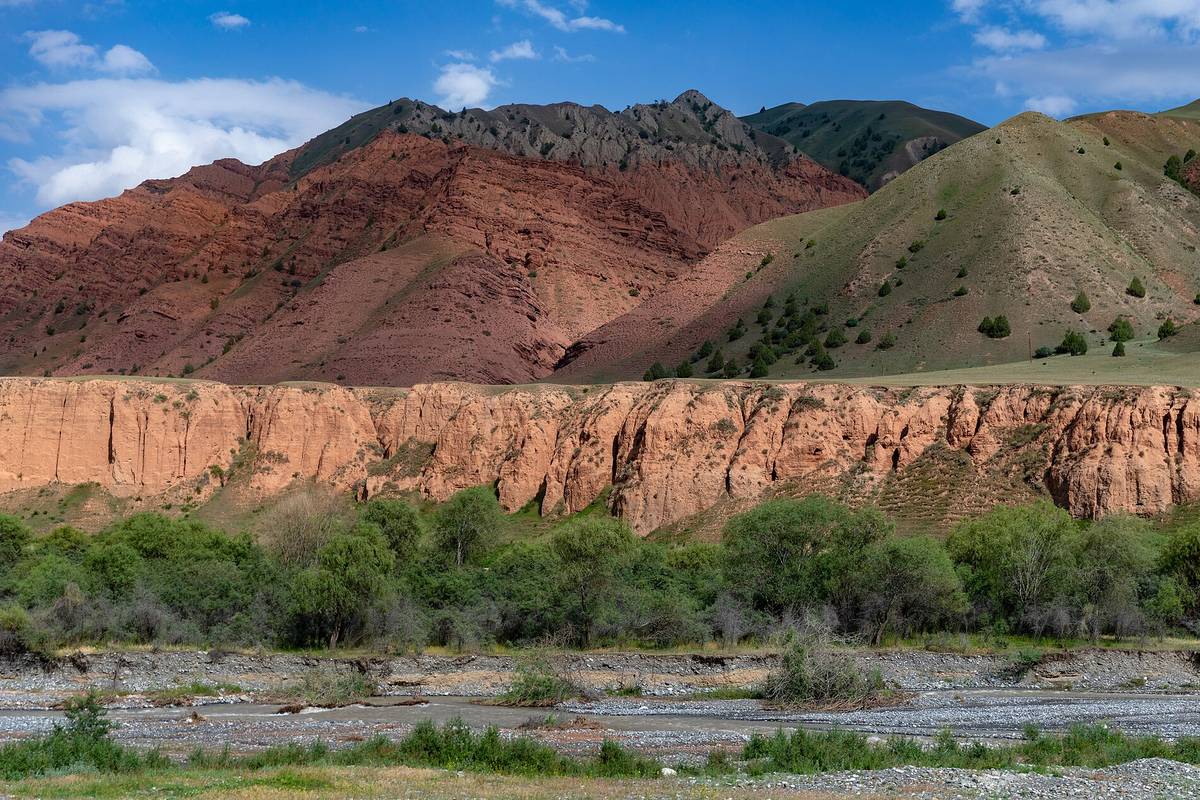
The Call of the Tian Shan
For years I had been searching for a place that felt like mine, not a destination but a belonging. I visited cities with famous landmarks and coastlines everyone raved about, yet I always left with the same hollow feeling. The Kyrgyzstan mountains, though, kept pulling at something I couldn't name. Friends asked why I chose a country most people couldn't find on a map. I didn't have a good answer then, only that the Tian Shan range felt like a promise I needed to keep.
Kyrgyzstan is a landscape of extremes. One moment you are crossing a high-altitude pass where the wind cuts through every layer; the next you are descending into a valley so lush and green it feels like a secret. The nomads who move with the seasons have lived this way for centuries, their yurts dotting the plains like punctuation marks in a story I could not yet read. I wanted to understand what made this place feel like home for them, and whether it could feel the same for me.
The question that drove me into the mountains was simple: What does it mean to belong somewhere? I had grown tired of the idea that home is a house with an address. Out here, with the glaciers and the wild horses, I wondered if home could be a feeling instead, a connection to the land that bypasses logic. The Tian Shan seemed to hold the answer, but I had to earn it by climbing higher.
That morning, I left the guesthouse in Karakol before sunrise. The air smelled of juniper and cold stone, and the only sound was my own breath. I had no map, no plan, only the instinct to walk until the mountains stripped away everything I thought I knew. I was ready for the moment that would change everything.
Leaving the Familiar Behind
Arrival in Bishkek and the Long Drive
Bishkek hit me like a held breath finally released. The city sprawls at the foot of the Tian Shan range, but the first thing I noticed was not the mountains. It was the flatness. The steppe stretches out behind the airport, an endless brown-gold plain that makes the city feel like a temporary camp. Our rented Soviet-era jeep sat in the parking lot, dust already coating the windshield from the morning wind. I climbed in, my daughter buckled into her car seat, and we pulled onto the main road with no destination except a rough line on a map. The air smelled of dry earth, exhaust, and something sweet. Apricots, maybe, from a roadside stall. I felt a strange anticipation, not excitement exactly, but a quiet readiness.
The drive south began with a long ribbon of asphalt that quickly turned to gravel. Dust rose behind us in thick clouds, coating the jeep, our luggage, even my daughter's hair. I remember thinking: this is the physical shedding of my old life. Every mile of that road stripped away another layer of the person I had been in Lisbon. The commuter, the planner, the one who always knew where she was going. We passed through small villages with names I could not pronounce: Kemin, Balykchy. Children waved from the side of the road. Old women sat on wooden benches, watching the world pass. I did not know then that this was the moment I would later call home, but I felt it in my chest. A loosening, a belonging to something older than any address. The mountains grew closer, and for the first time in years, I did not want to turn back.
First Glimpse of the Mountains
The bus jerked around another switchback, and then I saw them: the Tian Shan, rising like a spine of bone and ice across the entire southern horizon. For three days we had been rattling through the Fergana Valley, past roadside stalls selling dried apricots, past villages that seemed to sink into the dust. Nothing prepared me for that first glimpse. The peaks were not beautiful in the way postcards are beautiful. They were raw, jagged, and so close I could almost feel the cold air rolling off them, even though they were still a day away.
And yet, as I pressed my forehead to the window, I felt something I could not name. A strange familiarity. I had never seen such wildness, no roads, no lights, no signs of anyone. It should have felt alien, intimidating. But it settled into my chest like a memory I had forgotten. The Kyrgyz mountains felt like home, not because I had been there before, but because the place itself seemed to recognize me. In that silence, with the engine humming and the sky turning a deep violet, the moment I found home in nature became clear: home was not a house or a city. It was this feeling of being held by the land, of belonging to something older than any address.
That is the moment in the Kyrgyzstan mountains I understood home. It was not a destination I arrived at. It was the realization that I had been carrying it with me all along.
Nomadic Days
Waking to Silence
The first morning in the yurt, I woke not to an alarm but to the absence of everything I had known. No engine hummed in the distance, no voices drifted through walls, no refrigerator kicked on. Just the faint creak of felt and the slow breath of the Tian Shan range pressing against the canvas. I lay still, half-convinced I was still dreaming, because my ears had nothing to process. For a person accustomed to the constant low-grade buzz of city life, the silence was a physical presence, almost heavy.
Then the wind arrived, sweeping down from the peaks with a sound like a long exhale. It rustled the grass outside and carried the distant bleating of sheep, a sound so simple and ancient it felt like a memory I had never made. The sheep were somewhere on the slope, their calls tinny and far, but they anchored the moment in something real. I could hear the wind moving through the valley, the faint clink of a bell on a goat, the soft thud of my own heart in my chest.
That was the moment I understood. In the absence of noise, I had room to hear myself. My heartbeat was not a stress signal but a rhythm, steady and unhurried. The Kyrgyzstan mountains felt more like home than any house I had ever lived in, not because of the view or the adventure, but because the silence let me recognize my own presence. I had spent years searching for a place to belong, and here, in a felt tent on a mountainside, I found it. Not a destination, but a feeling of being exactly where I was meant to be.
The Shepherd's Routine
I met the shepherd at dawn, just as the first light hit the Tian Shan peaks. He didn't speak English, and my Kyrgyz was limited to a few words I'd learned the night before, but language wasn't necessary. He gestured for me to follow, and I did, up a slope where his sheep were already stirring. For the next several hours, I watched him work: a slow, deliberate rhythm of checking the flock, adjusting a broken fence post, and stopping to scan the valley as if reading the land itself.
Around midday, he built a small fire from dry brush and set a kettle to boil. We sat on the ground, sipping salty tea with milk, watching the clouds drift over the ridges. There was no hurry, no agenda. The sheep grazed in a scattered circle, bells clinking, and the wind carried the sound of distant streams. In that moment, I realized I was witnessing something I'd never understood before: the shepherd's day was not a series of separate tasks but one continuous motion. Tending the flock, making tea, watching the sky, it was all the same action.
That afternoon, I helped him move the sheep to a higher pasture. We walked slowly, the herd flowing around us like water. I noticed how his pace never changed, whether he was standing still or walking. Motion and stillness shared the same rhythm. And in that rhythm, I felt a quiet sense of belonging. Not because I was a traveler or a guest, but because I was simply there, part of that day. It was the moment I found home, not in a place, but in the feeling of being fully present in the ordinary, repeating motions of a life lived close to the earth.
Evening by the Fire
That first evening, after a day of riding through the Tian Shan foothills, our host family simply gestured for us to sit. The fire was already crackling in the center of the yurt, smoke curling up through the open crown. I remember the way the flames painted everyone's faces amber and shadow. The grandmother, seated closest to the fire, was stirring a pot of something that smelled of lamb and wild herbs. I understood nothing of what was being said, but I understood the rhythm of it. The way the father's voice would rise and fall with a story. The way the children would interrupt with laughter. The way the grandmother would hush them with a soft hand on their heads.
They were speaking Kyrgyz, a language I had never heard before that week. But sitting there, with the fire warming my cheeks and the smell of juniper smoke in my hair, I didn't need translation. The cadence of their voices felt like something I had known before. The moment stretched, and I realized that home had never been a place I could find on a map. It was this: the warmth of a fire after a long day, the quiet trust of strangers sharing a meal, the feeling of being held by a landscape that doesn't know your name.
That night, in the Kyrgyzstan mountains, I understood that home is not a roof or a city. It is the closeness of people who owe you nothing and give you everything. A fire, a story, a place to rest.
The Moment of Clarity
The High Pass
I decided to hike to the high pass alone. My husband and daughter stayed at the yurt camp, and I packed a small daypack with water, a thermos of tea, and an extra layer. The trail climbed right from the valley floor, gaining over a thousand meters in elevation. Within an hour, the thin air made every step a negotiation with my lungs. The altitude pressed on my chest, and the cold wind cut through my fleece. I stopped often, not for the view but to catch my breath. My legs ached, and doubt crept in. Why had I thought this was a good idea? I kept moving, one foot in front of the other, counting steps to distract myself from the burning in my thighs.
Near the top, the gradient eased, and I entered a world of rock and ice. The silence was absolute. I sat on a boulder, panting, and looked back at the valley below. The yurt camp was a tiny speck. The mountains stretched in every direction, their ridges sharp against the sky. In that moment, the exhaustion fell away. I was not a visitor anymore. I was part of this landscape. The cold, the altitude, the effort: they had stripped away everything unnecessary. I had pushed through the discomfort not to conquer a peak, but to arrive at a new understanding. This was the moment I found home: not in a place, but in the feeling of being fully present, deeply connected to the earth and to my own strength. The Kyrgyzstan mountains became home not because I lived there, but because they had asked me to earn my place, and I had answered. Realizing home in nature is not a passive gift; it is an active choice made with every step uphill.
Standing at the Edge of the World
The final push up the ridge was steep, my legs burning and my lungs working hard in the thin air. But when I crested the top, I stopped dead. The Tian Shan stretched out before me in every direction, valley after valley folding into the horizon like a crumpled green-and-grey map. I had been hiking for hours, but this was the moment I understood why I had come.
The wind hit me first, strong and steady, carrying the smell of dry earth and distant snow. Then the silence settled in behind it, a deep quiet that felt almost physical. The sky was impossibly wide, a pale blue dome that made the mountains look like wrinkles on a giant's palm. I stood there, heart pounding, feeling small in a way that had nothing to do with insignificance.
That was when the thought hit me: this is what home feels like. Not a house, not a city, but a place where you can stand at the edge of the world and feel completely connected to it. The moment I found home wasn't in a familiar room. It was here, on a rocky ridge in the Kyrgyzstan mountains, realizing home is a feeling I carry inside me. The mountains, the wind, the silence: they didn't give me belonging. They just helped me recognise it.
The Realization
I was sitting on a rocky outcrop above a high alpine lake, the water so clear I could see every stone on the bottom even at thirty feet. The late afternoon sun had turned the Tian Shan peaks from gray to rose to a deep bruised purple, and the only sound was the wind moving over the grass like a long exhale. I had been hiking for two weeks through Kyrgyzstan, sleeping in yurts, eating bread and cheese shared by strangers, and every day the mountains had pulled me deeper into a rhythm that felt older than clocks. And then, in that quiet moment, it hit me: home is not a place. It never has been.
Home is the feeling of belonging to the wild, to the moment. Not to a house or a city or a country, but to the way the light falls at dusk, to the smell of juniper after rain, to the simple act of being present on a mountainside. I had spent years searching for a sense of permanence somewhere, and here, in a landscape that had never known my name, I found it. The nomadic herders I had met along the trail understood this instinctively. They carried their homes on horseback, their yurts folded and ready. They didn't need a fixed address to feel rooted.
And then the tears came, not from sadness but from relief. I laughed at myself, sitting there crying on a rock in Kyrgyzstan, and the laughter felt just as true as the tears. I was certain, in a way I had never been certain of anything, that I had found what I had been looking for. The mountains had given me nothing but themselves, and that was everything.
What Home Means Now
The Taste of Freedom
I sat on a granite slab above the Ala-Arch gorge, the Tian Shan peaks white against a piercing blue sky. My daughter slept against my husband's shoulder, and the only sounds were wind and goat bells. I bit into a hunk of bread, coarse and dense, baked in clay ovens in the villages below. The taste, the juniper smell, the sun on my neck, it all came together. I realized home was not the Lisbon apartment I had left behind. It was this feeling of being exactly where I needed to be, with no walls, no roof. The Kyrgyzstan mountains had reshaped my definition of home into something I could carry.
The moment I found home in the Kyrgyzstan mountains was the moment I stopped needing a fixed address. The freedom was intoxicating. The nomadic Kyrgyz people have lived this way for generations, home is where your path takes you. I was realizing home in nature, not in a building. The mountains feeling like home was a new sensation, powerful. I no longer needed to prove my existence by staying in one place. I could hold the entire valley in my mind and call it mine.
Carrying the Kyrgyz horizon inside me keeps that feeling alive. The Tian Shan personal experience changed me. When I'm back in Lisbon, I summon the sense of belonging outdoors by remembering the taste of that bread on that granite slab. The mountains taught me that home is a portable feeling, not a permanent address. The taste of freedom is the memory of that moment, and it nourishes me still. It reminds me that home is not something I leave behind, but something I carry with every step.
Carrying the Mountains Home
Coming home to Lisbon felt like stepping into a familiar room that had somehow rearranged itself while I was away. The same tram rattled past our window, the same baker waved from across the street, but I was not the same person who had left. That week in the Tian Shan had pried something open in me, and I could not simply close it again.
I started noticing how I was searching for the same stillness in ordinary moments. The quiet of early morning before my daughter woke, the way steam curled off my coffee, the exact shade of gold on the tiles at sunset. These were not the mountains, but they were the same kind of anchor. I learned to pause, to let the silence settle, to let a place root itself in me without needing to possess it.
The silence of the Tian Shan still echoes in the choices I make. I take the longer route home through the park. I say no to plans that feel too loud. I leave space in my days for nothing at all. That emptiness is not loneliness, but a kind of fullness I had never known how to hold. The mountains taught me that home is not a destination you arrive at, but a rhythm you carry inside you.
The Gift of the Mountains
Looking back, the journey from the first restless step off the plane in Bishkek to that stilled moment on the Ala-Kul pass was never really about finding a place on a map. It was about peeling away the layers of expectation, the rented apartments, the borrowed routines, the idea that home was a fixed coordinate. Out there, with the wind carrying the smell of juniper and sheep, I stopped searching and started listening. The Kyrgyzstan mountains became the mirror that showed me what I had been carrying all along.
The mountains taught me that home is not a destination you reach; it is an inner compass you learn to trust. In the Tian Shan, where nomadic families pack their yurts and move with the seasons, I saw that belonging has nothing to do with permanence. It has everything to do with recognition. The feeling of home in nature is not about owning the landscape but about letting the landscape own a piece of you. That moment I found home was not marked by a tent or a trail. It was the quiet certainty that I could carry that sense of belonging anywhere, even into a Lisbon apartment with a cat named Biscuit.
To anyone still searching for their own moment, I offer this: go to a place that makes you small. Not in a diminishing way, but in the way that reminds you how vast the world is and how much room there is for you inside it. The Kyrgyzstan mountains home gave me that gift. But the real gift is that you don't have to climb a peak to find it. You just have to be willing to stop, breathe, and let the landscape tell you who you are.
Official sources
Details worth verifying before you go — checked against:
Travel Writer & Editor
Emily Johnson writes and edits Do Travel Blog. Every guide on the site starts the same way: with a question she actually had while planning — when to book, which pass to buy, how to get from A to B without overpaying. Where a number matters, she cites the source: park tickets link to the park's own fee page, visa rules to the official consulate, ferry times to the operator. Prices get re-checked against those pages before each update, and a guide is re-dated when its numbers move. Nothing here is sponsored — she doesn't accept payment for coverage. Spotted something stale or wrong? Email hello@dotravel.blog and she'll fix it.