Nomadic vs Settled Life in Kyrgyzstan and the Idea of Home
Explore the contrast between Kyrgyz nomadic vs settled life and discover how mountain communities create a portable sense of home. A deep look at yurt living, tradition, and modern Kyrgyzstan.
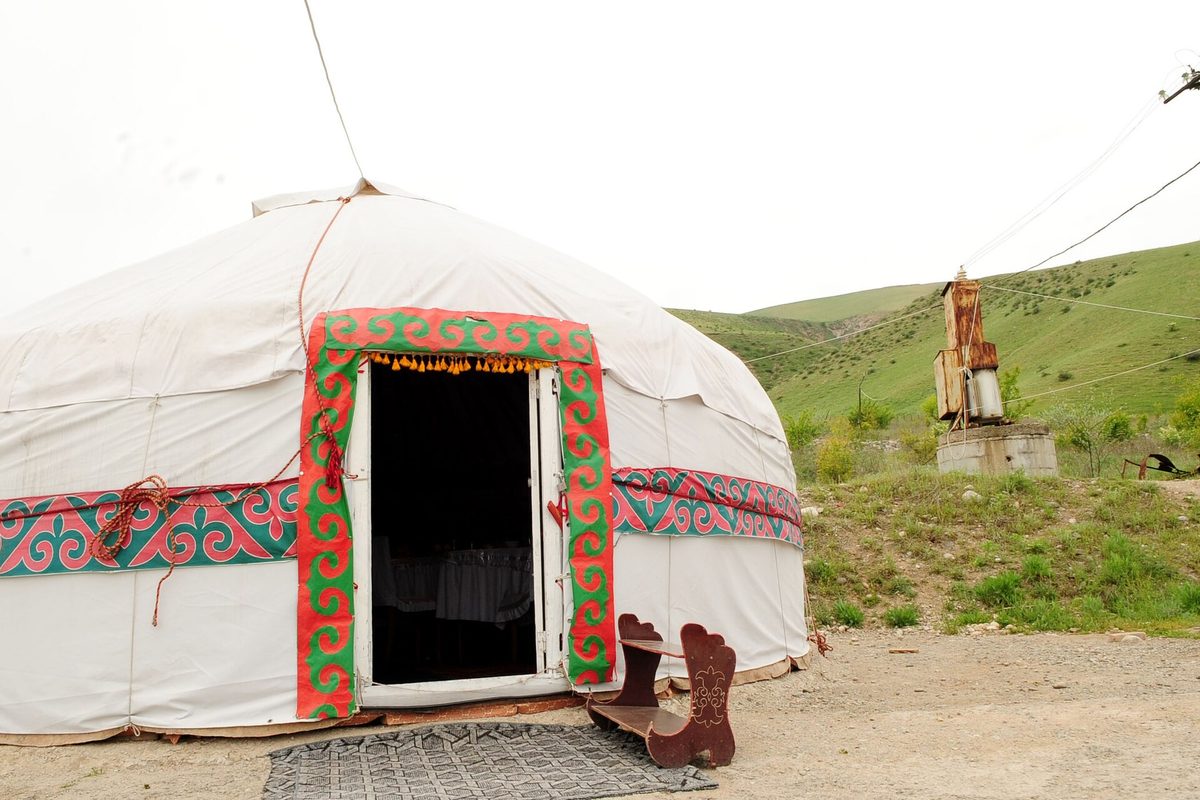
Nomadic vs. Settled Life in Kyrgyzstan
Kyrgyzstan's landscape, a mosaic of jagged peaks and endless steppes across the Tian Shan, has long shaped a tension between movement and rootedness. For centuries, the Kyrgyz people followed seasonal pastures, living in portable yurts that could be packed and unpacked with the rhythm of the seasons. Their home was not a fixed location but a set of practices and relationships with the land. This nomadic heritage, disrupted by Soviet-era collectivization, still defines the Kyrgyz identity today.
The contrast between Kyrgyz nomadic vs settled life offers a sharp lens on the idea of home. The nomadic home concept is built on mobility and community, not walls. Even after forced settlement, many Kyrgyz families maintain ties to the jailoo (summer pastures) and preserve yurt traditions. This dual existence, rooted yet mobile, challenges Western notions of home as a permanent address. Understanding Kyrgyzstan lifestyle requires exploring how cultural identity persists across both worlds.
This article will examine yurt living, the Soviet-era changes that reshaped nomadic traditions in Kyrgyzstan, and the realities of modern Kyrgyz life in urban centers. It will also explore what home means in the mountain communities where tradition and change coexist. By tracing these threads, we can understand how the idea of home can be both portable and permanent, shaped by landscape and history.
The Nomadic Heritage of Kyrgyzstan
Roots of Kyrgyz Nomadism and Yurt Living
The Kyrgyz nomadic tradition grew out of the Central Asian steppes, where horses were domesticated around 3000 BCE, allowing people to move with their herds. Unlike settled farmers, the Kyrgyz built an economy around livestock that required constant movement across the Tien Shan mountains. By the 10th century, this nomadic culture was well established, rooted in Turkic traditions that treated home as a portable idea rather than a fixed spot. That mobility became the bedrock of Kyrgyz cultural identity.
The yurt is the physical expression of that portable home. Its design uses a collapsible wooden frame of kerege (lattice walls), uyk (roof poles), and tunduk (crown), all covered with felt made from sheep's wool that insulates against harsh mountain weather. The tunduk represents the connection between earth and sky, a spiritual anchor for the family. A yurt can be set up in 30 minutes, which makes it the ideal dwelling for the seasonal migrations that define Kyrgyz nomadic versus settled life. Even today, yurt living remains a strong symbol of tradition, and many Kyrgyz families keep one for summer use.
Seasonal migration follows a rhythm of transhumance: families move to the jailoo (high summer pastures) in spring, where grass is plentiful, then descend to the kishloo (winter settlements) before the first snow. This pattern, practiced for centuries, continues among mountain communities, creating a lifestyle that balances mobility with a deep connection to specific landscapes. In modern Kyrgyz life, the contrast between nomadic traditions and settled urban existence shapes the nation's cultural identity. The Kyrgyzstan lifestyle thus blends ancient nomad traditions with contemporary realities, keeping the idea of a portable home alive.
Nomad Traditions and Community Life
Kyrgyz nomadic life revolves around seasonal herding cycles, with each migration shaping daily customs. When a family arrives at a new jailoo (summer pasture), the first act is to set up the yurt and offer chai, kumis, and boorsok to any visitor. This hospitality is a sacred duty, reflecting the idea that home is not a fixed structure but a portable center of warmth and generosity. Hunting traditions like salburun, where men on horseback hunt with golden eagles, reinforce bonds between the extended family, known as the uruk, and pass down practical skills across generations.
The extended family and tribal lineage, or zheke, form the backbone of social organization. Elders, particularly the aksakal (white beard), settle disputes and guide major decisions such as when to move pastures or negotiate marriages. This collective decision-making ensures that the group's survival takes priority over individual needs, a principle that starkly contrasts with settled, urban lifestyles. In Kyrgyzstan today, these tribal ties still influence marriage, business partnerships, and even political allegiances, demonstrating how nomad traditions continue to shape society.
Cultural identity is maintained through oral epics like the Manas trilogy, performed by akyns (storytellers), and through annual horse games such as kok-boru and er enish. These activities, along with the distinctive shyrdak felt carpets decorated with nomadic motifs, keep the youth connected to their heritage. Even as Kyrgyzstan urbanizes, the concept persists in the way families gather for Nooruz and travel to ancestral villages, proving that a portable sense of home can survive alongside city life.
The Portable Home: How Nomads Define Belonging
For the Kyrgyz nomads, home has never been a fixed address on a map. It is a portable entity: a felt-walled yurt that can be dismantled in thirty minutes and reassembled on a new alpine pasture. This way of thinking challenges the very definition of belonging. Instead of anchoring identity to a wooden house or a city block, the Kyrgyz define home through the act of carrying it. The yurt, known as a boz ui, is not merely shelter; it is a mobile sanctuary that moves with the family across the Tian Shan mountains. In this way, Kyrgyz nomadic vs settled life is not a choice between two locations but between two philosophies of permanence.
Emotional and spiritual attachment runs deep through the landscape itself. Each generation inherits ancestral migration routes, from the rolling jailoos of Naryn to the high pastures of Song-Kol Lake, and these routes become the coordinates of belonging. The nomad traditions of Kyrgyzstan teach that a person belongs to a territory, not a building. The mountain communities pass down oral maps of water sources, wind patterns, and seasonal grasses, creating a cultural identity woven into the terrain rather than the walls of a house. This bond is so strong that even after a century of Soviet collectivization and enforced settlement, many Kyrgyz families still return to the jailoos each summer, living in yurts and practicing the same seasonal rhythms their great-grandparents followed.
This stands in stark contrast to the Western notion of a permanent home, where ownership of a physical structure signifies stability, success, and rootedness. A mortgage, a picket fence, a fixed address: these markers of settled life are foreign to the nomadic mindset. In Kyrgyzstan today, the tension between these two worlds is palpable. The young generation works in Bishkek apartments but keeps a yurt in the village for summer migrations. The portable home offers a profound lesson: that belonging is not about where you are, but about the routes you are willing to travel.
The Shift to Settled Life
Soviet Collectivization and the End of Nomadism
The Soviet collectivization campaign of the late 1920s and 1930s ended centuries of Kyrgyz nomadic life almost overnight. Starting in 1929, the state forced pastoral families to abandon their seasonal migration routes and settle permanently in newly formed collective farms, or kolkhozes. Within a decade, over 80 percent of the Kyrgyz population had been sedentarized, and the traditional yurt-based lifestyle was systematically dismantled. Livestock numbers dropped from roughly 5 million head in 1929 to just 2 million by 1933, as herds were confiscated or died during the upheaval.
The impact on family structures and land use was severe. Extended clan networks that had organized grazing rotations and shared decision-making were replaced by state-controlled labor brigades. Men were often conscripted for industrial projects, while women and children remained on the kolkhoz, assigned to agricultural work. The communal pastures that had sustained mountain communities for generations were either seized or divided into inefficient plots, leading to overgrazing and soil degradation that persists in some areas today. The intimate knowledge of seasonal grass cycles, water sources, and animal husbandry (the core of nomadic life) lost its daily relevance.
Over the long term, the forced shift created a deep economic dependence on Soviet subsidies and state planning, eroding the self-sufficiency that had defined Kyrgyz nomadic versus settled life for centuries. Yet the cultural identity tied to nomad traditions in Kyrgyzstan did not vanish. Many modern Kyrgyz families still feel a pull toward the mountains, keeping a yurt for summer gatherings or maintaining ties to ancestral pastures. This tension between the settled present and the nomadic past continues to shape daily life, particularly in mountain communities where the idea of home remains portable, even when the physical dwelling is fixed.
Modern Kyrgyz Life: Urbanization and Cultural Change
Bishkek, the capital, has grown from a Soviet-era planned city into a bustling metropolis of over one million residents. High-rise apartments, Western-style shopping malls, and tech startups define its skyline, drawing young Kyrgyz from the surrounding mountain communities. Cities like Osh and Karakol have also expanded, offering jobs in education, tourism, and trade that pull people away from the seasonal rhythms of yurt living. This rapid urbanization is the most visible shift in Kyrgyz nomadic vs settled life, as entire generations now grow up in apartments rather than on summer pastures.
Yet the transition has not been smooth. Many urban Kyrgyz struggle to maintain the nomad traditions Kyrgyzstan once thrived on - the knowledge of herding, felt-making, and navigating vast landscapes. The nomadic idea of home, centered on the portable yurt and a deep connection to the land, feels increasingly abstract to those who commute by bus and work in offices. Language use has shifted, with Russian dominating city life, and younger people often lack the hands-on skills their grandparents possessed. The tension between urban life and ancestral heritage creates a quiet identity crisis for many.
Cultural revival efforts, however, are gaining momentum. The World Nomad Games, held every two years since 2014, bring thousands to the shores of Lake Issyk-Kul to watch eagle hunting, kok-boru, and horse racing. Crafts cooperatives in Karakol and Naryn sell traditional ala-kiyiz felt rugs to international buyers, preserving techniques that were nearly lost. Yurt camps for tourists - like those at Song-Kol and Jyrgalan - offer visitors a chance to experience daily nomad life, while also providing income for mountain communities to continue their seasonal migrations. These initiatives keep the tradition alive, not as a museum piece but as a living, evolving practice. For many Kyrgyz, home is no longer a single valley or a felt tent, but the memory of both, carried into a rapidly changing world.
Mountain Communities: Between Two Worlds
In the high mountain pastures of Naryn and the jailoo around Son-Kul Lake, thousands of Kyrgyz families still practice a form of transhumance rarely seen elsewhere in Central Asia. They move with their sheep, horses, and cattle between summer camps at 3,000 meters and winter settlements in the lower valleys, dismantling and reassembling their yurts twice a year. This is not a relic of the past but a living strategy for survival in a landscape where elevation dictates life. For these semi-nomadic herders, home is not a fixed address but a set of practices tied to seasonal rhythms and animal movement. The felt yurt, with its collapsible lattice walls and crown opening, remains the most practical shelter for this mobile existence.
Yet maintaining herding in a modern economy is increasingly difficult. Market access is limited: a herder in the Alay Mountains may ride four hours to sell a single sheep at a roadside market. Climate change has shortened grazing seasons, and the government's push for permanent school enrollment means children cannot accompany families on the jailoo. Many young Kyrgyz now migrate to Bishkek or work abroad, losing the generational knowledge of animal husbandry and seasonal pasture management. The 2022 livestock census showed a 12% decline in mobile herding households compared to a decade earlier, as families settle into fixed villages for access to electricity and healthcare.
These communities negotiate their identity through daily decisions: whether to send children to boarding school or keep them on the move, whether to invest in a winter house while still maintaining a yurt for summer. The yurt is not just a dwelling but a symbol of continuity. Families display both traditional shyrdak felt rugs and satellite phones. They celebrate Nooruz with the same rituals as their grandparents, but now also rely on mobile banking to receive remittances. This hybrid existence challenges the binary of Kyrgyz nomadic vs settled life. Instead, mountain communities demonstrate that home here persists as a flexible, portable sense of belonging, adapting to modern Kyrgyzstan lifestyle without losing its core.
The Idea of Home: Nomadic vs. Settled
What Makes a Home? Contrasting Perspectives
For Kyrgyzstan's mountain communities, the definition of home shifts dramatically depending on lifestyle. In the settled view, home is a fixed address, a house with walls, a roof, and property lines that anchor a family to one piece of land. This perspective aligns with life in cities like Bishkek, where stability, ownership, and permanence define domestic security. Psychologically, home becomes a physical structure that represents investment and rootedness, often tied to legal deeds and generational inheritance.
The nomadic view, by contrast, treats home as something carried rather than built. For families who still practice seasonal migration on the jailoo, home is the yurt itself, a structure that can be dismantled in hours and reassembled elsewhere. More than a shelter, the yurt embodies nomad traditions in Kyrgyzstan: a circle of felt and lattice that contains family memory, ritual, and belonging. Home is not the land beneath it but the people inside it and the stories they share. Movement is not a disruption of home but an expression of it.
These contrasting definitions of home create a unique tension in Kyrgyz nomadic vs settled life. Many Kyrgyz families today maintain one foot in each world, a city apartment for winter and a yurt on the summer pasture. The cultural identity of Kyrgyzstan remains deeply shaped by this portable sense of home, where belonging is defined less by a fixed location and more by the continuity of tradition, language, and community across landscapes.
The Nomadic Home Concept: Portability and Belonging
The yurt, or boz uy, is the physical embodiment of the nomadic home concept in Kyrgyzstan. This portable, circular structure of felt and lattice can be assembled by a skilled family in under an hour, yet it carries the same weight of belonging as a stone house. For Kyrgyz nomads, home is not defined by a fixed address but by the presence of kin, the rhythm of seasonal migrations to the jailoo, and the shared landscape of the Tien Shan mountains. The felt rugs, the shyrdak patterns, and the hearth at the center all anchor a sense of security that moves with the family. This is the core of Kyrgyz nomadic vs settled life: the settled home is static, while the nomadic home is a set of relationships that travel.
Belonging, in this tradition, is rooted in kinship and landscape rather than a physical structure. The Kyrgyz word "jurt" means both "people" and "homeland" - a linguistic clue that home is wherever your community and your ancestral pastures are. The concept thus extends beyond the yurt itself to include the mountain passes, the river valleys, and the graves of elders. This portable sense of identity has profound implications for the country. As urbanization pulls young Kyrgyz into Bishkek and other cities, many struggle to reconcile yurt living traditions with apartment blocks. The yurt remains a powerful symbol of cultural identity, used in national celebrations like Nowruz and offered as tourist accommodation in places like Song-Kol Lake.
For contemporary Kyrgyzstan, the tension between these two ideas of home shapes a broader search for identity. The country's post-Soviet trajectory has emphasized settled infrastructure, yet the mountain communities still practice seasonal migrations. This inheritance offers a psychological anchor: a reminder that belonging can be carried in memory and tradition, not just in a house. This duality is central to understanding Kyrgyzstan lifestyle today, where the yurt stands as both a practical dwelling and a living emblem of resilience.
Kyrgyzstan's Cultural Identity: Blending Both Worlds
Contemporary Kyrgyz identity is a living fusion of nomadic and settled values, a duality that shapes everything from family structures to national celebrations. Urban Kyrgyz professionals may spend weekdays in Bishkek apartments and weekends in family yurts on the jailoo, blurring the line between city and mountain life. This mix is most visible during the World Nomad Games, held every two years since 2014, where traditional horse games, eagle hunting, and felt-making compete for attention alongside modern sports and concerts. The event itself embodies the Kyrgyz nomadic vs settled life tension: a global spectacle rooted in ancient pastoral practices, broadcast on smartphones and attended by tourists from five continents.
Cultural institutions and education play a central role in preserving this hybrid heritage. Schools across the country teach Kyrgyz history, oral epic recitation (Manas), and handicraft techniques like shyrdak and ala-kiyiz felt rug making, which UNESCO recognized as intangible cultural heritage in 2012. The Kyrgyz National Museum of Fine Arts in Bishkek houses both Soviet-era realist paintings and contemporary installations that reinterpret yurt living and nomad traditions Kyrgyzstan. These institutions ensure the tradition remains a living reference, not a museum artifact, for a generation raised in concrete apartments.
The future of Kyrgyzstan's cultural identity lies with younger generations who are redefining home through a blend of digital connectivity and ancestral roots. Many urban youth now spend summers working remotely from mountain yurt camps, embracing the portability of the nomadic lifestyle while keeping their laptops charged. Eco-tourism startups run by young Kyrgyz entrepreneurs offer guided horseback treks and homestays in traditional communities, creating an economy that sustains both city and steppe. For these millennials and Gen Z citizens, the idea is not about returning to the past but about carrying their heritage into a new century, one where the idea of home can be both a fixed apartment and a portable felt tent.
Finding Home in Kyrgyzstan's Nomadic and Settled Traditions
The contrast between Kyrgyz nomadic and settled life is not a binary choice but a living continuum. For centuries, the yurt served as both shelter and symbol of a portable home, its felt walls holding the warmth of family and the memory of mountain pastures. Today, while many Kyrgyz live in permanent houses in Bishkek or Osh, the nomadic home concept endures in summer migrations to jailoos like Song-Kul, where families still raise yurts and tend livestock. This dual existence defines modern Kyrgyz life, where city apartments coexist with a felt dwelling in the alpine meadows.
The Kyrgyzstan lifestyle remains deeply shaped by the rhythms of mountain communities. Even those who have never slept in a yurt inherit a cultural identity that prizes mobility, adaptability, and the idea that home travels with you. Nomad traditions Kyrgyzstan include the practice of felt-making, horse games like ulak tartysh, and the oral epics recited around the hearth. These traditions are not museum pieces; they are lived experiences that adapt to contemporary life.
The question of home in Kyrgyzstan is not about choosing between nomadic and settled life. It is about recognizing that belonging is forged by culture and geography, not by walls. Whether a person lives in a high-rise in Bishkek or a felt yurt on the shores of Issyk-Kul, the sense of home comes from the shared language, the hospitality, the taste of kumis, and the knowledge that the mountains are always within reach. Home, in Kyrgyzstan, is a portable idea rooted in an ancient landscape.
Official sources
Details worth verifying before you go — checked against:
Travel Writer & Editor
Emily Johnson writes and edits Do Travel Blog. Every guide on the site starts the same way: with a question she actually had while planning — when to book, which pass to buy, how to get from A to B without overpaying. Where a number matters, she cites the source: park tickets link to the park's own fee page, visa rules to the official consulate, ferry times to the operator. Prices get re-checked against those pages before each update, and a guide is re-dated when its numbers move. Nothing here is sponsored — she doesn't accept payment for coverage. Spotted something stale or wrong? Email hello@dotravel.blog and she'll fix it.